Houston Chapter

2025 Wildscapes Workshop

Discover the magic of native habitats as night falls...

Our beloved one-day event returns with a fresh theme, exploring the fascinating intersection of native plants and nocturnal life—from pollinators on the move to creatures of the canopy.
Join us for a day of engaging speakers, community connections, and a lush array of native plants ready to bring biodiversity to your backyard.
Save the date—and keep an eye out! We’ll be sharing speaker highlights, sneak peeks, and updates here as the stars align.
 

Where?
Northside Columbus Club Hall
607 E. Whitney Street
Houston, Texas, 77022


Want to know more?

Uncategorized

Plant Sale Preview – Take Home the Wild!

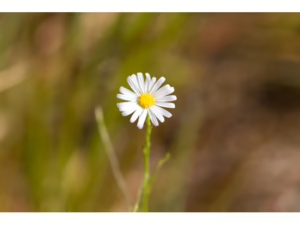
Don’t leave Wildscapes empty-handed! Our curated plant sale features a variety of native species perfect for Houston gardens. Quantities are limited, and the best selections go fast — so come early, ask questions, and bring home a piece of the wild.
Read More »
Uncategorized

Wildscapes Workshop Speakers

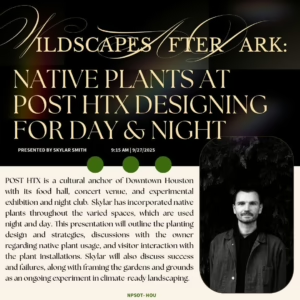
Preview the speakers presenting at our event! We have a great lineup featuring landscape design, toad conservation, bat at work, and lighting the night right.
Read More »
Uncategorized

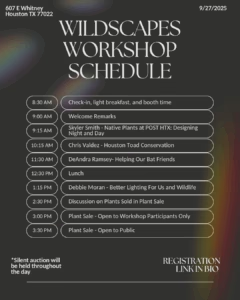
Wildscapes Workshop Lineup

Check out the lineup of activities for the day and get yourself registered. We will be selling yard signs, NPSOT merch, books, and of course native plants! There will be a silent auction and raffle throughout the day, and exhibitors on hand to include native landscape design firms and other like-minded non-profit organizations.

Read More »
Uncategorized

Sponsor Wildscapes Workshop

Your sponsorship will help fuel our mission to restore native ecosystems through education, outreach, and example. In addition to this annual workshop, we host monthly speaker events, offer wildscaping grants, and sponsor invasive species removal efforts throughout the Houston area.

Read More »

About the Region

2026 Fall Symposium Logo

This low-elevations region of Texas extends inland from the barrier islands, about 60 or so miles, and stretches from Brownsville to Louisiana. In total, it covers about 9.5 million acres, with a high point of 150 feet in elevation. More than 1000 species of plants can be found in this region. On the southern end, species more common in Mexico (such as Sabal mexicana) and Central America occur.

The barrier islands provide us with dune systems, and clay flats to the inland side, which have species found in these areas alone. Many plants here, such as Ipomoea pes-caprae (beach morning glory), can be found throughout tropical regions of the globe. I’ve encountered the same species on the beaches of Guam.

Once inland, vast marshes and wet prairies occur. Occasionally, oak (Quercus fusiformis) groves can be found. Common grasses include species of Bothriochloa, Paspalum, and Sporobolus; eastern gamagrass (Tripsacum dactyloides); and switchgrass (Panicum species). Many rivers and creeks cut through the Gulf Prairies, and along these riparian areas various species of trees, Sabal minor, and other plants adapted to clay soils can be found. Due to overgrazing, farming, and fire suppression, woody species such as mesquite (Prosopis glandulosa) and huisache (Acacia farnesiana), and invasive species such as chinaberry (Melia azedarach), Brazilian pepper (Schinus terebinthifolius), and Chinese tallow (Sapium sebiferum) have increased and displaced our native flora.

Source: Wildflowers of Texas by Michael Eason