La Bahia Chapter

Welcome to the La Bahia Chapter of NPSOT including Washington County and the five surrounding counties within its boundaries.

We are in both the East Central Texas Plains and Texas Blackland Prairies, divided between Austin and Houston, and includes plains, prairies, and woodlands landscapes. Our average rainfall is about 42 inches with peak rainfall usually in May and October, Hardiness Zone 9a.

Use the menus in the bar above to get more information relevant to our area, including plant lists, activities, and more.

You can use the interactive map to the right to learn more about our local ecoregions, and find your location. Zoom in to find your ecoregion. Click on an ecoregion for more details. 

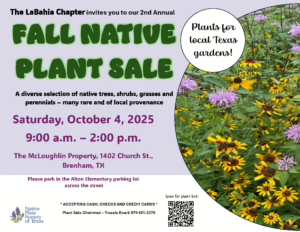
Please join us at a plant sale and/or swap, field trip, or other activity.

Upcoming Events

Starting Native Plants from Seed 
 
February 20, 2026
Social starts at 10:00
Presentation starts at 10:30
 
Nancy Carol Roberts Memorial Library
Brenham Texas
 
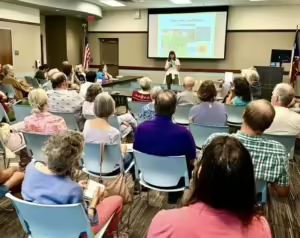
Join Blas Espinosa, owner of Next Door Nursery, as he shares practical tips for collecting, processing, and propagating local native seeds. Blas will talk about the principles of native plant propagation, share his go-to soil mixes and supplies, and explore solutions for common problems faced during propagation. Participants will gain insight on various nursery structures used at Next Door Nursery that can be used in small or large scale applications.
 
Blas Espinosa has spent 15 years offering garden education to youth and adults, and supporting gardens in Houston, Tx. Since 2018,  he has been building Next Door Nursery, a small-scale nursery dedicated to growing the disappearing native plants of the Houston region. The mission of Next Door Nursery is to reintroduce these plants back into the landscape by making them commercially available wholesale to the nursery and landscape trade, as well as retail to individuals. Blas continues to share his knowledge to anyone who wants to take part in the conservation and restoration of our native Texas landscape. 

Native Plant Society Virtual Events

La Bahia Chapter News

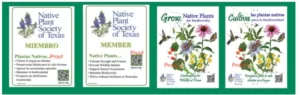
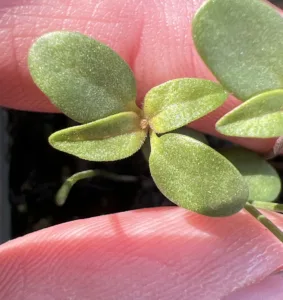
Garden Signs Available

We’ve had a great response for the NPSOT Biodiversity and Members gate/garden signs. We still have 7 of the Biodiversity and 6 of the Members signs, $20 apiece, which will
Read More »

State Native Plant Society News

Join Us for the Big Pull

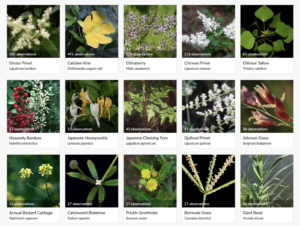
Please join us for the invasive species Big Pull! Let’s make an impact during National Invasive Species Week by removing invasive species and supporting healthy native ecosystems across Texas between
Read More »

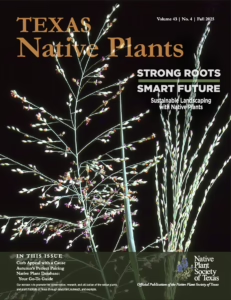
Fall 2025 Member Magazine

President’s Message | Executive Update | Celebrating Leadership | Curb Appeal with a Cause | Grant Recipients | Autumn’s Perfect Pairing | Native Plant Database | Sustainable Landscaping | Winterizing Tips
Read More »

About the Region

Fall Symposium 2025 Logo - Teach for the Future

Salado, the location of our Fall 2025 Symposium, lies at the intersection of two ecoregions: the Edwards Plateau (Limestone Cut Plain) and Blackland Prairie (Northern Blackland Prairie).

The Edwards Plateau area is also called the Hill Country; however, this general term covers a much larger area extending farther north. Spring-fed creeks are found throughout the region; deep limestone canyons, rivers, and lakes (reservoirs) are common. Ashe juniper is perhaps the most common woody species found throughout the region. Additional woody species include various species of oak, with live oak (Quercus fusiformis) being the most common. Sycamores (Platanus occidentalis) and bald cypress (Taxodium distichum) border waterways. This area is well known for its spring wildflower displays, though they may be viewed in spring, late summer, and fall, as well. According to Texas Parks and Wildlife, average annual rainfall in the Edwards Plateau ranges from 15 to 34 inches.

The Blackland Prairie extends from the Red River south to San Antonio, bordered on the west by the Edwards Plateau and the Cross Timbers, and on the east by the Post Oak Savannah. Annual rainfall averages 30 to 40 inches, with higher averages to the east. This region is dominated by prairie species. The most common grass species include little bluestem (Schizachyrium scoparium) and Indian grass (Sorghastrum nutans) in the uplands and switchgrass (Panicum virgatum) in the riparian areas and drainages. Common herbaceous flowering plants include salvias, penstemons, and silphiums. This area has suffered greatly from overgrazing and agricultural use. Few intact areas remain, though many of the plants can be found along county roadsides throughout the region.

Our fall Symposium host chapter, the Tonkawa Chapter, includes both of these ecoregions.

Source: Wildflowers of Texas by Michael Eason