April 11 @ 9:00 am – 12:00 pm
Date and Time: April 11, 2026 @9:00am
Meeting Location: We will be meeting at the south side of the intersection of Ralston Road and Beltway 8 feeder road. The field trip will be located behind a secured gate that will be locked behind the group. Please arrive by 9:15 or you will be unable to access the area. (GPS: 29.933496, -95.225616)
Things To Bring: Expect uneven, potentially saturated ground—boots or closedtoe shoes are required. Bug spray, sun protection, and adequate water are strongly recommended. Portions of the site lack shade, and depending on hydrologic conditions, we may traverse shallow inundation or soft soils, so dress accordingly and bring anything needed for personal comfort.
Field Trip Overview: The Greens Bayou Wetlands Mitigation Bank (GBWMB) offers a unique opportunity to examine how large-scale restoration design, compensatory mitigation requirements, and watershed-scale hydrologic management interact to shape habitat development in northeast Harris County. Implemented by the Harris County Flood Control District (HCFCD), the mitigation bank was established to offset unavoidable wetland impacts associated with flood damage reduction projects throughout the region. The bank includes a mosaic of restored palustrine emergent, scrubshrub, and forested wetlands, along with native prairie and riparian buffers that tie into the broader Greens Bayou watershed.
The site’s restoration framework is centered around re-establishing historic hydrologic connectivity,
regrading portions of the landscape to reintroduce appropriate microtopography, and implementing targeted plantings to accelerate community development. Over time, these interventions have encouraged a functional wetland complex characterized by a gradient of hydroperiods, supporting diverse vegetation from bottomland hardwood assemblages to persistent herbaceous wetlands, depending on elevation and soil moisture.
Because GBWMB is an active mitigation bank, it provides an excellent setting to discuss:
– The role of soils, hydrology, and watershed function in guiding successful wetland establishment.
– How invasive species pressure—particularly Chinese tallow and other woody colonizers—is
managed within a compensatory mitigation framework.
– The long-term monitoring and
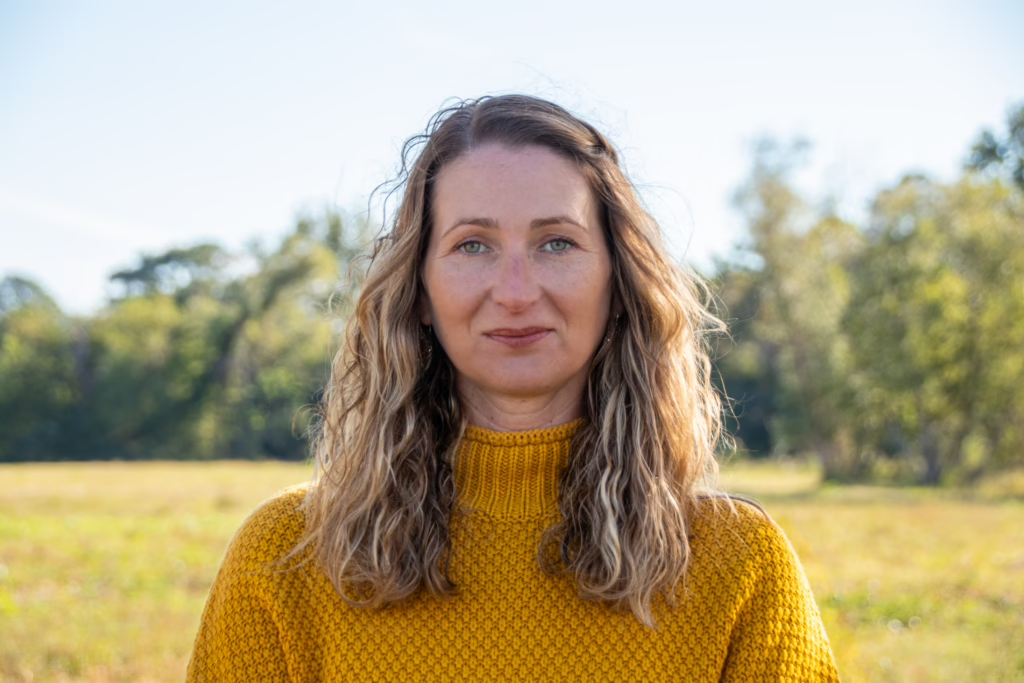
Leader Bio: Andy Newman is a restoration ecologist, botanist, and longtime advocate for Texas native plant communities based in Houston. With more than 17 years of experience working across prairies, wetlands, forests, and riparian systems, Andy brings a sciencebased yet deeply observant approach to understanding landscapes. His work is rooted in careful attention to plant communities, ecological processes, and the stories written into the land by water, soils, disturbance, and time. Whether in the field or sharing knowledge with others, Andy emphasizes curiosity, observation, and respect for the complexity of natural systems.
As Vice President of the Native Plant Society of Texas – Houston Chapter, Andy is dedicated to
strengthening connections between people and the native landscapes of the Gulf Coast. He is an active speaker, mentor, and field educator, often blending science with creativity through nature journaling, scientific illustration, and art. These practices shape how he observes and communicates the natural world, helping make ecology more accessible and meaningful to diverse audiences. Andy looks forward to supporting the chapter’s mission through education, conservation, and thoughtfulstewardship—fostering a deeper appreciation for native plants and the ecosystems they sustain.
Additional Coordination Details: Please contact Bob Romero for any further coordination details at
bobromero@gmail.com or by phone at (713) 248-6030.
Return to Houston Chapter Page