Register Now for the 2025-26 Force of Nature Competition!
We are inviting all middle school students (grades 5-8) across Texas to participate in our Force of Nature research competition. It is a chance to get outside and learn about the amazing native plants we have in Texas. Here is how you can participate:
1) Form a Team and Register by Sept. 30
Designate a school advisor and form a team of students who will work on the research project. Teams can consist of any middle school group – a science class, a school garden club, a home school group, etc. Engage your local Native Plant Society of Texas chapter to serve as mentors! REGISTER YOUR TEAM HERE.
2) Choose a Topic
Determine which Texas native plant topic you would like to explore with your research. See our list of example research projects below. Use our Native Plant Database to find plants native to your area of Texas.
3) Conduct Research
Form your research hypothesis, design your experiment, and conduct your research. Optional: create a school native plant garden (or utilize an existing garden) to make observations and collect data. Get our Native Plant Garden Starter Guide to help you plan your garden.
4) Present Findings
Create a short slide presentation (no more than 25 slides) to showcase your findings to our NPSOT judges! See below for the criteria our judges will be using to review the projects. The winning school will receive a trophy, a $300 garden grant, and native plant books for their library.
Competition Timeline
August 15 through September 30, 2025– Register your team and start on your project.
October, 2025 – Zoom Q&A call with participating schools (date TBD)
March 31, 2026 – all research presentations are due.
April 30, 2026 – winning school is announced
Competition Prizes
The school with the winning research project will receive:
- A trophy for their school
- $300 grant for garden plants and supplies
- $100 grant for native plant books for their school library
Three additional schools will receive honorable mention awards and a $50 gift card to Native American Seed.
All students participating in the competition will receive a Force of Nature vinyl sticker.
Example Research Topics
Here are some example native plant research topics you could explore. These are just thought starters – you are not limited to these topics. The only requirement is that your research focuses on plants that are native to Texas:
Growth & Germination
- Seed Germination under Different Conditions – Test how light vs. dark, warm vs. cool, or scarified vs. unscarified seeds affect germination for a Texas native species.
- Soil Type and Growth – Compare plant growth in sandy, clay, and loamy soils using the same native plant species.
- Effect of Mulch on Seedling Survival – See whether mulch helps or hinders seedlings (or transplants) of a Texas native plant.
- Container Size vs. Root Growth – Grow seedlings in different pot sizes and measure root development.
Water & Drought Tolerance
- Watering Frequency Study – Grow a native species under high, medium, and low watering schedules and track plant health.
- Rainwater vs. Tap Water – See if the water source changes growth rates for a Texas native plant.
- Wilting Point Measurement – Record how many days without water it takes for different native species to show stress signs.
Wildlife & Pollinators
- Pollinator Preference – Count visits from bees, butterflies, and other insects to different native flowers.
- Flower Color and Pollinator Attraction – Test if pollinators prefer certain colors of native blooms.
- Time of Day Pollinator Activity – Observe what time of day pollinators visit a specific native plant the most.
- Seed Dispersal Helpers – Study which animals (ants, birds, etc.) take seeds from a particular native species.
- Flower Lifespan – Measure how long a bloom stays open for different native species.
Environmental Impact
- Erosion Control – Compare how well different native grasses prevent soil loss on a slope.
- Temperature Regulation – Measure soil temperature under native plant cover vs. bare ground.
- Invasive Species Resistance – Plant a native species with a common invasive species and observe competition outcomes.
Human Uses & Cultural Connections
- Dye from Native Plants – Test the dyeing effectiveness of different native plants.
- Edible Native Plants – Research which native plants have edible parts and test nutrient content (if safe).
Research Presentation Guidelines
Your research presentation must be submitted to native-plants-in-schools@npsot.org by March 31, 2026.
Keep it original. All submissions must be participants’ original work. Any entries found not to be original will be disqualified from the contest.
Research Presentation Format:
- Slide Creation: The presentation can be created with Google Slides, PowerPoint, Canva, or similar tool.
- Cover Page: Include a cover page with title, name of sponsor and participating students, and school logo.
- Organization: Organize information in a clear and logical way.
- Visual Appearance: Get creative with the content! You can include photos, graphs, videos, testimonials, artwork, etc.
- Spelling and Grammar: Give your presentation a good proofread before submitting it.
- Works Cited: Provide a list of sources used for your research project.
- Total Slides: The presentation should be no more than 25 slides.
Research Project Information:
- Research Hypothesis: State a clear research topic and hypothesis for your project. The research topic must be related to Texas native plants.
- Experiment Plan: Outline the steps you followed to conduct your experiment.
- Experiment Execution: Demonstrate how your project was completed according to plan.
- Data Analysis: Show the data you used to inform your research project.
- Conclusion: Clearly summarize the outcomes of your research experiment and what you learned.
We’re Here to Help
We hope you will join us for our first ever Force of Nature competition. We are here to support you and answer any questions you have along the way. Email native-plants-in-schools@npsot.org and we will get back to you ASAP.
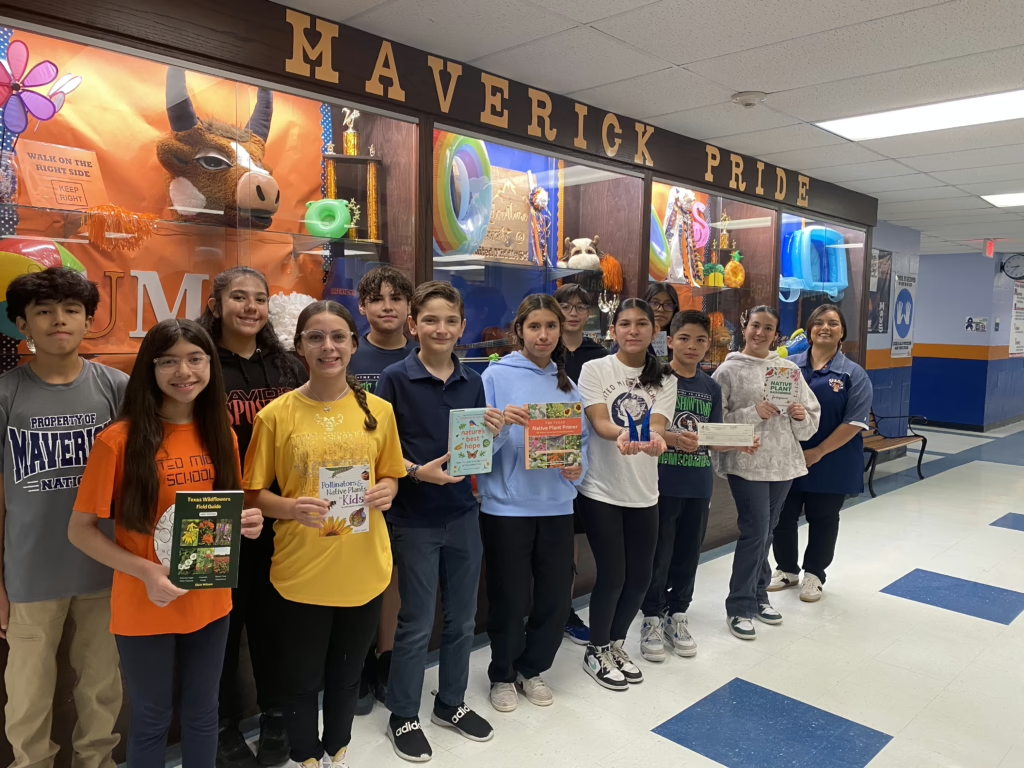
Congratulations to our 2025 Force of Nature Winners!
We are pleased to announce that 6th grade STEM class at United Middle School in Laredo, Texas is the winner of our first annual Force of Nature research competition! Led by Ms. Janet Peña, the students explored different techniques for germinating native milkweed seeds. You can view their research project here!