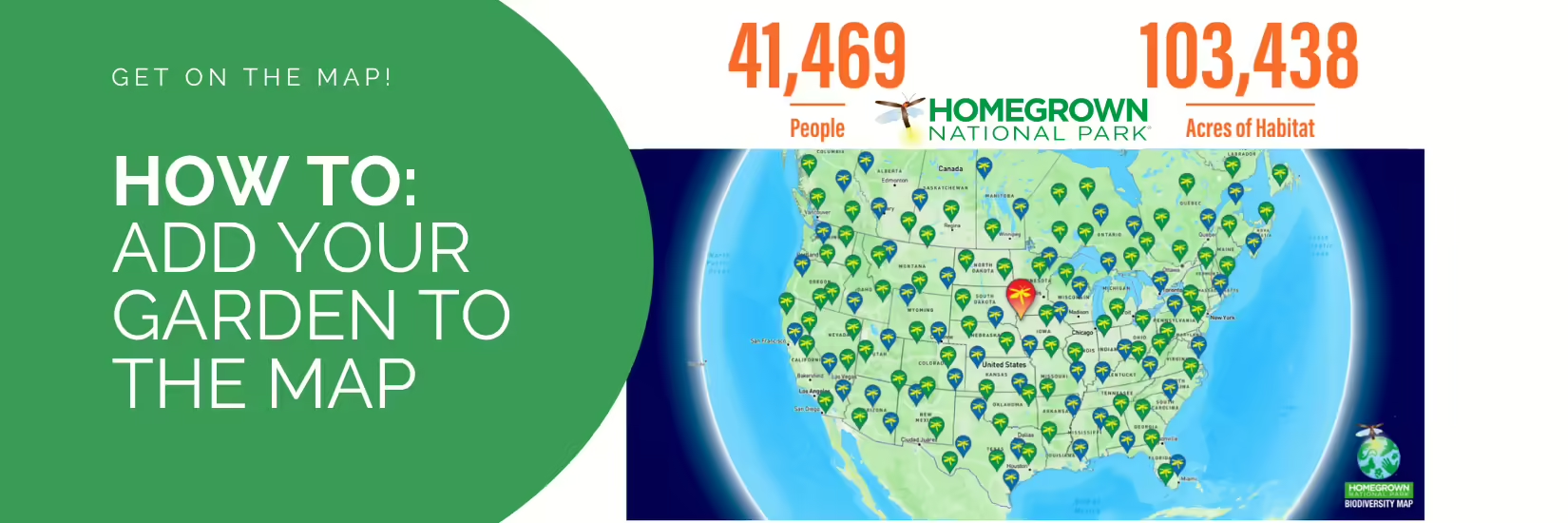
Show off your native plant garden by “getting on the map”! The Native Plant Society of Texas is partnering with Doug Tallamy’s Homegrown National Park® (HNP) to add Texas native plant gardens to their Biodiversity Map . Let’s demonstrate how NPSOT members are making a real impact with their gardens!
How to get on the map and join your user account to NPSOT:
With just a short form and a single email confirmation, your garden will be counted toward our statewide effort to make Texas #1 on the map.
Step 1: Fill out this short form
https://form.jotform.com/253381924234154
Step 2: Accept your invitation
Check your inbox for the invitation email to activate your account. Check your spam folder if you do not see your invite. You will NOT receive an invitation if you already have a Map account associated with the email you used.
Your garden will automatically count towards NPSOT’s contribution to the biodiversity movement.
Questions? Email MapSupport@homgrownnationalpark.org.
Frequently Asked Questions:
Q: I have been on the map since 2022. Do I have to do something?
A: Yes, we would like you to associate your HNP Member Profile to the Native Plant Society of Texas Membership section of your profile. See instructions for
How to Join an Organization.
Q: I have more than 1 planting areas on this site and can’t find a place to enter a 2nd, 3rd and 4th planting area.
Q: I tried to find the link on my membership page, but could not. Would it be possible for you to see if my native plant garden has already been registered?
A: Use the SEARCH feature. Enter the address for your profile and search on the desired address.
Q: Is my entry just another certification like NWF, Monarch Watch, Audubon, etc.?
A: Getting on the Biodiversity Map is not a certification. It is a visual listing, acknowledgement and confirmation that a single individual can take independent action and make a difference in restoring the foundation of biodiversity by planting native plants. It is free. Homegrown National Park is Doug Tallamy’s non-profit organization . It provides education about growing native plants, reducing non-productive turf lawns, removing invasive plants, and specific keystone native plants which are critical to building a foundation for habitats. This tool maps where folks are installing native plant sites and planting areas, as part of a native plant focused movement.