Lakes and Pines Chapter

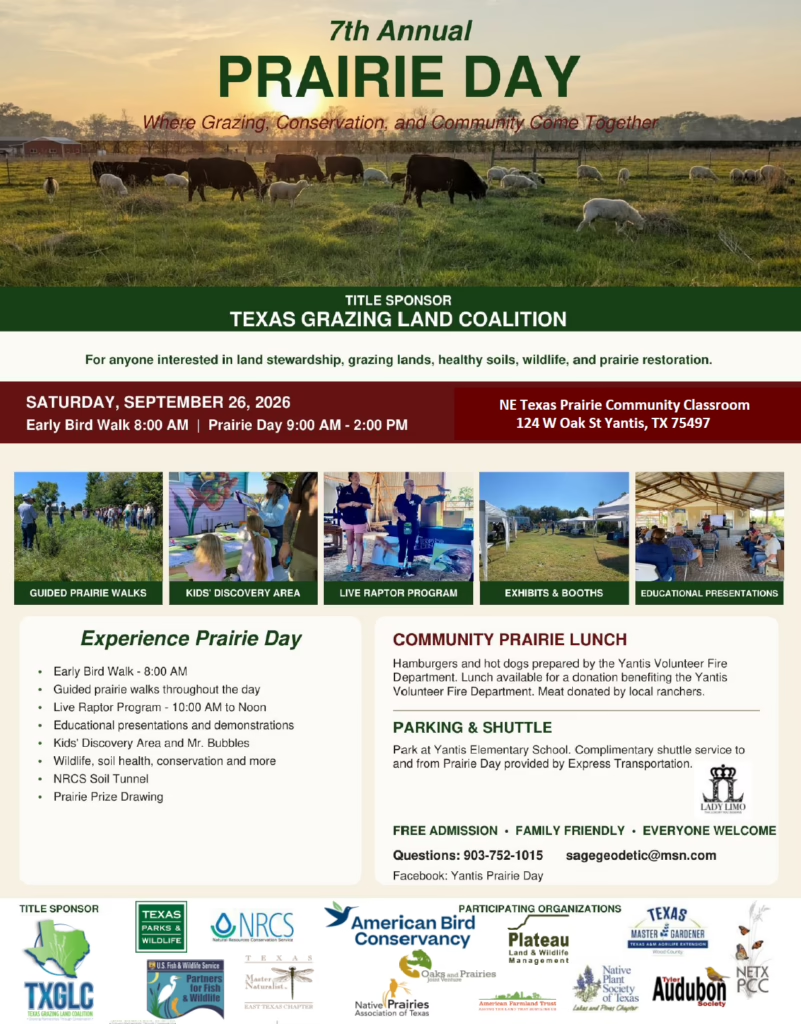
7th Annual Yantis Prairie Day Sept. 26

Looking for a fun and educational way to spend a Saturday? Join us for the 7th Annual Prairie Day on Saturday, September 26, from 9:00 a.m. to 2:00 p.m. at the NE TX Prairie Community Classroom at 124 W Oak St. Yantis, TX 75497.  Early morning bird walk at 8:00 a.m.

Stop by and visit with the Lakes and Pines Chapter of the Native Plant Society of Texas. We’ll have a table and comfortable chairs for visiting and discussing how native plants play a role not only in Texas prairie life but also in your everyday life. We’d also be happy to discuss your membership in NPSOT!

This free, family-friendly event celebrates land stewardship and the rich natural heritage of Northeast Texas. Visitors will enjoy expert presentations, guided prairie walks, live birds of prey, educational exhibits, children’s activities, and opportunities to visit with conservation professionals from across Texas.

Whether your interests are wildlife, native plants, ranching, bird watching, gardening, or simply enjoying the outdoors, Prairie Day offers something for everyone. Prairie Day brings together landowners, families, and conservation professionals to share practical ideas for managing healthier grazing lands, improving wildlife habitat, and preserving the natural heritage of Northeast Texas. Lunch will be available by donation, courtesy of the Yantis Volunteer Fire Department. Parking is available at Yantis Elementary School, with complimentary shuttle service to and from the event.

About the Region

2026 Fall Symposium Logo

This low-elevations region of Texas extends inland from the barrier islands, about 60 or so miles, and stretches from Brownsville to Louisiana. In total, it covers about 9.5 million acres, with a high point of 150 feet in elevation. More than 1000 species of plants can be found in this region. On the southern end, species more common in Mexico (such as Sabal mexicana) and Central America occur.

The barrier islands provide us with dune systems, and clay flats to the inland side, which have species found in these areas alone. Many plants here, such as Ipomoea pes-caprae (beach morning glory), can be found throughout tropical regions of the globe. I’ve encountered the same species on the beaches of Guam.

Once inland, vast marshes and wet prairies occur. Occasionally, oak (Quercus fusiformis) groves can be found. Common grasses include species of Bothriochloa, Paspalum, and Sporobolus; eastern gamagrass (Tripsacum dactyloides); and switchgrass (Panicum species). Many rivers and creeks cut through the Gulf Prairies, and along these riparian areas various species of trees, Sabal minor, and other plants adapted to clay soils can be found. Due to overgrazing, farming, and fire suppression, woody species such as mesquite (Prosopis glandulosa) and huisache (Acacia farnesiana), and invasive species such as chinaberry (Melia azedarach), Brazilian pepper (Schinus terebinthifolius), and Chinese tallow (Sapium sebiferum) have increased and displaced our native flora.

Source: Wildflowers of Texas by Michael Eason