We did it again! For the fourth year, the Boerne chapter of the Native Plant Society of Texas successfully gave away about 100 bigtooth maples to homeowners, businesses, schools and churches. Someday, all those maples will make Boerne the Bigtooth Maple Town, where residents and visitors alike will glory in the beautiful fall foliage.
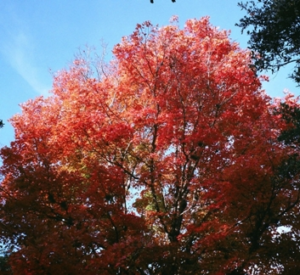
Bigtooth Maples for Boerne grew out of a dream of Jan Wrede. After the Boerne chapter of NPSOT planted maples on the Old No. 9 Greenway Trail in 2004 and 2005, Jan envisioned all the streets of Boerne bright with yellow, orange and red foliage every fall.
Maple-lined streets still would be just a dream if the Lende Foundation had not committed to finance a maple-planting program for 10 consecutive years. The extended duration of this generous financial support distinguishes this project from other NPSOT community-service planting programs around the state. This sort of backing can make the dream come true!
This program also would not have been possible if volunteers from the Boerne NPSOT chapter did not provide the planning and labor to get the maples distributed through the city. The person most instrumental in making Bigtooth Maples for Boerne an annual success is Suzanne Young. I call her “Maple Momma.”
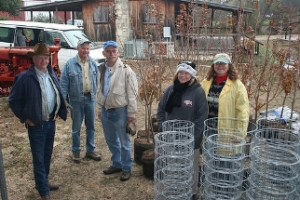
All year, Suzanne receives and evaluates the official request forms. As the fall giveaway approaches, she buys the maples, wire fencing, and bags of mulch.
After the application deadline, she chooses the lucky recipients and schedules times to pick up the saplings. Then Suzanne recruits the volunteers to cut wire enclosures, unload the maples and the mulch when they arrive at the giveaway site, and later help the recipients load the trees into their vehicles.
With each tree goes a wire enclosure, a bag of mulch and detailed planting and care instructions written by Maple Momma herself.
After all that, Suzanne itemizes the expenditures and balances the Bigtooth Maples for Boerne account. Then she starts planning for next year.
Boerne homeowners, businesses, and community organizations can apply for free maples by submitting the application form – available at www.npsot.org/Boerne/maplesforboerne/ – any time before Oct. 1 each year.
A third major element in the success of a long-term planting program such as this is a supplier who can provide the number of trees required every year. Luckily, we have the dedicated cooperation of Baxter Adams of Medina.

Many people know Baxter as the man who introduced apples to the Texas Hill Country, but he also has been the major source of bigtooth maples for many years. He grows them by the thousands from seedlings he collects in the wild, mostly from land he once owned in the Love Creek valley between Medina and Vanderpool.
The seedlings he leaves uncollected eventually are eaten by deer. Baxter’s enterprise is helping to preserve the bigtooth maple population of the Hill Country.
The fourth factor that makes Bigtooth Maples for Boerne a viable project is the cooperation of the Boerne property owners who are willing to participate in this vision by caring for a maple or two.
The trees generally can fend for themselves a couple of years after planting, but at first a little TLC is required. Some landscape architects are choosing maples as the trees to plant on new construction sites in Boerne. Also, some business owners are adding bigtooth maples to their established landscapes.
Last week a group of us planted several more maples near the Esser Road trail head of the Old No. 9 Greenway Trail.
During the last few years Jack Morgan has taken it upon himself to care for trees planted along this hike-and-bike trail that runs along the old railroad track through Boerne. The nice foliage color at the Blanco Street crossing this attributed to Jack’s having nursed the bigtooth maples through that severe heat last summer.
The 2009-10 kindergarten class at Cibolo Creek Elementary will plant a “Papa Bigtooth,” “Mama Bigtooth” and “Baby Bigtooth” and then take a group picture by the trees.
When this class graduates from the sixth grade in 2016, they will once again take pictures with the Bigtooth family to see how much everyone has grown.
In one block of Hickman Street, the residents have gotten together to plant maples in every front yard. Those residents who can’t easily plant and care for the trees are helped by those who can.
With this kind of community cooperation, Boerne indeed will be The Bigtooth Maple Town of Texas.