By Peter Keilty
When Texans think about heat-tolerant native planting, wildflowers usually get top billing. This short piece makes the case that trees deserve equal attention, especially when the goal is long-term beauty, wildlife value, and lower-input landscapes.
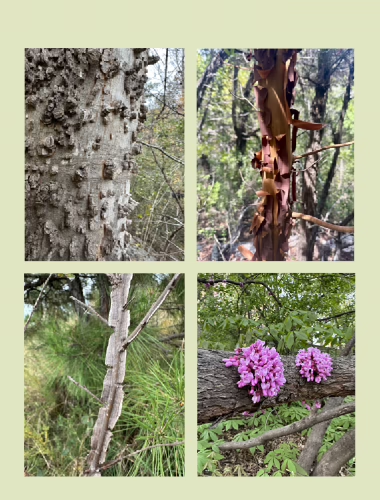
Sugar Hackberry
Sugar Hackberry (Celtis laevigata) earns praise for its distinctive bark and its support for native butterflies, with golden fall color adding ornamental appeal.
Cedar Elm
Cedar Elm (Ulmus crassifolia) is celebrated for its corky branch texture, adaptability, and welcome habit of volunteering into suitable spaces.
Texas Madrone
Texas Madrone (Arbutus xalapensis) brings one of the most striking bark displays in the state, especially after rain, when its peeling copper tones seem to glow.
Eastern Redbud
Eastern Redbud (Cercis canadensis var. canadensis) offers an early-season burst of pink through cauliflory, the trait that allows flowers to emerge not only from twigs but directly from older branches and trunks.
Together these species show that planting for heat tolerance does not have to mean sacrificing character. Native trees can deliver resilience, ecological value, and unforgettable texture at the same time.
Did you like this article? It’s from our Summer 2026 Texas Native Plants magazine. Read more here