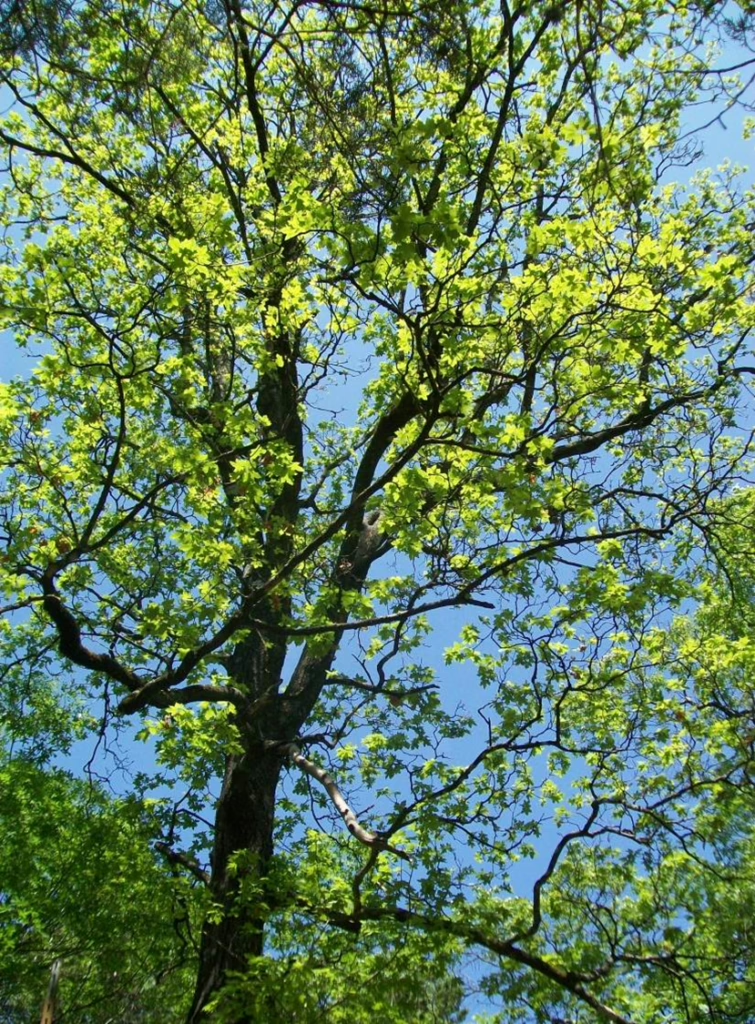
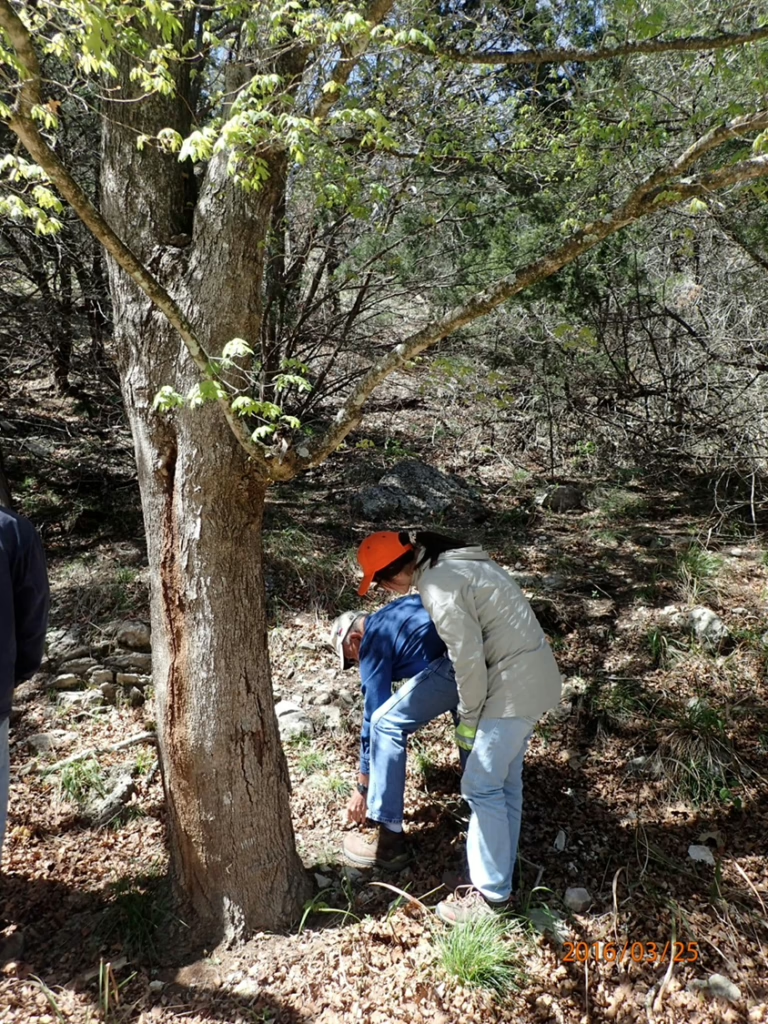
Join us to learn more about what deciduous trees are doing in Central Texas. Our speaker, O. W. (“Bill”) Van Auken, Ph.D., is a Professor Emeritus in Integrative Biology at the UTSA College of Sciences. He holds a Ph.d. in Physiology, and M.S. in Zoology, both from the University of Utah, and a B.S. in Biology from High Point College. Since 1969 he has lived and worked in Central Texas as a Researcher and Professor in the fields of plant ecology and biology. His research interests include physiological plant ecology and woody plants. His impact on conservation and natural resources extends throughout the region and beyond.
Dr. Van Auken will be discussing the state of deciduous trees and other woody plants within the Edwards Plateau region and the pressures they face.
The meeting will start with a social time at 6:00pm, at Hunke Gathering Hall at Herff Farm, 33 Herff Road, Boerne. Announcements will begin at 6:45pm, followed by the presentation. For the social time, please bring any snacks/appetizers/desserts that you would like to share.