

February 2025 Presentation by Craig Hensley – Naturalist and Educator
Bringing the Natural World Home Using Native Plants: A Personal Journey
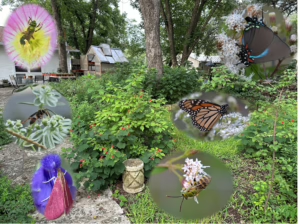
The use of native plants in landscaping our yards, parks and elsewhere continues to grow in popularity. The challenge for many comes in how to start, where to get plants, and how to best care for them. Naturalist and educator Craig Hensley will share his journey into the world of native plants, from growing them to enjoying the flush of pollinators and other critters that were invited back, as a result. He’ll share his observations of what species seem preferred by his “new neighbors,” as well as what you might expect by venturing into this life and community-altering adventure.
Craig Hensley is a lifelong learner, naturalist and educator, having spent more than 40 years engaging audiences from Minnesota to Texas about the wonders of the natural world from birds and butterflies to the night sky, native plants, and everything in-between. He has developed a knack for growing a wide variety of native plants and through those planted in his and wife Terry Lashley’s yard has invited a ever-increasing diversity of fauna, from bees, butterflies, flies, wasps, moths and beetles to those critters that eat them, and those that eat those. Craig has a B.S. in Fisheries and Wildlife Management and a M.S. in Zoology, and has worked for Texas Parks and Wildlife Department for more than a decade, as an interpreter and resource specialist at Guadalupe River State Park and for the past five years as one of two Texas Nature Trackers Biologists. He is father to son Dr. Noah Hensley, PhD. and daughter Dr. Jennifer Hensley, a pediatrician, and grandfather to four girls and one boy.
View Recording of Lecture
