Many Society members have had interactions with our Administrative Assistant Renata Lucia since she joined the Native Plant Society of Texas staff in early 2022. However, not many may realize she is also a working artist in her off hours. She currently has a solo exhibition on view at Art League Houston titled “Can’t See the Forest,” which will end this Saturday April 20, 2024, when she’s giving a 1 pm artist talk which is open to the public.
She describes the exhibition as ecological drawings, printing plates, and collagraphs that are equal parts warning, love letter, and documentation delivered in trees. The title is borrowed from the phrase “can’t see the forest for the trees,” to highlight how focusing on the wrong details can lead to failure to notice what’s important as an ecological whole. “I am striving to shift aesthetics to a wilder landscape, inspire wonder, and encourage local ecosystem conservation through art.” As an artist, naturalist, and environmental advocate, her practice is rooted in regular engagement with her environment through plein air studies, volunteer work for local nonprofit organizations, naturalist excursions, and ecological study.
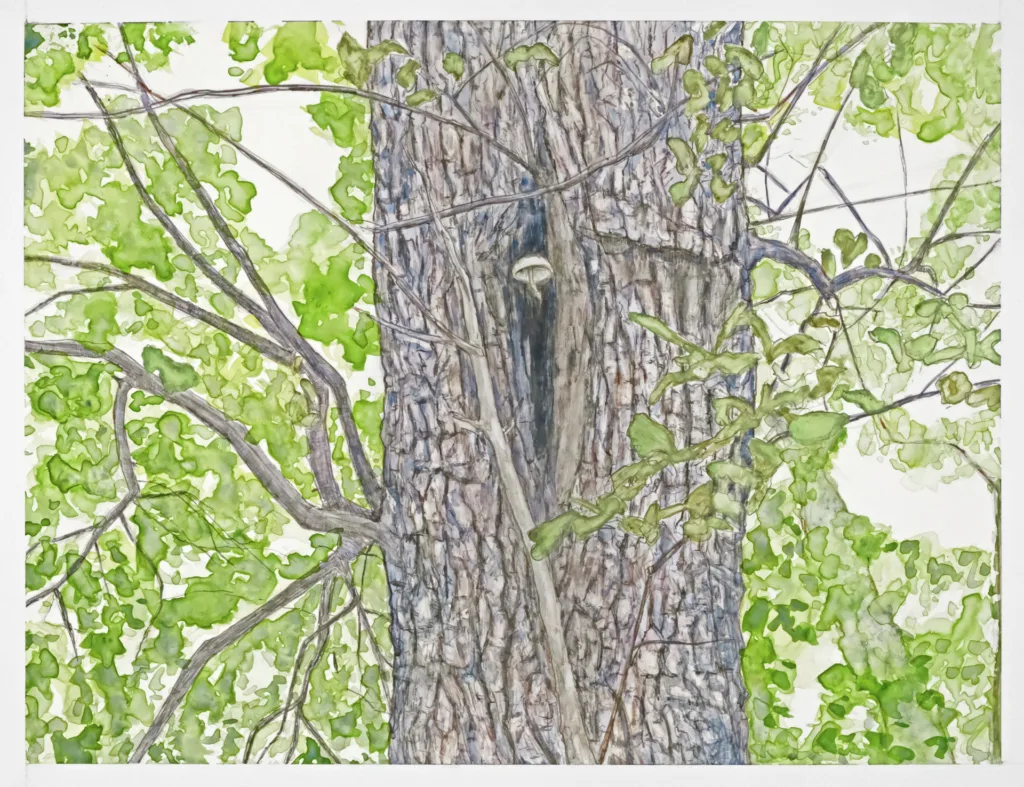
Her “Wildwoods” drawing series features tree portraits from those interactions in Houston neighborhoods, Texas State Parks (including the now-lost Fairfield Lake State Park), and the Russell Farm Art Center in North Texas. These graphite and watercolor images all include overlooked microhabitats within the trees, tree holes and hollows. “I learned some fascinating things about communications and interactions between trees, tree mortality, and tiny ponds and hanging aquaria with freshwater organisms in the trees while working on this series.”
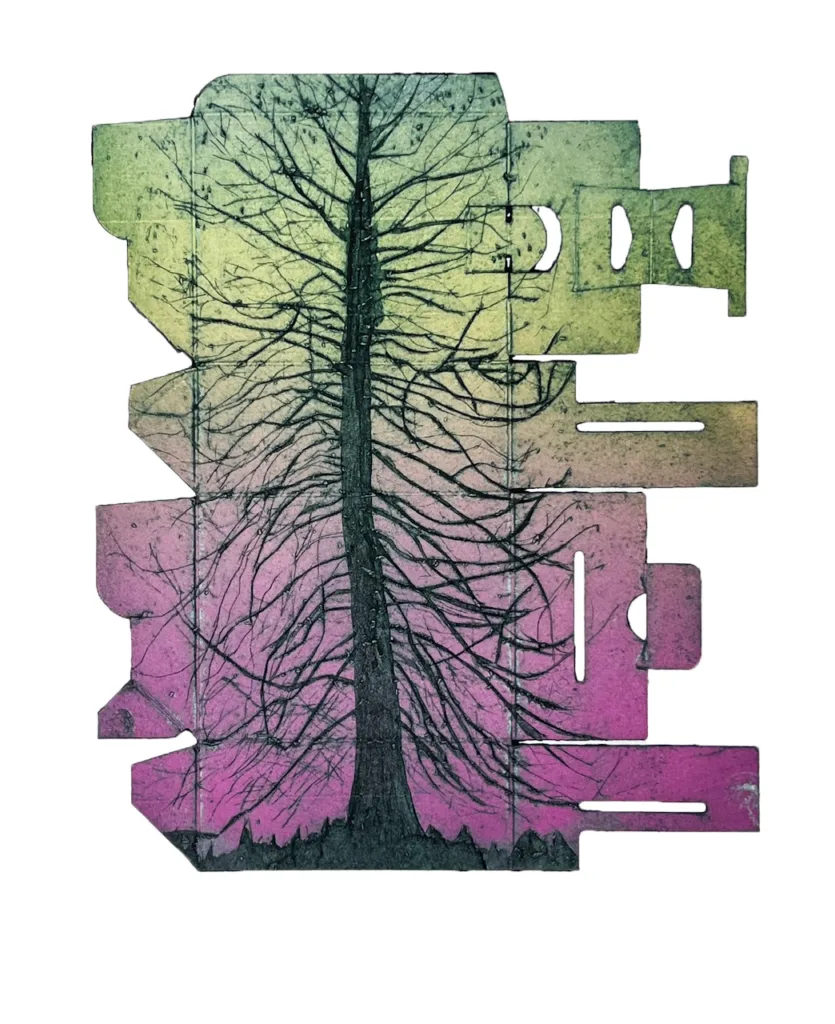
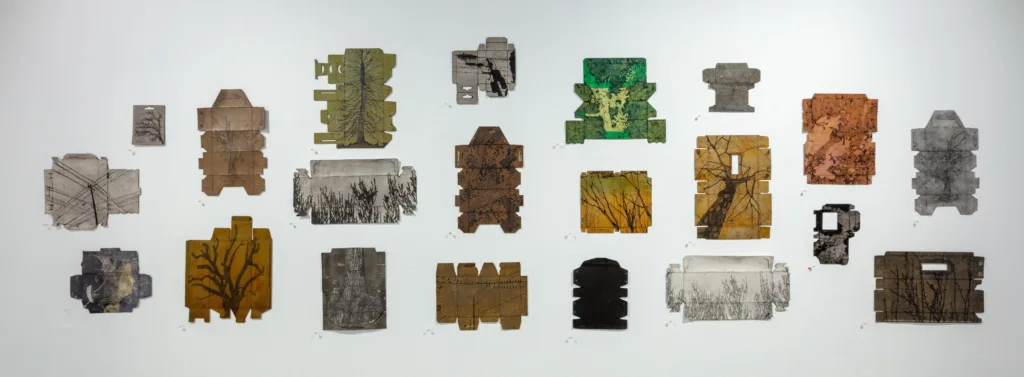
Her “Sylvan Transformations” collagraph print series forefronts disturbance, featuring trees transformed to ubiquitous packaging materials, to collagraph printing plates, and then framed images on paper. The prints are created by carving tree imagery into repurposed flattened packaging (such as unfolded printer cartridge or pasta boxes) to create printing plates that are intaglio printed or viscosity printed (multi-color printing that incorporates relief and intaglio techniques). The imagery includes healthy trees and snags, deformed urban trees, wooden power poles (former trees), microhabitats, and consequences of habitat loss. Sunsets depicted in the viscosity prints offer both end-of-day comfort and warning of the impending climate crisis. The printing plates are also presented to highlight the materiality and presence of the trees and clarify the printing process. One work from this series has also traveled to the Stephen F Austin University 2024 Texas National Exhibition, in Nacogdoches, on view now through June 20th 2024 at the Cole Art Center.
She’s already at work on her next show, an October 2024 exhibition with four other Houston-area artists entitled Solastalgia. Coined by philosopher Glenn Albrecht, the term solastalgia “encapsulates the emotional distress caused by environmental degradation experienced while remaining in one’s home environment. A sensation of homesickness while still at home.” This exhibition is planned for San Jacinto College South in collaboration with local professors and is expected to include work on the Brio Superfund site, local species extirpations (Lucia’s work), the effects of oil and gas industry on local lands, and other topics.
On View Now:
Can’t See the Forest through Saturday 04/20
Artist Talk Saturday 04/20 at 1 pm
Art League Houston, 9-5 PM
1953 Montrose Blvd, Houston, TX 77006
2024 Texas National, through June 30
Cole Art Center
329 E Main St, Nacogdoches, TX 75961