

Our special anniversary event on October 7th brought together current members, past members, and lots of friends and supporters to celebrate 25 years of working together for native plant conservation and education in the Texas Hill Country.
About 100 people came out to honor our chapter’s story—everything we’ve accomplished and all the passionate folks who helped us get here. The evening had a warm, welcoming feel, full of memories, laughter, and a renewed sense of why we do what we do: Supporting the NPSOT mission to promote native plants and landscapes.
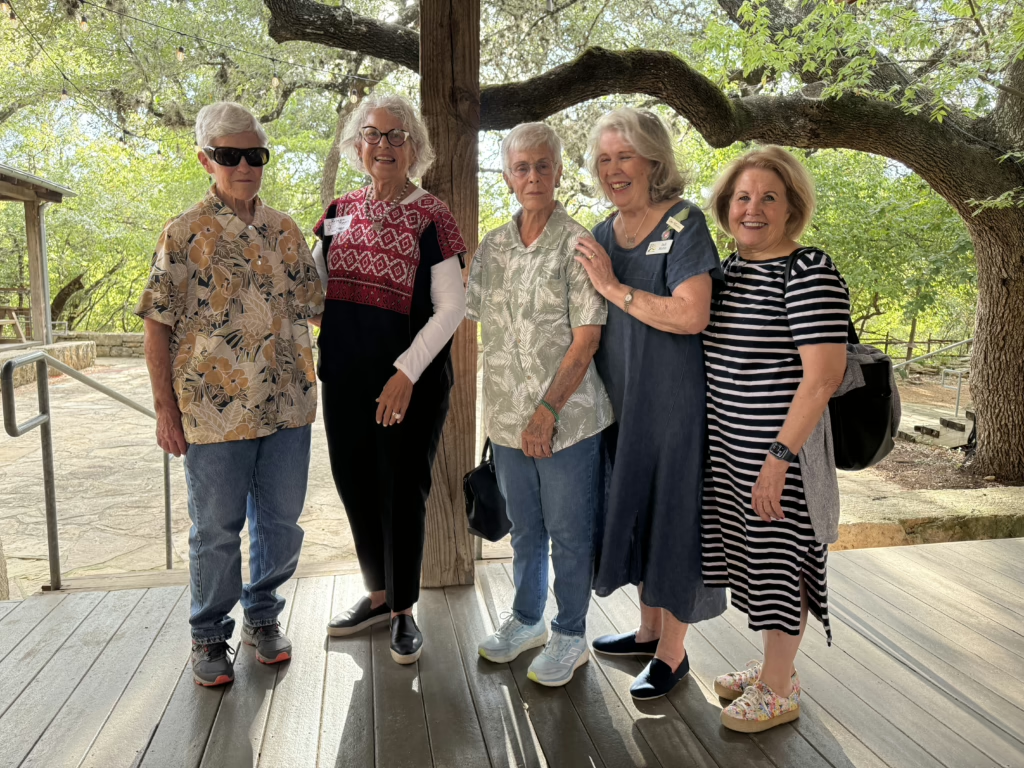


To see more photos, click here!
One of the biggest highlights was having several of our founding members with us—Suzanne Young, Judi Martin, Rebecca Rogers, Kathy Ward, and Bebe and Mary Fenstermaker. Judi and Rebecca shared personal stories from the chapter’s early days, remembering how a shared love of native plants and concern for our local environment inspired the group to form back in 2000. Their reflections were a great reminder of how a small group of committed people can spark something that grows far beyond what they imagined.
We also enjoyed a look back at the Boerne Chapter’s many accomplishments over the past 25 years. From community education and outreach to plant sales, partnerships, and restoration work, our chapter has played an important role in promoting native plants throughout the Hill Country.
Together, we celebrated some incredible achievements—like creating seven native plant demonstration gardens around Boerne, which show just how beautiful and tough our native species can be. We also recognized one of our biggest long-term projects, Bigtooth Maples for Boerne. Thanks to generous support from the Lende Foundation, nearly 2,000 Bigtooth maples were distributed over 15 years to residents, schools, and local businesses, helping enrich the natural character of our community.
We honored the impact of the long-running Boerne Star newspaper column written by chapter founder Bill Ward and native plant advocate Delmar Cain, which brought native plant education into homes across the area.
Of course, our spring and fall native plant sales got a shout-out too. Not only have they become a well-loved tradition, but they also help residents get their hands on locally adapted plants while supporting sustainable landscapes and wildlife habitat throughout the region.
Projects like Operation N.I.C.E. (Natives Instead of Common Exotics) have helped guide people toward choosing native plants over invasive ones. And our newer Pollinator Garden Assistance & Recognition Program (PGARP) has encouraged homeowners and organizations to create pollinator-friendly spaces, offering guidance, plant advice, and recognition for those helping support native wildlife.
“This anniversary is not just a celebration of years, but of people—those who have worked tirelessly to protect our natural heritage,” said Felicia Zbranek-Zeitman, our chapter president. “It was heartwarming to see so many familiar faces and new ones as we look forward to the next 25 years.”
Since its start in 2000, the Boerne Chapter has grown into a vibrant, community-centered group while staying connected to the mission of NPSOT statewide.
To see photos of the event, please follow this link
