San Antonio Chapter

Citizen Science in Action: Discovering Native Plants Through the City Nature Challenge and Beyond

San Antonio Chapter Meeting March 2025

March 2025 Presentation by Peter Hernandz and Jane Weeden
Citizen Science in Action: Discovering Native Plants Through the City Nature Challenge and Beyond

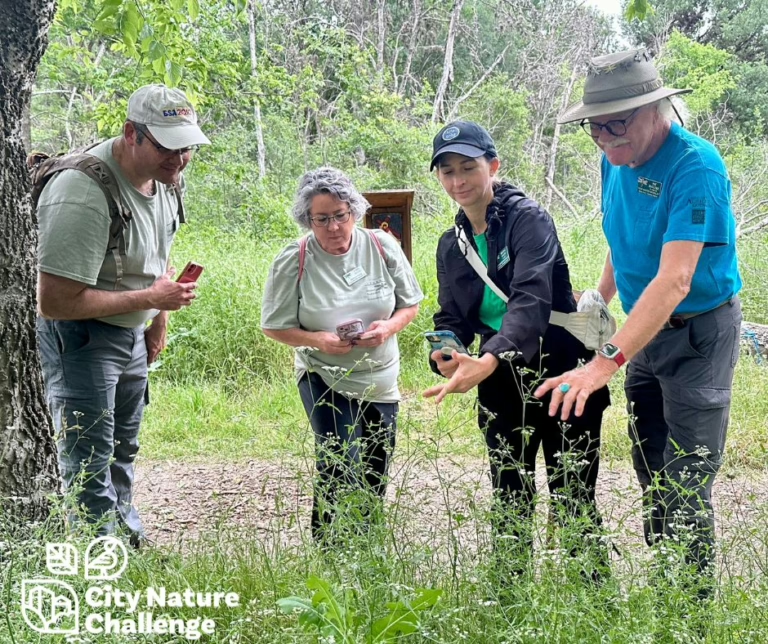
Discover how NPSOT members can harness iNaturalist (iNat) to support biodiversity and make a meaningful impact during the City Nature Challenge (CNC)! Peter will introduce iNat, exploring its powerful features, global reach, and local significance, including insights from Texas Parks and Wildlife Department (TPWD) data. Jane will share how you can contribute during CNC weekend (April 25–28) by documenting native plants and entire ecosystems, forming teams, and leading nature walks. Looking ahead to 2025, get involved in hands-on events, ID parties, and training sessions to sharpen your skills and help San Antonio stand out in the CNC!

Jane Weeden – Co-Coordinator of the City Nature Challenge (CNC) for the San Antonio Metro Area (2024-2025) and an iNaturalist staff member (Accounting Associate) since 2024. Jane is most known for her passion about promoting the iNaturalist mission.

Peter Joseph Hernandez – A seasoned iNaturalist user since 2015 and CNC Co-Coordinator since 2020. Peter is a member of the Alamo Area Master Naturalists and Guadalupe County Master Gardeners. A retired Senior Director in the telecommunications industry (2015), he has since dedicated himself to understanding nature and advocating for biodiversity through citizen science and iNaturalist.

Both presenters are avid photographers who continually refine their skills to document the biodiversity around us. Together, their coordination and leadership efforts in 2024 led the San Antonio Metro Area to become national champions in the City Nature Challenge and achieve 3rd place globally.

View Recording of Lecture

About the Region

2026 Fall Symposium Logo

This low-elevations region of Texas extends inland from the barrier islands, about 60 or so miles, and stretches from Brownsville to Louisiana. In total, it covers about 9.5 million acres, with a high point of 150 feet in elevation. More than 1000 species of plants can be found in this region. On the southern end, species more common in Mexico (such as Sabal mexicana) and Central America occur.

The barrier islands provide us with dune systems, and clay flats to the inland side, which have species found in these areas alone. Many plants here, such as Ipomoea pes-caprae (beach morning glory), can be found throughout tropical regions of the globe. I’ve encountered the same species on the beaches of Guam.

Once inland, vast marshes and wet prairies occur. Occasionally, oak (Quercus fusiformis) groves can be found. Common grasses include species of Bothriochloa, Paspalum, and Sporobolus; eastern gamagrass (Tripsacum dactyloides); and switchgrass (Panicum species). Many rivers and creeks cut through the Gulf Prairies, and along these riparian areas various species of trees, Sabal minor, and other plants adapted to clay soils can be found. Due to overgrazing, farming, and fire suppression, woody species such as mesquite (Prosopis glandulosa) and huisache (Acacia farnesiana), and invasive species such as chinaberry (Melia azedarach), Brazilian pepper (Schinus terebinthifolius), and Chinese tallow (Sapium sebiferum) have increased and displaced our native flora.

Source: Wildflowers of Texas by Michael Eason