

NICE! Plant of the Month
(Chrysactinia mexicana A. Gray)
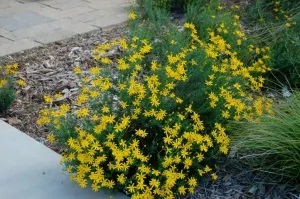
Family: Asteraceae (Aster Family)
Type: 1-2 ft. tall and wide, evergreen shrub, very aromatic leaves with woody base, forms rounded mound.
Natural Habitat: Lower Edwards Plateau, Trans-Pecos into NM and Mexico on caliche and limestone south facing hillside outcrops.
Growth: Slow to moderate; to shape trim tips after flowering or remove woody stems from beneath.
Deer Resistance: Very high, in most all situations, and rabbits don’t like the resinous leaves either!
Wildlife: Cover for small, ground dwelling critters, nesting sites for birds, and nectar source for insects.
Light Tolerance: Full sun is best; leggy growth in shade.
Flowers: Fragrant, bright yellow, daisy like (composite), ½-1 inch flowers cover and extend up from branch tips on slender 1-3 inch peduncles; mostly in spring then occasionally after rains into summer and early fall.
Fruit: Very small, 1/8 inch with bristly tip; collect and sow seed in late fall or early spring; may reseed.
Leaves: Twigs heavily covered by tiny, narrow, needle-like, dark green leaves; very fragrant when touched.
Water Requirements: Extremely drought tolerant once established; overwatering will cause spindly growth.
Soil Requirements: Caliche, limestone, sand, loam or igneous based only in well drained locations.
Planting Instructions: Space shrubs 1-1.5 feet apart to form a ground cover. Dig a hole at least two times wider than, but the same depth as the root ball in the nursery container. Sides of the hole should be irregular, not smooth. Remove plant from container, taking care to support the root ball. Loosen exterior roots thoroughly but gently with your fingers. If the plant is root-bound and cannot be loosened by hand, the outer roots may be cut in several places. Lift the plant by the root ball and place into the hole. Backfill hole, using soil dug from hole. Do not add any soil to the top of the root ball. Gently firm the soil with your hands, but do not tamp it down. Place 2-3 inches of mulch over the bare soil around planting and the root ball but not touching the base of the plant.
Watering Instructions: Water deeply after planting to settle soil around roots. Then water every 7-10 days, or more often as needed, during the first growing season. Before watering, check for soil moisture at a depth of an inch or two at the edge of the root ball. Skip a watering after a rainfall of 1 or more inches. Maintain this watering schedule until the first fall. Reduce watering during the cool fall and winter months. In a “normal” year, no watering may be necessary during the fall and winter, but during a dry period, monthly watering will be needed. Second Spring and thereafter: Water 1-2 times monthly only during periods of drought. Once established, this native shrub will survive with little or no supplemental irrigation.
NICE! Tip: Mass this heat, freeze (to 0oF) and drought tolerant small shrub for dramatic springtime show on sun exposed hillsides, in rock or cactus gardens, or next to buildings or walls where reflected, hot sunlight keeps other things from growing due to harsh conditions. Also, use as border plant for native flower bed areas that are not watered often and are in full sun. You won’t be able to resist touching the leaves as you pass by to release the aromatic fragrance.
Look for the NICE! Plant of the Month signs and information sheets on your next visit to a participating Boerne nursery. And thank you for supporting native plants by using them in your landscapes.
