


These days a lot of gardeners and landscapers make a point to include plants that attract butterflies. One of the best butterfly magnets is blue mistflower, the Operation NICE! (Natives Instead of the Common Exotics!) choice for September.
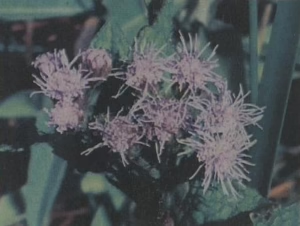
Blue mistflower has clusters of “fuzzy” blooms, making it look like the old-fashioned garden plant ageratum. Indeed, one common name for blue mistflower is wild ageratum. Another is blue boneset. Despite the names, the color is more lavender than blue.
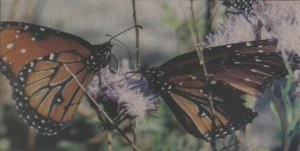
This plant grows in many-branched clumps that get up to four feet tall, usually shorter in the local calcareous soils. The 1-to 3-inch-long leaves are either deltoid with blunt-toothed margins or highly lobed, according to species. During cold winters, mistflower dies back to the ground, but it never fails to sprout up again in the spring. All around, it is a pretty easy-to-grow garden plant, and most of the time from late summer through fall, the blue mistflower is covered with blooms that attract a wide variety of butterflies.

The blue mistflowers in our yard are in full sun most of the day. They are fairly drought-resistant, but during hot, dry spells, they do appreciate a little watering.
Apparently, in this area mistflower also grows well in dappled shade, and it does not require good drainage.
So far, the deer have not browsed our mistflowers. Just for good measure, I spray the plants with a stinky liquid every once in a while, because blue mistflower looks to me like something deer would love to nibble.
Blue mistflower is widely available in nurseries, and hardy cultivars have been developed from the native species. One on two bunches in many gardens will be enough, because it spreads by rhizomes and over time will occupy a large patch. However, roots are shallow, and it is easy to control.
The Boerne chapter of the Native Plant Society of Texas provides free planting and care instructions for blue mistflower at nurseries participating in Operation NICЕ! (Hill Country African Violets and Nursery, Maldonado Landscape and Nursery and Medina Garden Nursery) as well as at the Cibolo Nature Center.
Nurseries probably carry blue mistflowers under the scientific name of Eupatorium, which used to be the accepted genus for a whole group of similar plants. The taxonomists, in their wisdom, have put blue mistflowers in the genus Conoclinium.
The species that grows in eastern Texas and into the eastern edge of the Hill Country is Conoclinium coelestinum. A frillier-leafed species, C. greggii (dissectum), grows in western Edwards Plateau, the Trans Pecos and farther west. Both these species or their cultivars are in the nursery trade.
The West Texas blue mistflower is easier to keep in Hill Country gardens, because it requires less water. The one native to this part of Texas grows close to streams and other wet areas.
My favorite native “Eupatorium” is no longer in that genus either. It is the thoroughwort or white boneset, once named Eupatorium havanense and now called Ageratina havanensis by many botanists.
Whatever the taxonomist calls them, you can’t go wrong by including mistflowers, blue or white, in your garden.
In the wild, the bushy thoroughwort is confined mostly to the Edwards Plateau, and so it makes an excellent small shrub for Hill Country yards. It may have a subdued bloom during the spring, but during the fall, thoroughwort is covered with highly fragrant white flowers.
If you are interested in what butterflies occur in your area in the fall, plant a thoroughwort, and they’ll all come.
