

NICE! Plant of the Month
(Ulmus crassifolia)
Family: Ulmaceae
Other Common Names: Olmo
Type: Deciduous medium-sized shade tree with a single straight trunk.
Natural Habitat: Oklahoma to Central and South Texas, east to Arkansas and Mississippi.
Growth: Moderately fast, mature height 30-60 feet with a narrow rounded to irregular crown.
Deer Resistance: Leaves browsed by deer. Protect trunks of all young trees from deer rubbing.
Wildlife: Seeds and buds eaten by variety of small mammals and birds. Larval host plant for butterflies such as Mourning Cloak and Question Mark.
Light Tolerance: Full sun to part shade. Prefers woodlands, ravines and open slopes.
Flowers: Clusters of small inconspicuous green flowers at leaf bases in late summer to fall.
Fruit: Small brown winged seed, about 3/8 inch long, maturing late summer to early fall.
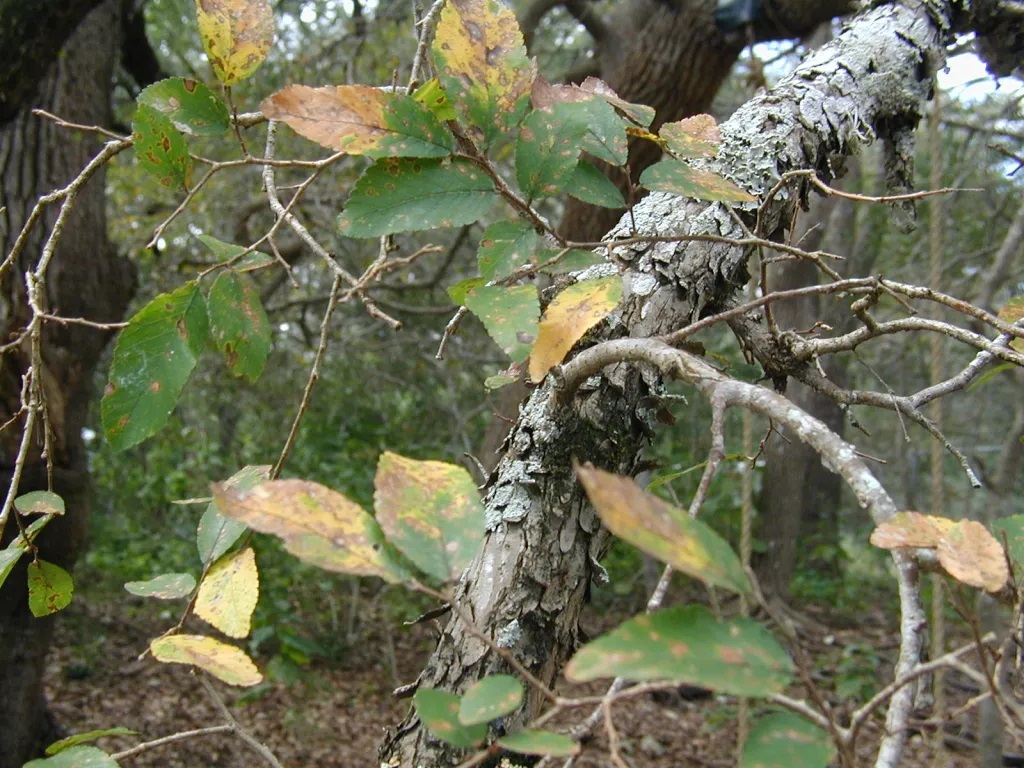
Leaves: Stiff dark green leaves with serrate margins, 1-2 inches, surface rough, yellow-gold in fall.
Water Requirements: Moderate during establishment then very drought tolerant.
Soil Requirements: Prefers well-drained calcareous soils, but adapted to wide variety of soils including sand, loam, caliche, clay and limestone. Tolerates short-duration flooding.
Planting Instructions: Space plants 20-30 feet apart. Dig a hole at least two times wider than, but the same depth as the root ball in the nursery container. Sides of the hole should be irregular, not smooth. Remove plant from container, taking care to support the root ball. Loosen exterior roots gently with your fingers. If the plant is root-bound and cannot be loosened by hand, the outer roots may be cut in several places. Lift the plant by the root ball and place into the hole. Backfill hole, using soil that was dug out. Do not add any soil to the top of the root ball. Gently firm the soil with your hands, but do not tamp it down. Place 3-4 inches of mulch over the bare soil around, but not touching the base of the plant.
Watering Instructions: Water deeply after planting to settle soil around roots. Then every 7-10 days, as needed, during the first growing season. Before watering, check for soil moisture at a depth of an inch or two at the edge of the root ball. Skip a watering after a rainfall of ½ to 1 inch. Maintain this watering schedule until the first fall. Reduce watering during the cool fall and winter months. In a “normal” year, no watering may be necessary during the fall and winter, but during a dry period, monthly watering may be needed. Second Spring and thereafter: Water monthly only during periods of drought. Once established, natives will survive with little supplemental irrigation.
NICE! Tip: Cedar Elm is easy to transplant and care for, making it a popular shade tree. Select this native instead of non-native invasive trees such as Chinaberry and Chinese Pistache.
Look for the NICE! Plant of the Month signs and information sheets on your next visit to a participating Boerne nursery. And thank you for supporting native plants by using them in your landscapes.
