

NICE! Plant of the Month
Big Red Sage
(Salvia pentstemonoides)
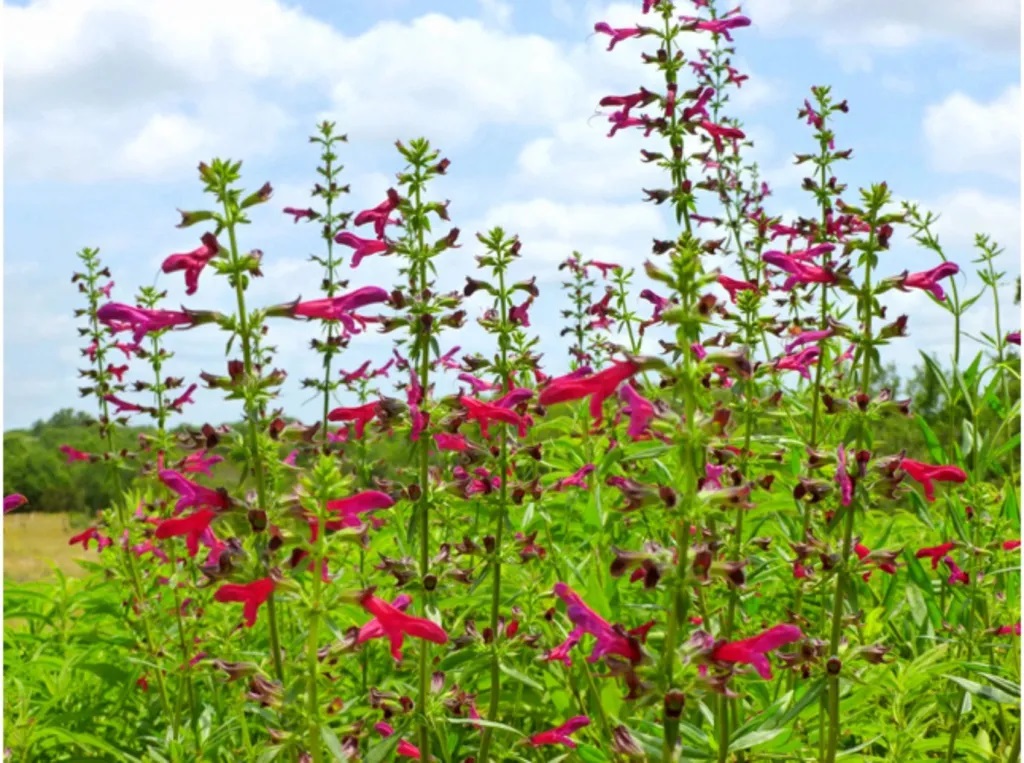
Photo courtesy of Lee Page, Lady Bird Johnson Wildflower Center)
Family: Lamiaceae
Other Common Names: Penstemon sage, Beardtongue red sage
Type: Perennial herb/wildflower
Natural Habitat: Seeps along ledges and streams in riparian habitats in central and lower Edwards Plateau. Also depressions and ravines
Deer Resistance: Low
Wildlife: Attracts hummingbirds
Light Tolerance: morning sun/partial shade/understory
Flowers: Red, raceme, conspicuous, edible
Foliage: Leaves opposite, Fragrant with a lemony odor
Bloom Period: June to October
Water Requirements: low water requirement once established
Soil Requirements: Alkaline adaptable, loam, well drained
Planting Instructions: Space plants two feet apart. Dig a hole at least two times wider than, but the same depth as the root ball in the nursery container. Sides of the hole should be irregular, not smooth. Remove plant from container, taking care to support the root ball. Loosen exterior roots gently with your fingers. If the plant is root-bound and cannot be loosened by hand, the outer roots may be cut in several places. Lift the plant by the root ball and place into the hole. Backfill hole, using soil that was dug out. Do not add any soil to the top of the root ball. Gently firm the soil with your hands, but do not tamp it down. Place 3-4 inches of mulch over the bare soil around, but not touching the base of the plant.
Watering Instructions: Water deeply after planting to settle soil around roots. Then every 7-10 days, as needed, during the first growing season. Before watering, check for soil moisture at a depth of an inch or two at the edge of the root ball. Skip a watering after a rainfall of ½ to 1 inch. Maintain this watering schedule until the first fall. Reduce watering during the cool fall and winter months. In a “normal” year, no watering may be necessary during the fall and winter, but during a dry period, monthly watering may be needed. Second Spring and thereafter: Water monthly only during periods of drought. Once established, natives will survive with little supplemental irrigation.
NICE! Tip: Salvia pentstemonoides has become extremely rare in its native habitat of the Edwards Plateau but can be found readily in nurseries and home gardens. There is a great story that details the history of discovery of this superb addition to your landscape: https://www.npsot.org/wp/story/2009/1091/
