

Bigtooth Maple

Acer grandidentatum

Other common name(s):

Big-toothed Maple, Uvalde Bigtooth Maple, Southwestern Bigtooth Maple, Canyon Maple, Sabinal Maple, Western Sugar Maple

Family:

Sapindaceae (Soapberry Family)

Plant Ecoregion Distribution Map

This map uses data from the US EPA. EPA  servers have been offline frequently so maps may not display. We are working on a solution.

Chihuahuan Deserts, Cross Timbers, Edwards Plateau
Chihuahuan Desert Grasslands, Chihuahuan Montane Woodlands, Low Mountains and Bajadas
Limestone Cut Plain
Balcones Canyonlands

Plant Characteristics

Growth Form

Tree

Height

15
to
40
ft.

Spread

10
to
15
ft.

Leaf Retention

Deciduous

Lifespan

Perennial

Habitat and Care Requirements

Soil Type(s)

Loam, Clay, Calcareous, Moist

Light Requirement

Sun

Water Requirement

Medium

Native Habitat

Woodland, Wetland or Riparian

Bloom and Attraction

Bloom Color

Yellow, Green

Bloom Season

Spring

Seasonal Interest

Fall Color, Seeds, Forage, Nectar, Pollen, Flowers

Wildlife Benefit

Browsers, Butterflies, Birds, Small Mammals

Maintenance

Slow growth rate, especially in the first few seasons. Needs well drained soil. Slightly more drought tolerant than eastern maples. A good small landscape tree. Brilliant yellow to red fall color. Benefits from 2″–4″ of mulch over and beyond the root zone. Do not allow mulch to contact tree trunk. Foliage tips may burn in hot summers. Prune only if necessary. Native habitat: moist soils of canyons in mountains and plateaus, in woodlands and riparian zones. Found mostly in the Edwards Plateau and Guadalupe Mountains but available in nurseries in other parts of Texas. May require supplemental watering outside of its native range, but do not overwater. Propagation: seed.

Comments

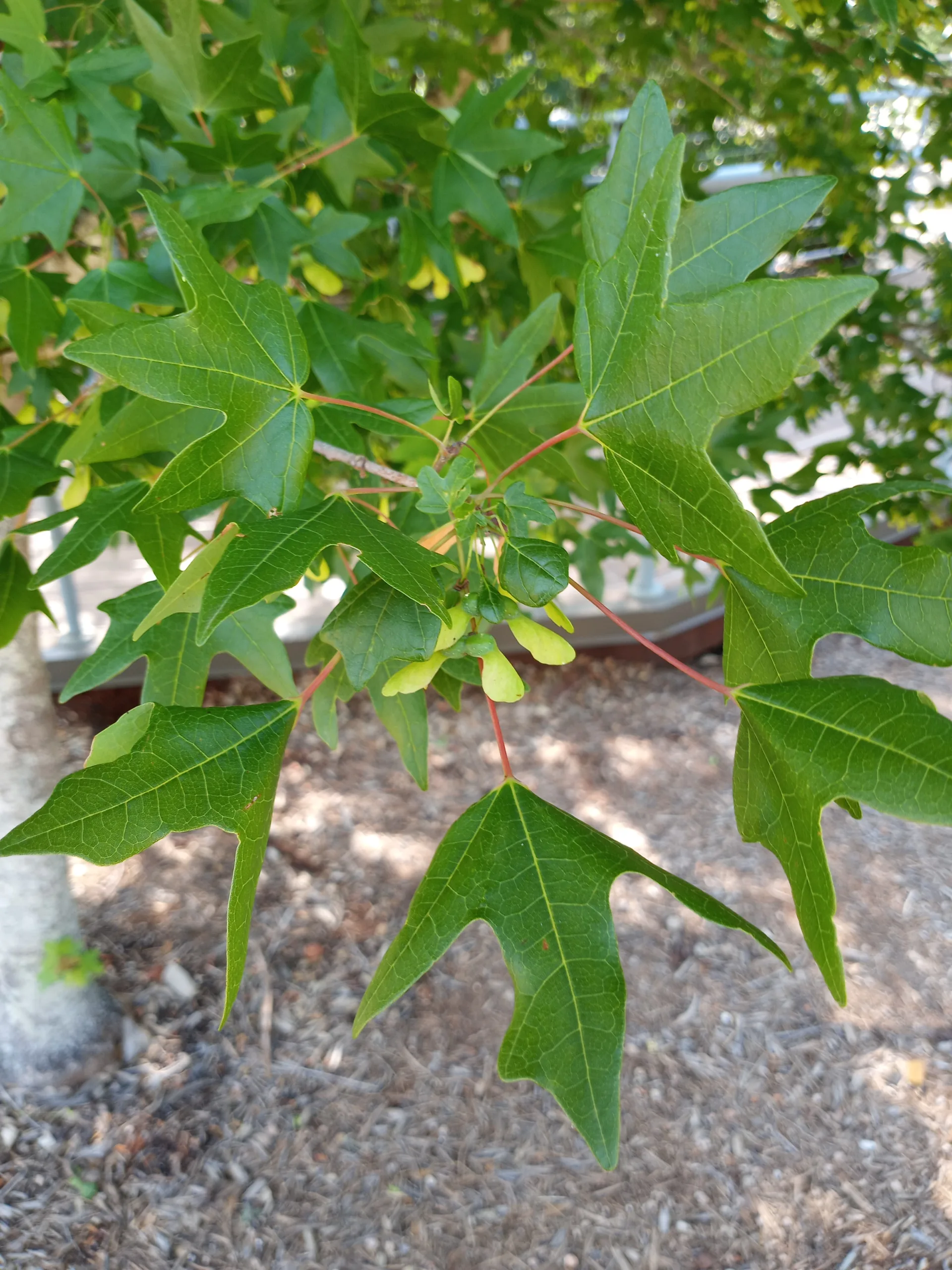
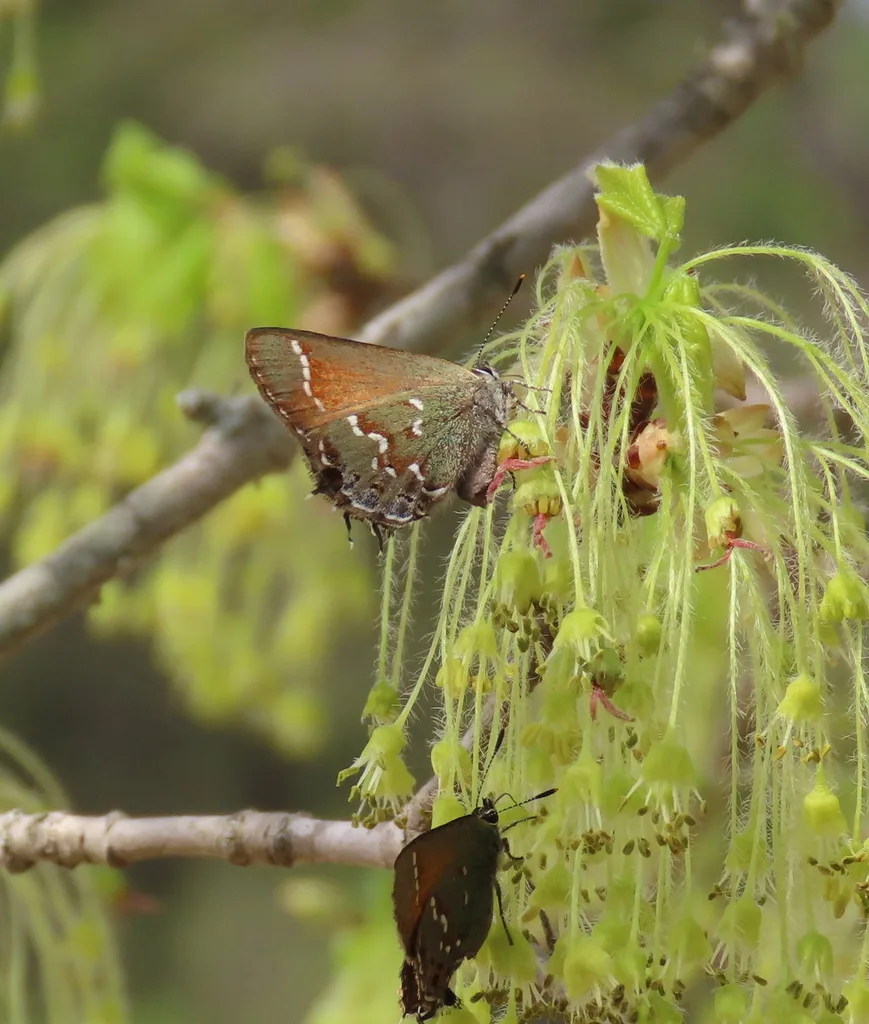
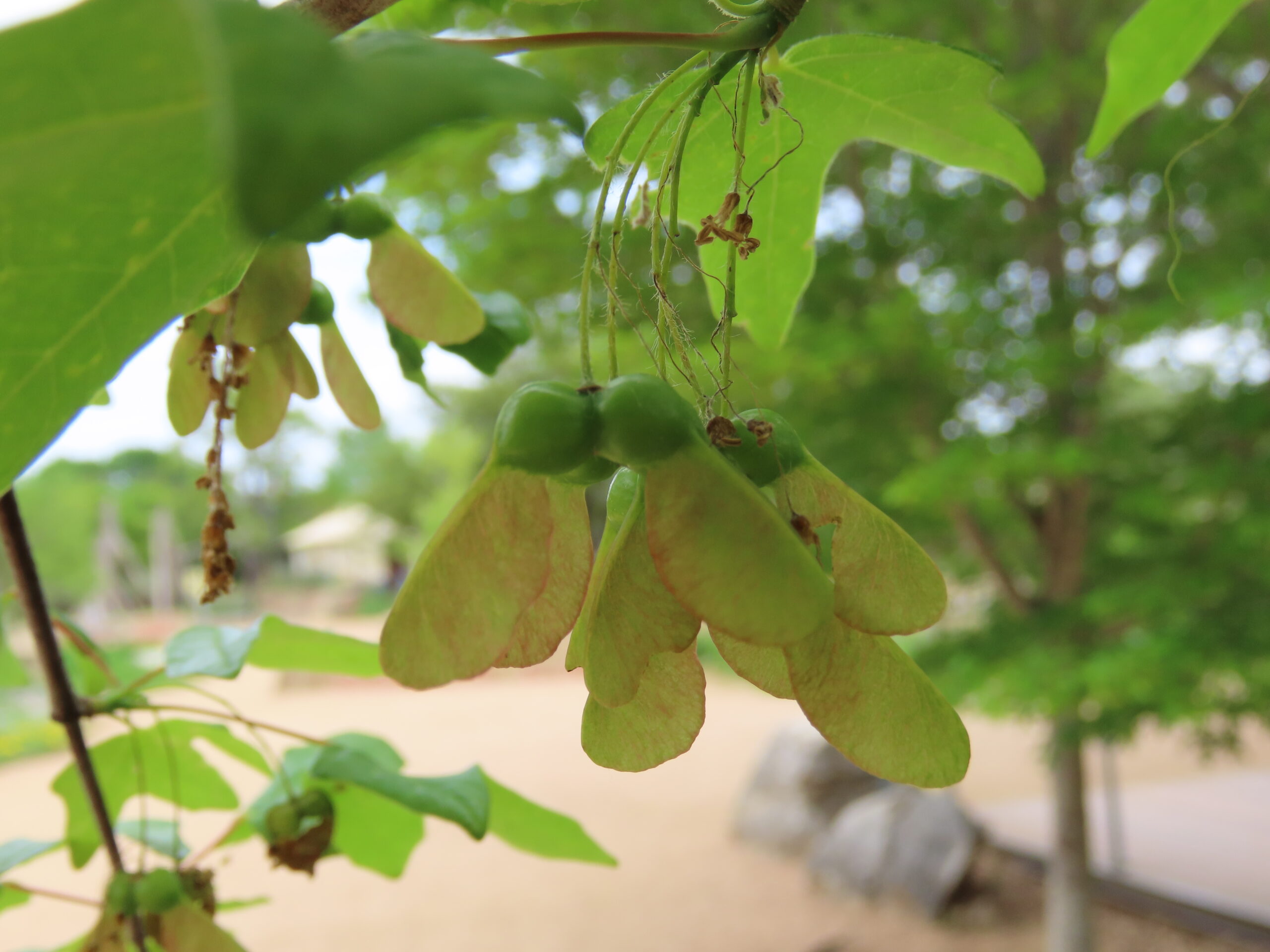
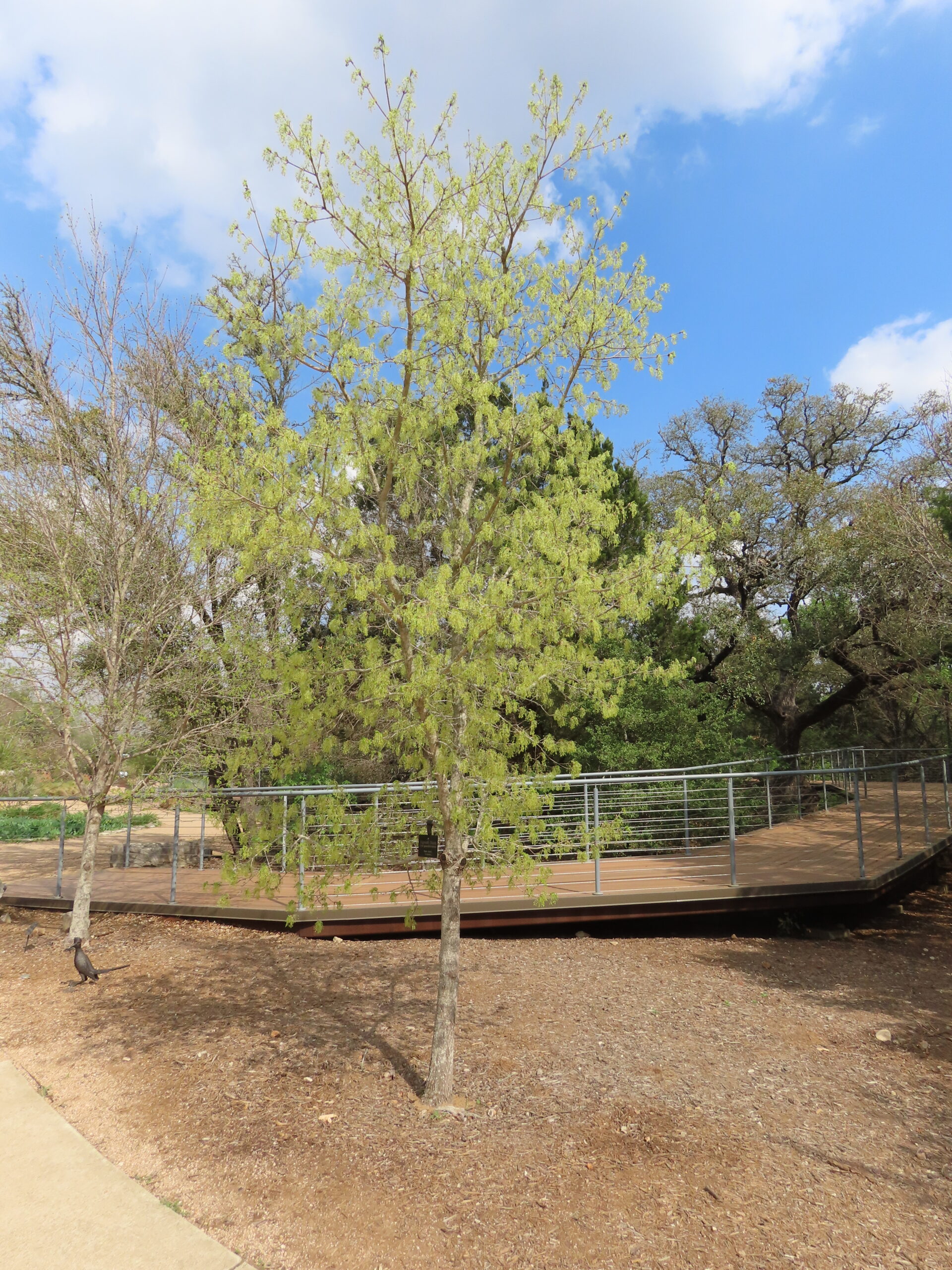
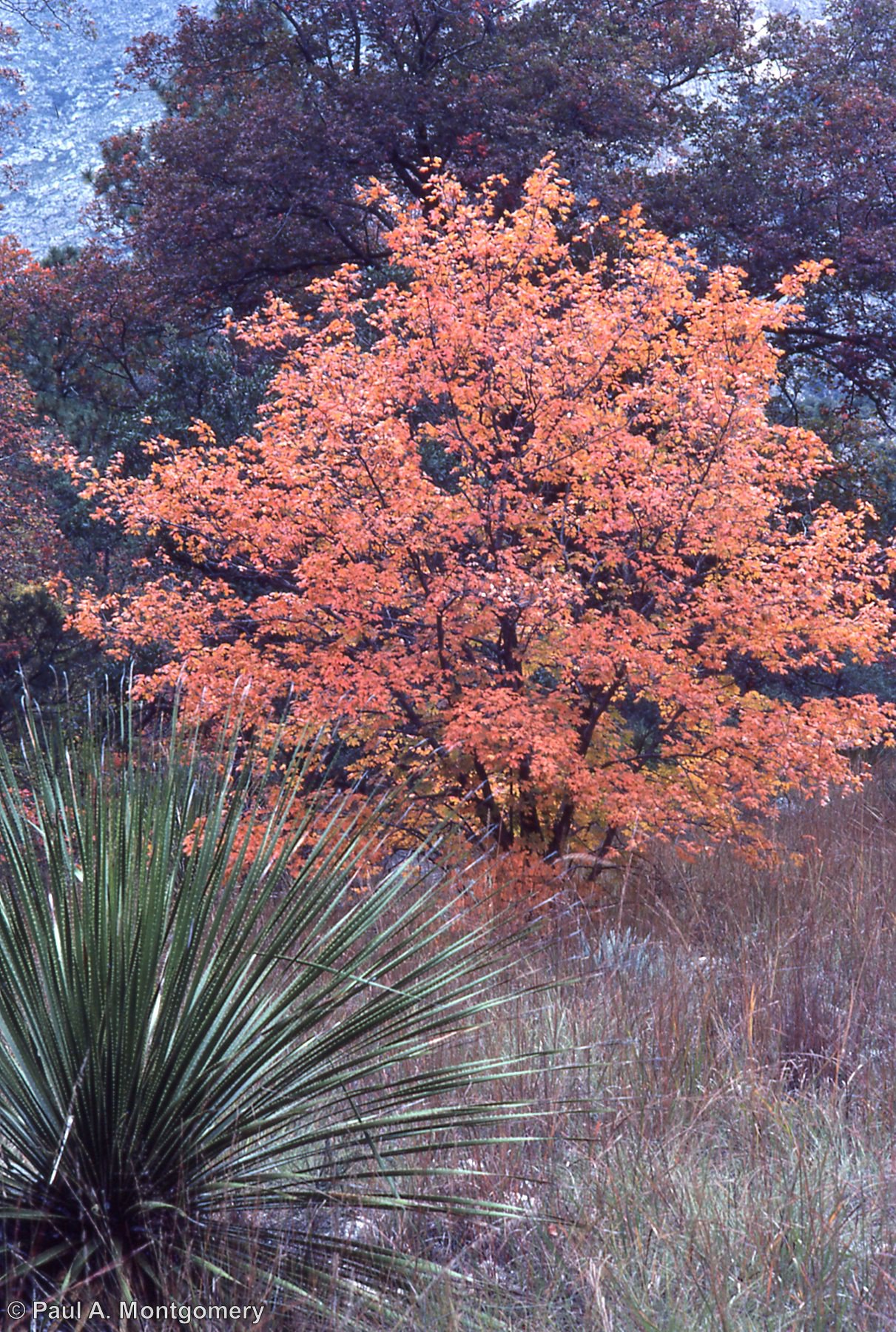
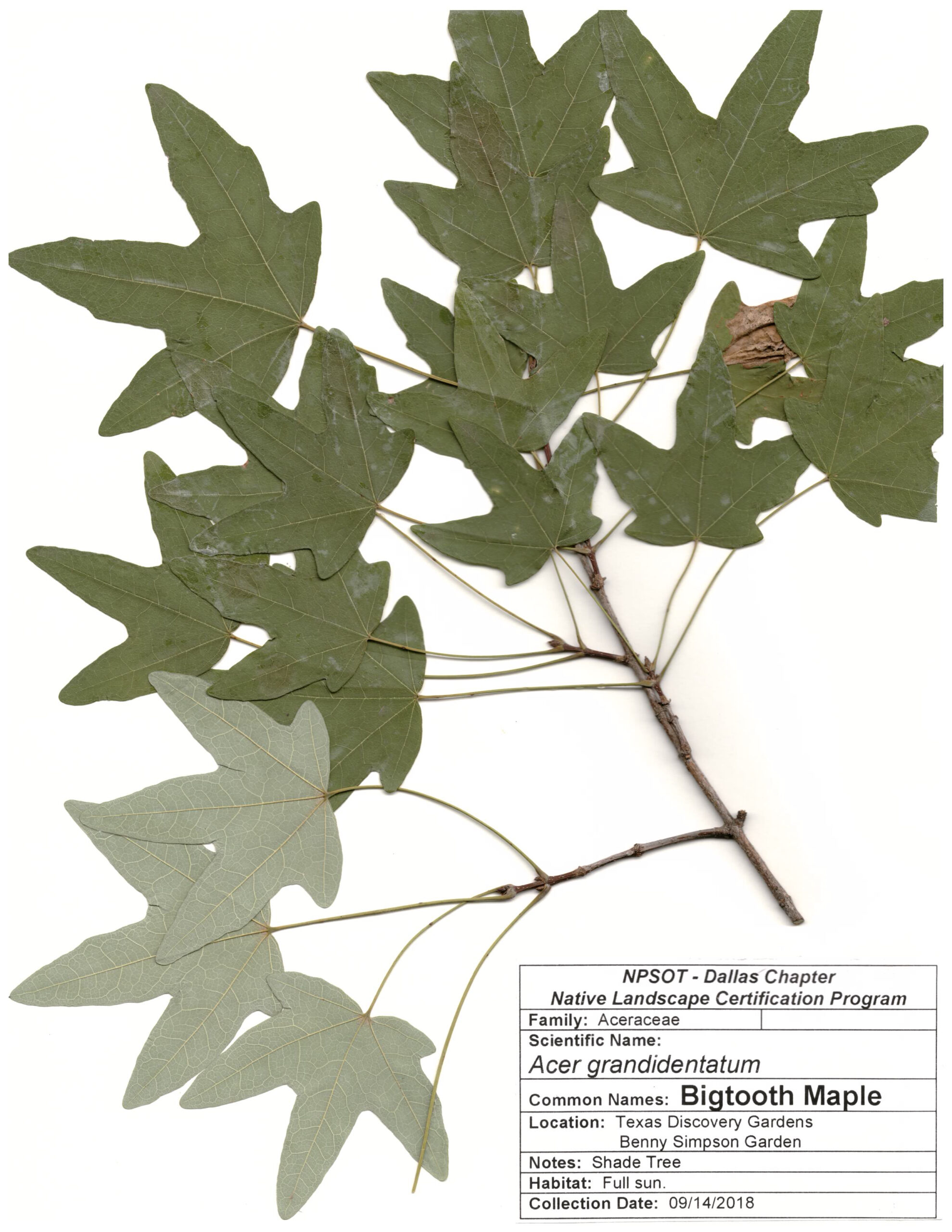
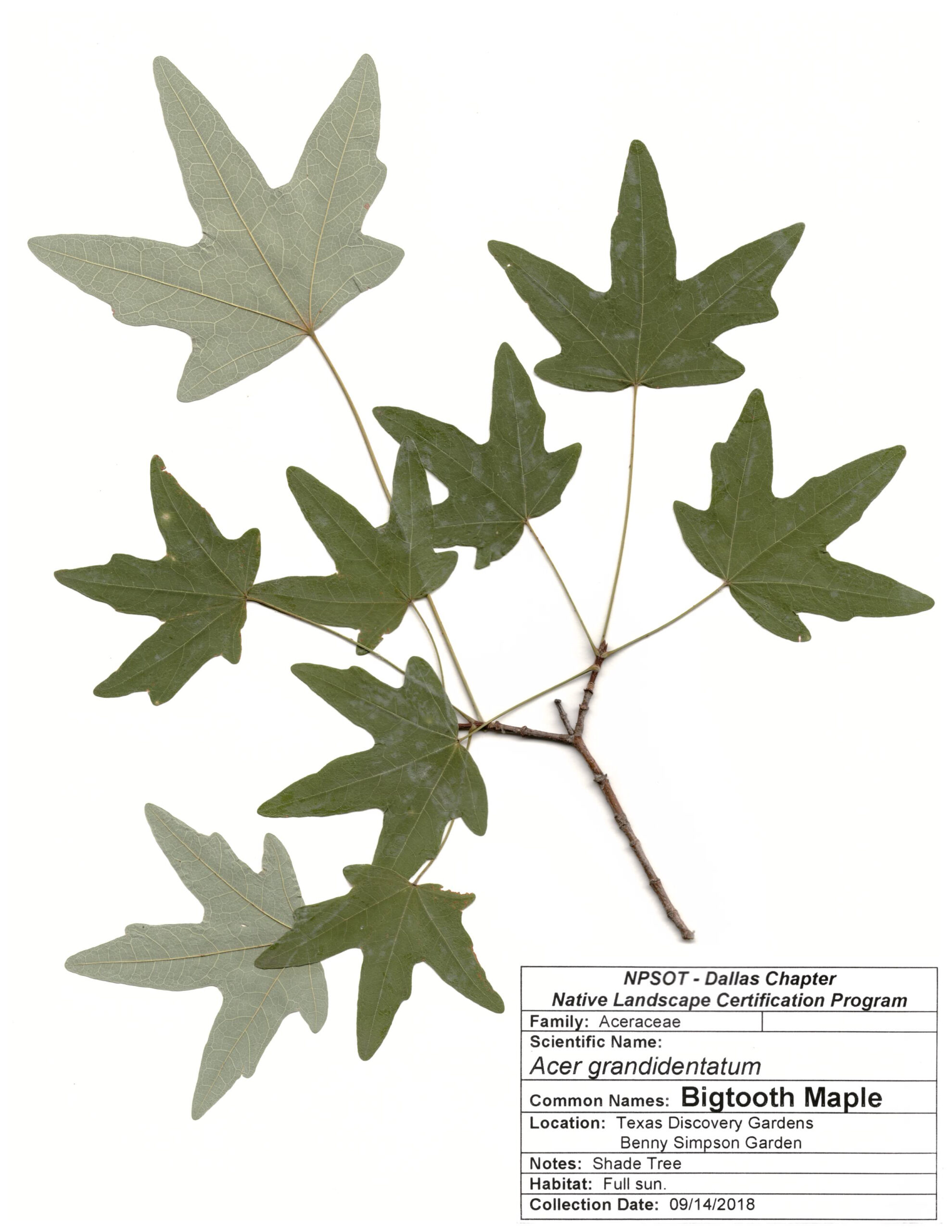
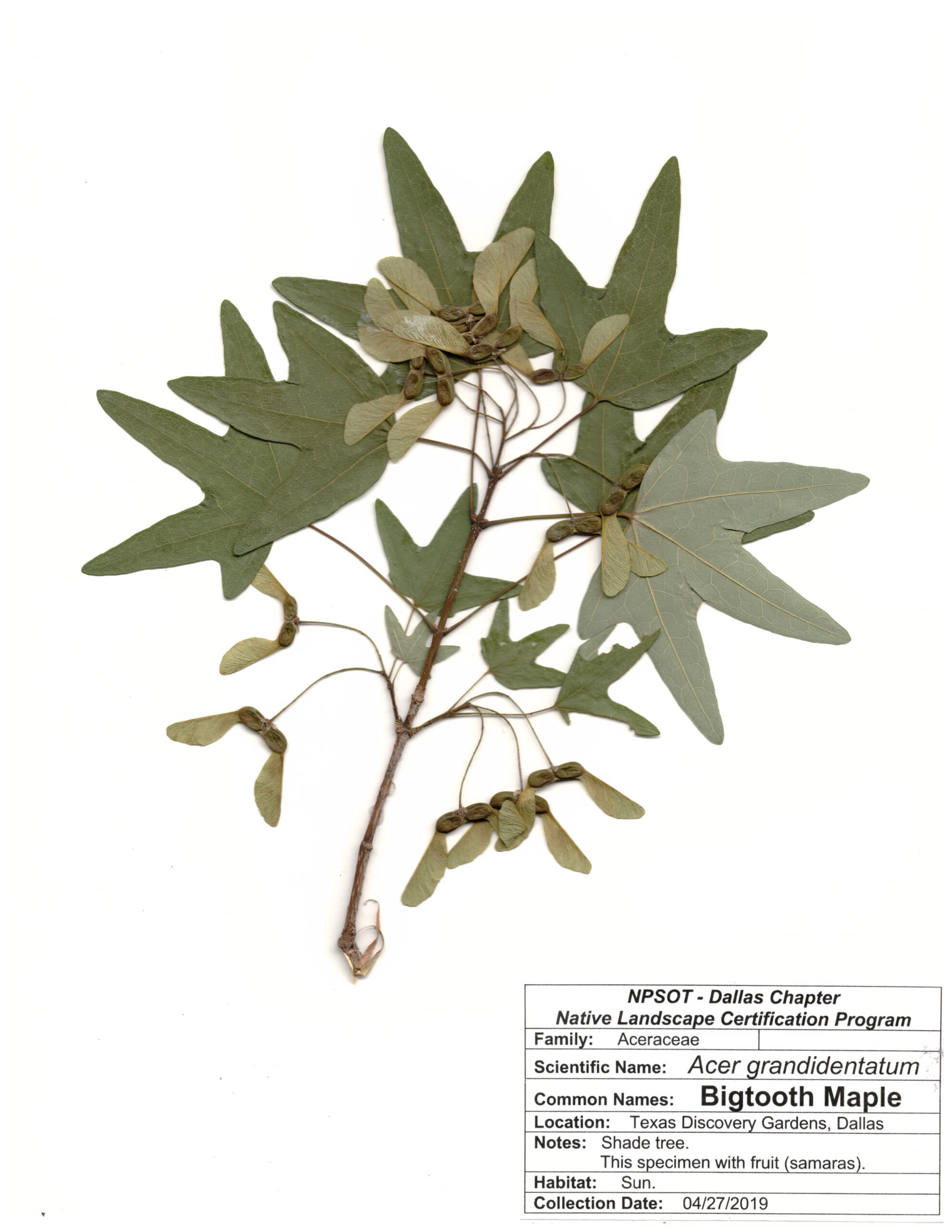
Blooms March-April. The western relative of Sugar Maple. Grows as a large shrub to small tree depending on conditions. Its bark is dark brown and scaly. The three to five lobed leaves are dark green above, with pale fuzz underneath. The scientific name refers to the large toothed leaf. Flowers are small, in hanging clusters, appearing before the leaves. The flowers are wind-pollinated, with variability in sex expression, as each plant may produce both male and female flowers in a single inflorescence or only one of the sexes, depending on environmental factors such as temperature and moisture. The fruit is a winged samara with two large fruits fused in the middle. Although still listed by some in the Aceraceae Family, the majority of botanical organizations now list it in the Sapindaceae Family.
Material Treatment Method Collection References
Seed No Treatment Seeds are typically sown as soon as they are collected. Seeds are stratified naturally by planted them in the fall in a thin layer of sand on mulched field beds. Seeds are sown in late September by hand at a depth of 0.25 inches. Seeds are lightly covered and irrigated when soils appear to be drying out on warm days. Desired field density is 18 trees per square foot. Length of Establishment Phase: 1 month after emergence in the spring. Seeds are collected during fall months. 1) https://npn.rngr.net/renderNPNProtocolDetails?selectedProtocolIds=aceraceae-acer-2682 2) https://www.wildflower.org/plants/result.php?id_plant=ACGR3 3) https://www.prairiemoon.com/seeds/#/?resultsPerPage=24
Stem Cutting This species is usually very hard to propagate by cuttings, but by placing dark bags over the stems, the tree is forced to grow in darkness — a process called etiolation. Cuttings taken from this etiolated growth root much easier than cuttings taken from stems that grew in full sunlight. The bags will be removed after the tree begins growing in late April or May. https://www.botanicgardens.org/blog/dark-side-propagating-maples#:~:text=The%20bigtooth%20maple%20Acer%20grandidentatum%20is%20a,soils%20much%20better%20than%20other%20maple%20species.&text=This%20species%20is%20usually%20very%20hard%20to,in%20darkness%20%E2%80%94%20a%20process%20called%20etiolation.
Seed Stratification Bigtooth maple exhibits deep physiological dormancy which means that the seed requires a cold stratification treatment of 8 to 16 weeks before it will germinate. Cold stratification is accomplished by storing seed in a moist, aerated medium such as vermiculite or peat moss at temperatures of 34-38° F. Seed should be presoaked for 24 hours before stratification. Maple seed germinates at variable times depending on the seed, temperatures, and duration of chilling. Seeds have a tendency to germinate during stratification, so one way to handle the variation in stratification and germination time is to periodically inspect the seeds and plant only those which have started to germinate. The remaining seeds can be refrigerated and planted later. Stratified seed can be sown in containers or in the field . Seed should be selected from healthy trees and can be collected by simply striping them off the branches. Seed can be stored for 1 to 2 years if well dried and held at 34-38° F and 15% moisture in a sealed container (Young et al., 1992). https://extension.usu.edu/cwel/research/propagating-bigtooth-maple

About the Region

Fall Symposium 2025 Logo - Teach for the Future

Salado, the location of our Fall 2025 Symposium, lies at the intersection of two ecoregions: the Edwards Plateau (Limestone Cut Plain) and Blackland Prairie (Northern Blackland Prairie).

The Edwards Plateau area is also called the Hill Country; however, this general term covers a much larger area extending farther north. Spring-fed creeks are found throughout the region; deep limestone canyons, rivers, and lakes (reservoirs) are common. Ashe juniper is perhaps the most common woody species found throughout the region. Additional woody species include various species of oak, with live oak (Quercus fusiformis) being the most common. Sycamores (Platanus occidentalis) and bald cypress (Taxodium distichum) border waterways. This area is well known for its spring wildflower displays, though they may be viewed in spring, late summer, and fall, as well. According to Texas Parks and Wildlife, average annual rainfall in the Edwards Plateau ranges from 15 to 34 inches.

The Blackland Prairie extends from the Red River south to San Antonio, bordered on the west by the Edwards Plateau and the Cross Timbers, and on the east by the Post Oak Savannah. Annual rainfall averages 30 to 40 inches, with higher averages to the east. This region is dominated by prairie species. The most common grass species include little bluestem (Schizachyrium scoparium) and Indian grass (Sorghastrum nutans) in the uplands and switchgrass (Panicum virgatum) in the riparian areas and drainages. Common herbaceous flowering plants include salvias, penstemons, and silphiums. This area has suffered greatly from overgrazing and agricultural use. Few intact areas remain, though many of the plants can be found along county roadsides throughout the region.

Our fall Symposium host chapter, the Tonkawa Chapter, includes both of these ecoregions.

Source: Wildflowers of Texas by Michael Eason