
Smooth Alder

Alnus serrulata

Other common name(s):

Hazel Alder, Brookside Alder, Tag Alder, Common Alder, Black Alder

Family:

Betulaceae (Alder Family)

Plant Ecoregion Distribution Map

This map uses data from the US EPA. EPA  servers have been offline frequently so maps may not display. We are working on a solution.

Western Gulf Coastal Plain
Flatwoods, Floodplains and Low Terraces3, Pleistocene Fluvial Terraces, Red River Bottomlands, Southern Tertiary Uplands, Tertiary Uplands

Plant Characteristics

Growth Form

Shrub

Height

12
to
20
ft.

Spread

5
to
10
ft.

Leaf Retention

Deciduous

Lifespan

Perennial

Habitat and Care Requirements

Soil Type(s)

Sand, Loam, Poor Drainage, Moist, Mud

Light Requirement

Sun, Part Shade, Shade

Water Requirement

High

Native Habitat

Wetland or Riparian

Bloom and Attraction

Bloom Color

Red, Green, Brown

Bloom Season

Spring

Seasonal Interest

Fall Color, Seeds, Flowers

Wildlife Benefit

Birds

Maintenance

Physiological problems are rare, however the wood is weak and breakage is common. Very flood tolerant. Needs constantly moist soil with a pH of 6.8-7.2. Prune during late winter or early spring before the onset of the new growth cycle. Alders fix nitrogen and thus serve as nutrient-giving pioneers in reclamation projects. Tends to clone itself through suckers, forming a dense thicket if left unchecked. Foliage turns an attractive yellow, tinged with red, in fall. Native habitat: stream banks, bogs, swamp borders, wet meadows.

Comments

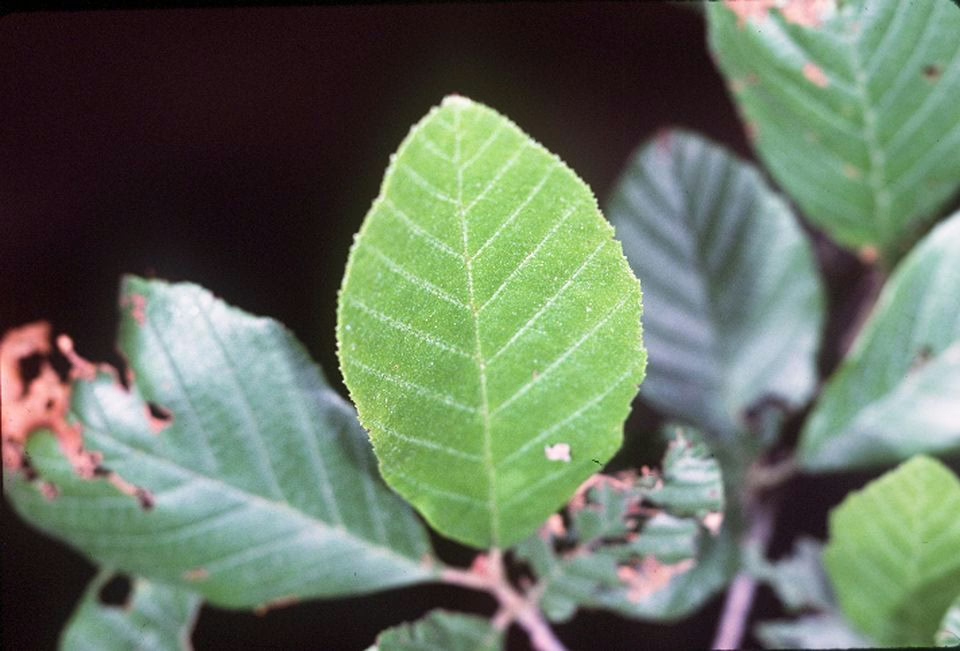
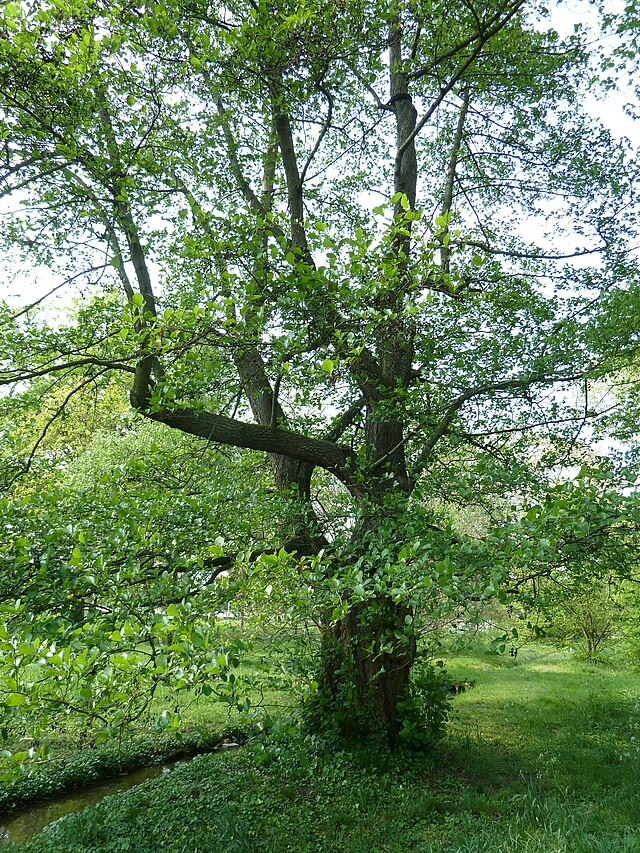
Blooms March-April. A multiple-trunked, suckering shrub with shiny gray-brown bark. Male flowers green-brown, female flowers are reddish; both on the same plant clustered on catkins. The species name serrulata refers to the margins of the leaves, which are toothed. The fruit is a brown cone-like catkin 1/2 inch long.
Previous Scientific Name(s): Alnus incana var. serrulata, Alnus noveboracensis, Alnus serrulata var. subelliptica
Material Treatment Method Collection References
Seed Scarification, Stratification Once the cones are fully dried, gently rub or shake them to release the tiny, winged seeds. These seeds need a period of cold stratification to break dormancy. This simply means mimicking winter conditions. Place the seeds in a zip-lock bag filled with slightly damp, sterile planting mix. Store the bag in a refrigerator for 8-12 weeks. After stratification, the seeds are ready to be sown. Choose a well-draining seed starting mix and fill a seed tray or small pots with the mix. Sow the seeds on the surface of the soil and lightly cover them with a thin layer of compost. Water gently. Keep the soil moist but not soggy. With proper conditions, germination should occur within a couple of weeks. Once seedlings have a few true leaves, they can be transplanted into individual pots to grow on. In late summer or early fall, look for the small, cone-like structures that contain the seeds. These cones turn brown and release their seeds as they mature. Collect the cones and dry them in a warm, well-ventilated area. 1) https://propagate.one/how-to-propagate-alnus-serrulata/ 2) https://hort.ifas.ufl.edu/database/lppi/sp026.shtml#:~:text=Propagation%20by%20Seed,harvest%2C%20but%20stratification%20improves%20germination.
Hardwood Cutting Remove the leaves from the lower half of the cutting and dip the bottom end in a root hormone solution. Prepare a rooting medium like a peat moss/perlite mix. Fill small pots or trays with this mixture. Make a hole with a pencil in the center of each pot and insert the cutting. Keep the cuttings moist and in a warm but shady location. A humidity dome or plastic wrap can help maintain moisture levels. Over time, roots will develop, and you can start hardening off the new plants before transplanting them outdoors. In the fall after the leaves have dropped, select mature branches that are about a pencil-thick. Take 6-8-inch cuttings from these branches, making sure to include a leaf bud at the top of the cutting. 1) https://propagate.one/how-to-propagate-alnus-serrulata/ 2) https://pfaf.org/user/Plant.aspx?LatinName=Alnus+serrulata

About the Region

Fall Symposium 2025 Logo - Teach for the Future

Salado, the location of our Fall 2025 Symposium, lies at the intersection of two ecoregions: the Edwards Plateau (Limestone Cut Plain) and Blackland Prairie (Northern Blackland Prairie).

The Edwards Plateau area is also called the Hill Country; however, this general term covers a much larger area extending farther north. Spring-fed creeks are found throughout the region; deep limestone canyons, rivers, and lakes (reservoirs) are common. Ashe juniper is perhaps the most common woody species found throughout the region. Additional woody species include various species of oak, with live oak (Quercus fusiformis) being the most common. Sycamores (Platanus occidentalis) and bald cypress (Taxodium distichum) border waterways. This area is well known for its spring wildflower displays, though they may be viewed in spring, late summer, and fall, as well. According to Texas Parks and Wildlife, average annual rainfall in the Edwards Plateau ranges from 15 to 34 inches.

The Blackland Prairie extends from the Red River south to San Antonio, bordered on the west by the Edwards Plateau and the Cross Timbers, and on the east by the Post Oak Savannah. Annual rainfall averages 30 to 40 inches, with higher averages to the east. This region is dominated by prairie species. The most common grass species include little bluestem (Schizachyrium scoparium) and Indian grass (Sorghastrum nutans) in the uplands and switchgrass (Panicum virgatum) in the riparian areas and drainages. Common herbaceous flowering plants include salvias, penstemons, and silphiums. This area has suffered greatly from overgrazing and agricultural use. Few intact areas remain, though many of the plants can be found along county roadsides throughout the region.

Our fall Symposium host chapter, the Tonkawa Chapter, includes both of these ecoregions.

Source: Wildflowers of Texas by Michael Eason