
Swamp Milkweed

Asclepias incarnata

Other common name(s):

Pink Milkweed

Family:

Apocynaceae (Dogbane Family)

Plant Ecoregion Distribution Map

This map uses data from the US EPA. EPA  servers have been offline frequently so maps may not display. We are working on a solution.

Chihuahuan Deserts, Edwards Plateau
Chihuahuan Basins and Playas
Balcones Canyonlands, Edwards Plateau Woodland

Plant Characteristics

Growth Form

Herbaceous, Wetland

Height

2
to
5
ft.

Spread

2
to
5
ft.

Leaf Retention

Deciduous

Lifespan

Perennial

Habitat and Care Requirements

Soil Type(s)

Clay, Rich, Moist, Mud

Light Requirement

Sun, Part Shade

Water Requirement

High

Native Habitat

Wetland or Riparian

Bloom and Attraction

Bloom Color

Pink, Purple

Bloom Season

Summer, Fall

Seasonal Interest

Nectar, Pollen, Larval Host

Wildlife Benefit

Butterflies, Hummingbirds, Bees

Maintenance

Swamp milkweed is underutilized in gardens. It will thrive in moist soils or in a pond. Good for wetland gardens. Swamp milkweed will inevitably have aphids. The insects are not a problem unless the plant looks sick; at that point an effective treatment is to spray the plant and aphids with soapy water. Set up a pond or a water collection tank near a downspout to supplement water. WARNING: all parts of the plant are poisonous. Propagation: seed, cutting, root division.

Comments

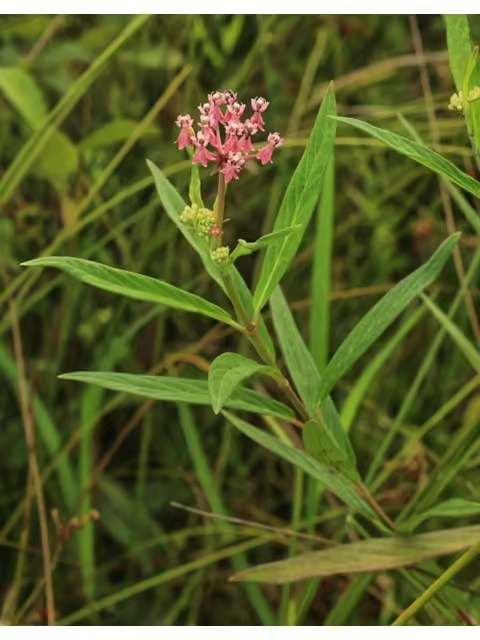
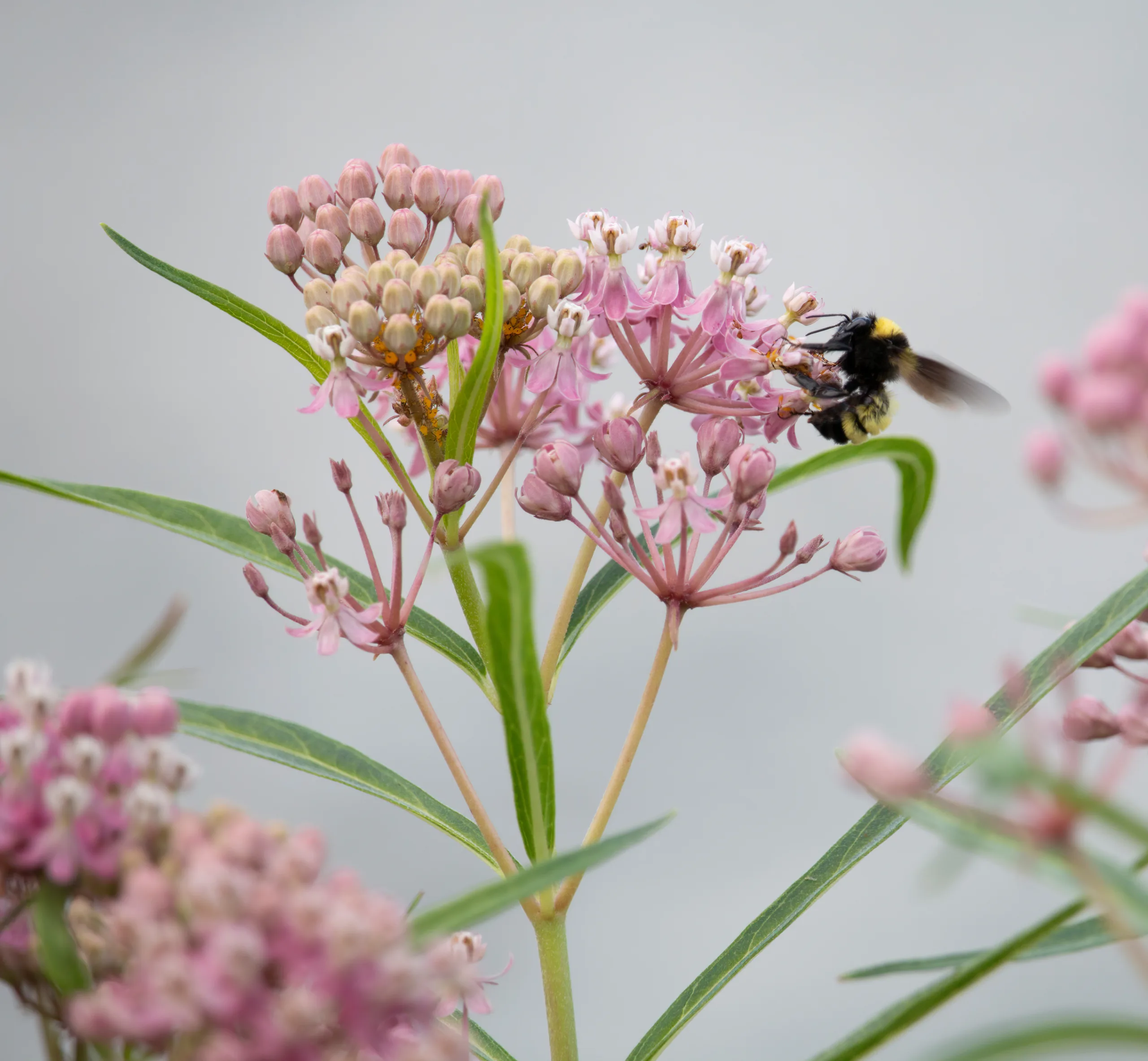
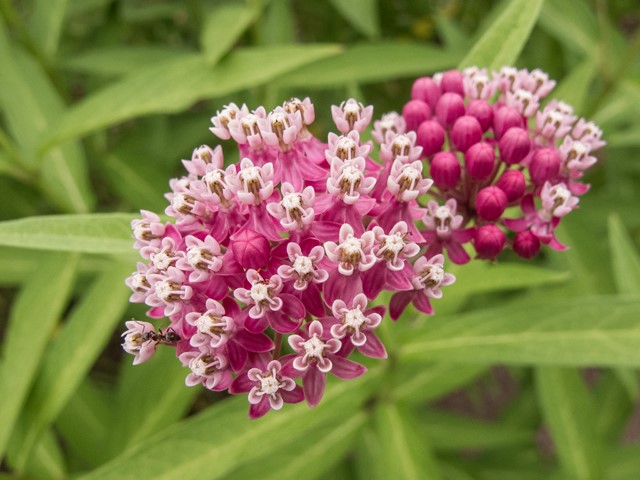
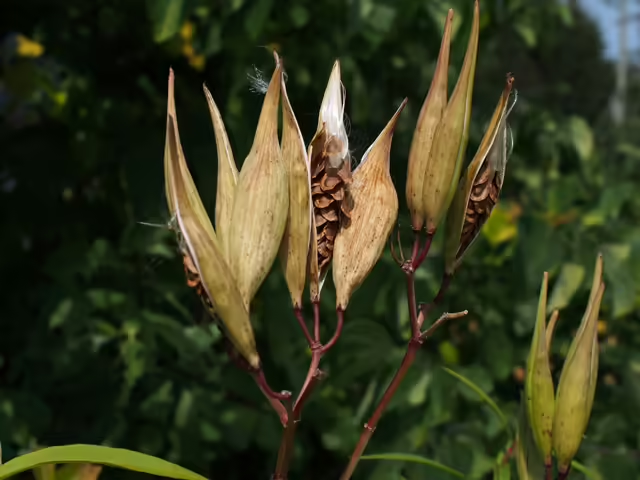
Blooms June-October. Narrow, lance-shaped leaves line the erect, open-branched stem. Small, fragrant, deep pink flowers appear in showy clusters at the end of stems. The fruit is a long narrow pod, filled with tiny brown seeds, attached to hairy tufts. The juice of this species is less milky than that of other milkweeds. Although still listed by some in the Asclepiadaceae Family, the majority of botanical organizations now list it in the Apocynaceae Family. Larval host: Monarch and Queen butterflies.
Material Treatment Method Collection References
Seed No Treatment Plant seeds in a pot outdoors in the fall, winter or early spring. The wet, cold conditions mimic wild seed propagation in nature and the seeds will germinate in mid spring. Germination is poor at temperatures higher than 85 degrees Fahrenheit. Seedlings should not be transplanted until they have at least one set of true leaves. Allow 4 to 8 weeks inside growing time for seedlings before moving to a cold frame or transplanting outside. Plants can be moved outside once the danger of frost has passed. Collect seeds in the fall, when the brown pods are dry and have begun to split. Crack the pods open completely allowing the seeds to dry for one to two weeks in paper bags. Several weevil larvae prey on developing seeds, so look for signs of damage including small entry holes in the pod exuding latex. 1) https://www.nrcs.usda.gov/plantmaterials/wvpmcot12252.pdf 2) https://wildseedproject.net/blog/swamp-milkweed#:~:text=To%20grow%20your%20own%20swamp,will%20germinate%20in%20mid%20spring.
Seed Stratification Place the seeds in a moist medium and store them in a refrigeratore at 35-38 F, for 4-12 weeks. After stratification, sow the seeds just beneath the soil sureface in seedling trays filled with draining seedling mix. Maintain ambient temperatures between 65 and 75 F, and keep the soil consistently moist. Germination typically occurs within a few weeks. Collect seeds in the fall, when the brown pods are dry and have begun to split. Crack the pods open completely allowing the seeds to dry for one to two weeks in paper bags. Several weevil larvae prey on developing seeds, so look for signs of damage including small entry holes in the pod exuding latex. 1) https://www.nrcs.usda.gov/plantmaterials/wvpmcot12252.pdf 2) https://www.gardenia.net/plant/asclepias-incarnata-swamp-milkweed 2) https://www.gardenia.net/plant/asclepias-incarnata-swamp-milkweed
Stem Cutting Dip the cut ends in rooting hormone to encourage root development. Insert the treated cuttings into a moist medium such as sand or potting soil. Keep the medium consistently moist until the stem develops roots. Roots typically develop within 6-10 weeks. after which the plants can be moved to their permanent location. During the summer, choose healthy, green stems approximately 1/3 inch in diameter. Cut the stems under water to prevent air embolism. https://www.gardenia.net/plant/asclepias-incarnata-swamp-milkweed
Root Division While division is possible, it's important to note that Swamp Milkweed has a deep taproot. making it sensitive to disturbance. https://www.gardenia.net/plant/asclepias-incarnata-swamp-milkweed
Seed Scarification Good germination results have been reported without stratification by soaking the seed. Soak the seed in hot water (190 degrees Fahrenheit) for 12 hours. Repeat this process two additional times for expected seed germination of 50%. Seed can be placed in cold storage for up to three years. Germination is poor at temperatures higher than 85 degrees Fahrenheit. Seedlings should not be transplanted until they have at least one set of true leaves. Allow 4 to 8 weeks inside growing time for seedlings before moving to a cold frame or transplanting outside. Plants can be moved outside once the danger of frost has passed. Collect seeds in the fall, when the brown pods are dry and have begun to split. Crack the pods open completely allowing the seeds to dry for one to two weeks in paper bags. Several weevil larvae prey on developing seeds, so look for signs of damage including small entry holes in the pod exuding latex. https://www.westernnativeseed.com/plant%20guides/ascincpg.pdf

About the Region

Fall Symposium 2025 Logo - Teach for the Future

Salado, the location of our Fall 2025 Symposium, lies at the intersection of two ecoregions: the Edwards Plateau (Limestone Cut Plain) and Blackland Prairie (Northern Blackland Prairie).

The Edwards Plateau area is also called the Hill Country; however, this general term covers a much larger area extending farther north. Spring-fed creeks are found throughout the region; deep limestone canyons, rivers, and lakes (reservoirs) are common. Ashe juniper is perhaps the most common woody species found throughout the region. Additional woody species include various species of oak, with live oak (Quercus fusiformis) being the most common. Sycamores (Platanus occidentalis) and bald cypress (Taxodium distichum) border waterways. This area is well known for its spring wildflower displays, though they may be viewed in spring, late summer, and fall, as well. According to Texas Parks and Wildlife, average annual rainfall in the Edwards Plateau ranges from 15 to 34 inches.

The Blackland Prairie extends from the Red River south to San Antonio, bordered on the west by the Edwards Plateau and the Cross Timbers, and on the east by the Post Oak Savannah. Annual rainfall averages 30 to 40 inches, with higher averages to the east. This region is dominated by prairie species. The most common grass species include little bluestem (Schizachyrium scoparium) and Indian grass (Sorghastrum nutans) in the uplands and switchgrass (Panicum virgatum) in the riparian areas and drainages. Common herbaceous flowering plants include salvias, penstemons, and silphiums. This area has suffered greatly from overgrazing and agricultural use. Few intact areas remain, though many of the plants can be found along county roadsides throughout the region.

Our fall Symposium host chapter, the Tonkawa Chapter, includes both of these ecoregions.

Source: Wildflowers of Texas by Michael Eason