
Buffalo Gourd

Cucurbita foetidissima

Other common name(s):

Stinking Gourd, Missouri Gourd, Stink Gourd, Wild Gourd

Family:

Cucurbitaceae (Cucumber Family)

Plant Ecoregion Distribution Map

This map uses data from the US EPA. EPA  servers have been offline frequently so maps may not display. We are working on a solution.

Chihuahuan Deserts, Edwards Plateau, High Plains, Southwestern Tablelands
Broken Red Plains
Chihuahuan Basins and Playas, Chihuahuan Desert Grasslands, Chihuahuan Montane Woodlands, Low Mountains and Bajadas, Stockton Plateau
Carbonate Cross Timbers, Eastern Cross Timbers, Grand Prairie, Western Cross Timbers
Balcones Canyonlands, Edwards Plateau Woodland, Llano Uplift, Semiarid Edwards Plateau
Canadian/Cimarron High Plains, Llano Estacado, Rolling Sand Plains
Canadian/Cimarron Breaks, Caprock Canyons Badlands Breaks, Flat Tablelands and Valleys, Semiarid Canadian Breaks

Plant Characteristics

Growth Form

Vine

Height

.5
to
1
ft.

Spread

20
to
30
ft.

Leaf Retention

Deciduous

Lifespan

Perennial

Habitat and Care Requirements

Soil Type(s)

Sand, Loam, Clay, Caliche, Dry

Light Requirement

Sun

Water Requirement

Low

Native Habitat

Grassland

Bloom and Attraction

Bloom Color

Yellow

Bloom Season

Summer

Seasonal Interest

Fruit, Pollen, Nesting Material

Wildlife Benefit

Birds, Small Mammals, Bees

Maintenance

Low maintenance and drought tolerant. Can form large colonies. Give lots of room to spread. Native habitat: open areas on plains and deserts. Buffalo gourds have decorative uses; the dried gourds were often painted for ornamental purposes. Thrives in arid or semi-arid environments, making them ideal for low-water, drought-tolerant gardening. Does well in a variety of soil types. Not common in plant nurseries but seeds are available commercially. WARNING: the fruit is poisonous to humans if eaten. Propagation: seed.

Comments

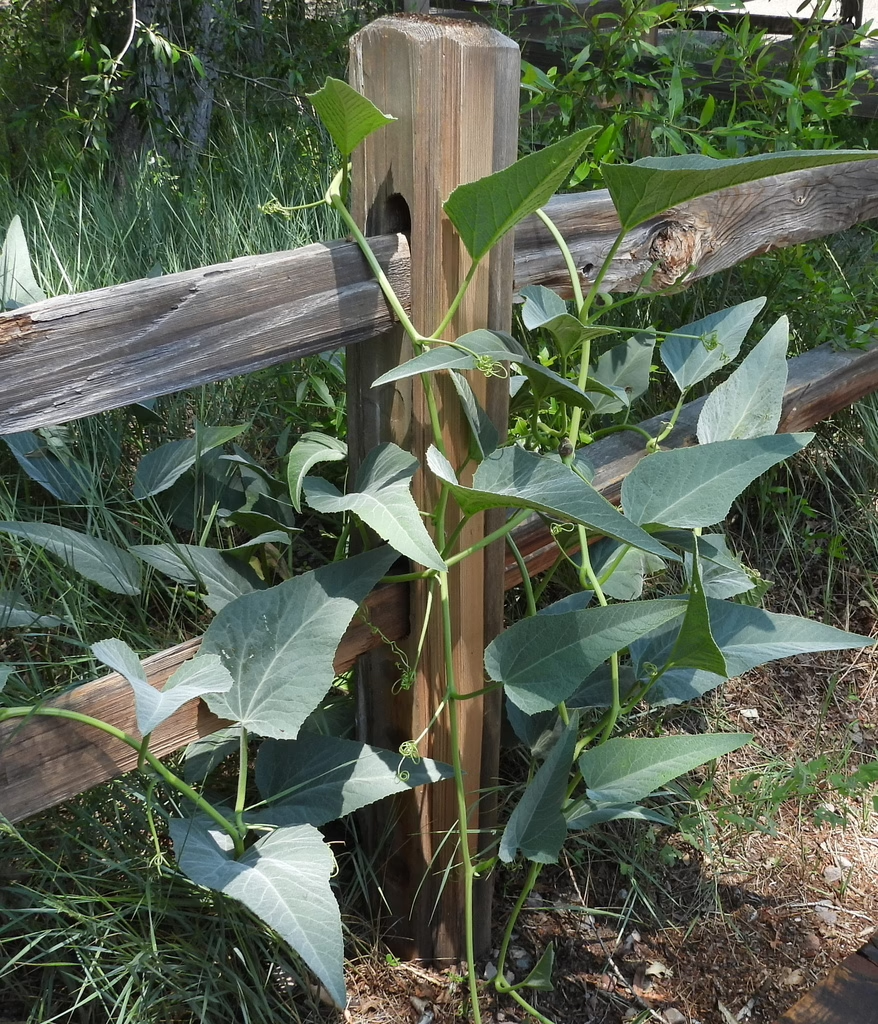
Blooms June-August. Forms long stems that creep along the ground. Large, rough, hairy, triangular leaves can grow up to 12 inches across, and have an unpleasant odor. Produces large bell-shaped, yellow flowers. Produces both male and female flowers, allowing it to self-fertilize through insect pollination. The fruit is a tennis ball-sized gourd that begins with green stripes that change to yellow as it matures.
Previous Scientific Name(s): Pepo foetidissima, Cucurbita perennis
Material Treatment Method Collection References
Stem Root It has developed a highly efficient method of asexual propagation by producing roots along its vines when they are in contact with moist sand or soil, principally during periods of summer rains. Make your cut with a sterilized tool just below a node, where the leaf bids adieu to the stem. Rooting hormones are not essential but highly recommended. They give your cuttings a head start in the rooting race. After dipping the cut end into this magic powder, plant your cutting in a well-draining soil mix. Keep the soil moist, but not soggy. Cover with a plastic dome or bag for that tropical humidity, but let it breathe—cuttings appreciate a little fresh air too. Selecting the right stem cuttings for propagation is like picking the best players for your team. Opt for stems that scream health: vibrant leaves, no signs of pests or diseases,. https://cucurbit.info/1978/07/the-versatility-of-the-feral-buffalo-gourd-cucurbita-foetidissima-hbk/#:~:text=It%20has%20developed%20a%20highly,permalink.
Seed No Treatment Germination temperature range is between 15 °C and 37 °C with an optimum at 25 °C. The maximum depth for a successful germination is 12 cm. The germination is possible in a pH range from 2.2 (germination rate 15%) up to pH 8 (germination rate 90%). sow early to mid spring in a greenhouse in a rich soil. Germination should take place within 2 weeks. Sow 2 or 3 seeds per pot and thin out to the best plant. Grow them on fast and plant out after the last expected frosts, giving them cloche or frame protection for at least their first few weeks if you are trying them outdoors. Selecting the right seeds is crucial for successful Buffalo Gourd propagation. Opt for seeds that are plump, shiny, and free from imperfections, as these traits often indicate good health and viability. It's like picking the best athletes for your team; you want the ones that show promise of great performance. 1) https://en.wikipedia.org/wiki/Cucurbita_foetidissima#:~:text=Germination%20temperature%20range%20is%20between,2.5%20m%20(8.2%20ft). 2) https://pfaf.org/user/Plant.aspx?LatinName=Cucurbita+foetidissima#:~:text=Plant%20Propagation,you%20are%20trying%20them%20outdoors. 3) https://seedsource.com/buffalo-gourd/ 4) https://greg.app/propagate-buffalo-gourd/
Clump division Division With a clean, sharp tool, divide the plant into sections. Ensure each has a fair share of roots and shoots. Plant each division in a well-prepped hole, mixing in some organic matter to give the soil a little pep. Keep the depth consistent with their previous growing conditions to avoid any growth stunts. Water the root balls generously before they settle into their new homes. Place them in bright, indirect light and keep the soil moist but not soggy. First, hydrate your plant thoroughly to make the roots more flexible. Gently unearth the plant, keeping the root ball intact. https://greg.app/propagate-buffalo-gourd/

About the Region

Fall Symposium 2025 Logo - Teach for the Future

Salado, the location of our Fall 2025 Symposium, lies at the intersection of two ecoregions: the Edwards Plateau (Limestone Cut Plain) and Blackland Prairie (Northern Blackland Prairie).

The Edwards Plateau area is also called the Hill Country; however, this general term covers a much larger area extending farther north. Spring-fed creeks are found throughout the region; deep limestone canyons, rivers, and lakes (reservoirs) are common. Ashe juniper is perhaps the most common woody species found throughout the region. Additional woody species include various species of oak, with live oak (Quercus fusiformis) being the most common. Sycamores (Platanus occidentalis) and bald cypress (Taxodium distichum) border waterways. This area is well known for its spring wildflower displays, though they may be viewed in spring, late summer, and fall, as well. According to Texas Parks and Wildlife, average annual rainfall in the Edwards Plateau ranges from 15 to 34 inches.

The Blackland Prairie extends from the Red River south to San Antonio, bordered on the west by the Edwards Plateau and the Cross Timbers, and on the east by the Post Oak Savannah. Annual rainfall averages 30 to 40 inches, with higher averages to the east. This region is dominated by prairie species. The most common grass species include little bluestem (Schizachyrium scoparium) and Indian grass (Sorghastrum nutans) in the uplands and switchgrass (Panicum virgatum) in the riparian areas and drainages. Common herbaceous flowering plants include salvias, penstemons, and silphiums. This area has suffered greatly from overgrazing and agricultural use. Few intact areas remain, though many of the plants can be found along county roadsides throughout the region.

Our fall Symposium host chapter, the Tonkawa Chapter, includes both of these ecoregions.

Source: Wildflowers of Texas by Michael Eason