Small Bluebell

Eustoma exaltatum

Other common name(s):

Catchfly Prairie Gentian, Bluebell Gentian, Western Blue Gentian, Blue Marsh Lily, Catchfly Gentian, Seaside Gentian

Family:

Gentianaceae (Gentian Family)

Plant Ecoregion Distribution Map

This map uses data from the US EPA. EPA  servers have been offline frequently so maps may not display. We are working on a solution.

Chihuahuan Deserts, Cross Timbers, Edwards Plateau, Gulf Coast Prairies and Marshes, Southern Texas Plains, Texas Blackland Prairies
Chihuahuan Basins and Playas, Chihuahuan Desert Grasslands, Chihuahuan Montane Woodlands, Low Mountains and Bajadas, Stockton Plateau
Eastern Cross Timbers
Balcones Canyonlands, Edwards Plateau Woodland
Coastal Sand Plain, Floodplains and Low Terraces4, Laguna Madre Barrier Island and Coastal Marshes, Lower Rio Grande Alluvial Floodplain, Lower Rio Grande Valley, Mid-Coast Barrier Islands and Coastal Marshes, Northern Humid Gulf Coastal Prairies, Southern Subhumid Gulf Coastal Prairies, Texas-Louisiana Coastal Marshes
Rio Grande Floodplain and Terraces
Floodplains and Low Terraces1, Northern Blackland Prairie, Southern Blackland Prairie

Plant Characteristics

Growth Form

Herbaceous

Height

1
to
2
ft.

Spread

.75
to
1
ft.

Leaf Retention

Deciduous

Lifespan

Annual

Habitat and Care Requirements

Soil Type(s)

Sand, Loam, Well Drained, Moist, Saline

Light Requirement

Sun, Part Shade

Water Requirement

High

Native Habitat

Grassland, Woodland, Wetland or Riparian

Bloom and Attraction

Bloom Color

Blue, Purple

Bloom Season

Spring, Summer, Fall

Seasonal Interest

Seeds, Nectar, Pollen

Wildlife Benefit

Butterflies, Birds, Hummingbirds, Bees

Maintenance

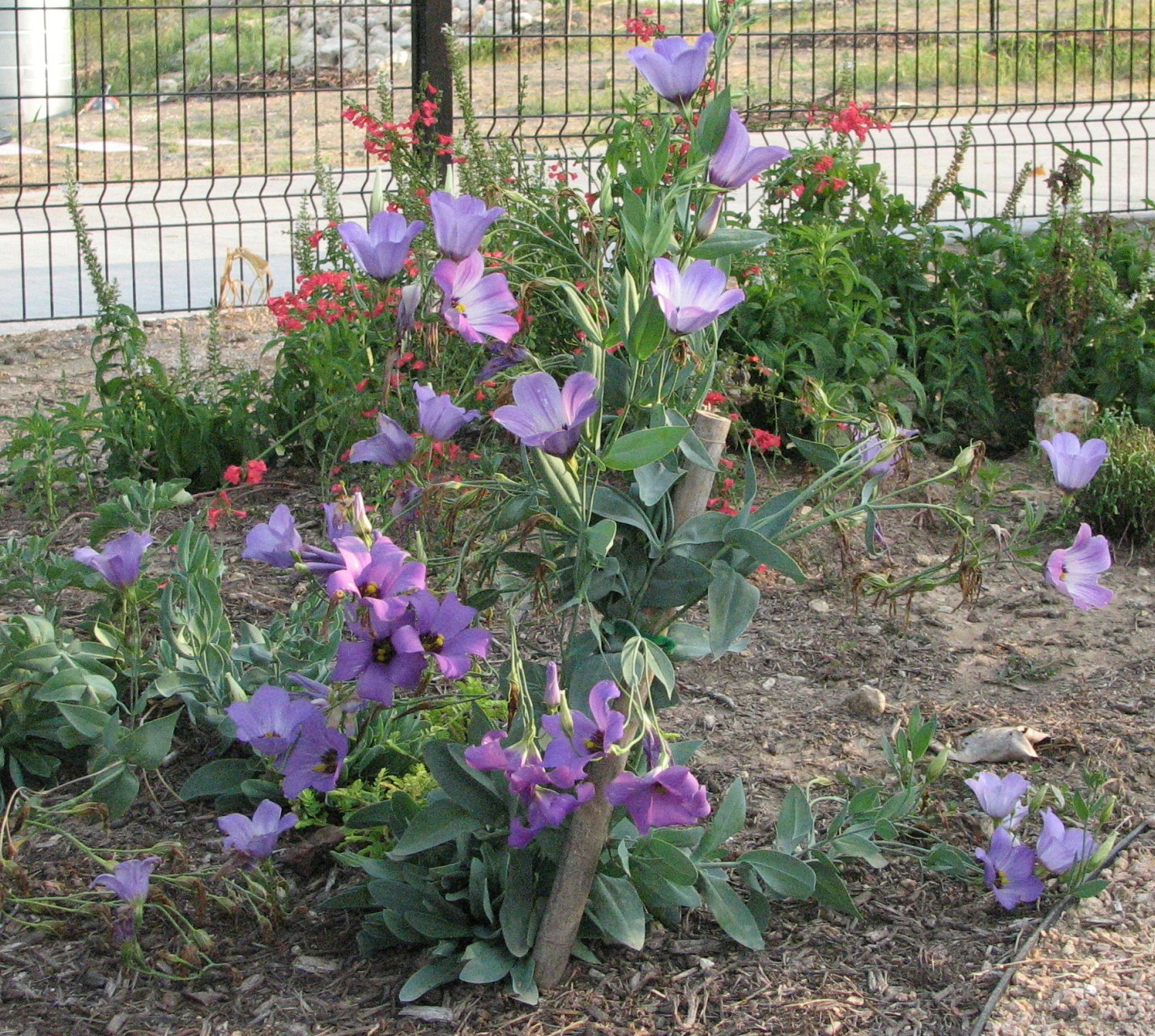
Easy to maintain. Very heat tolerant. Texas Bluebell prefers damp conditions, but need good drainage to prevent root rot. Although it is often referred to as the Seaside Gentian, it is not restricted to coastal habitats; it also grows in the Great Plains. This plant develops a long taproot to access moisture from deep within the soil. Texas Bluebells are perfect for the edges of water or rain gardens, in ornamental beds, or borders. Propagation: seed.

Comments

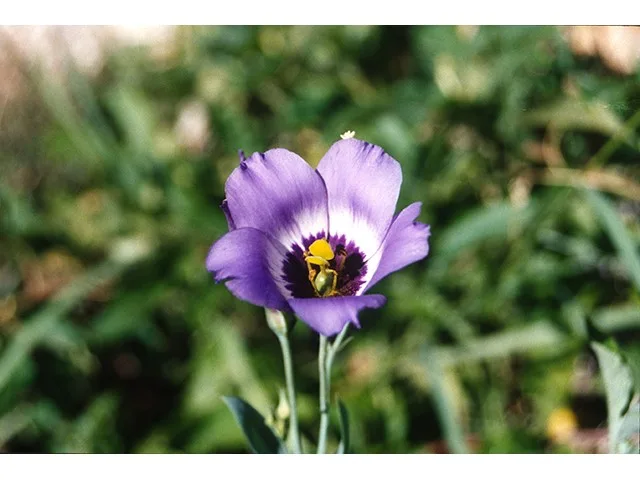
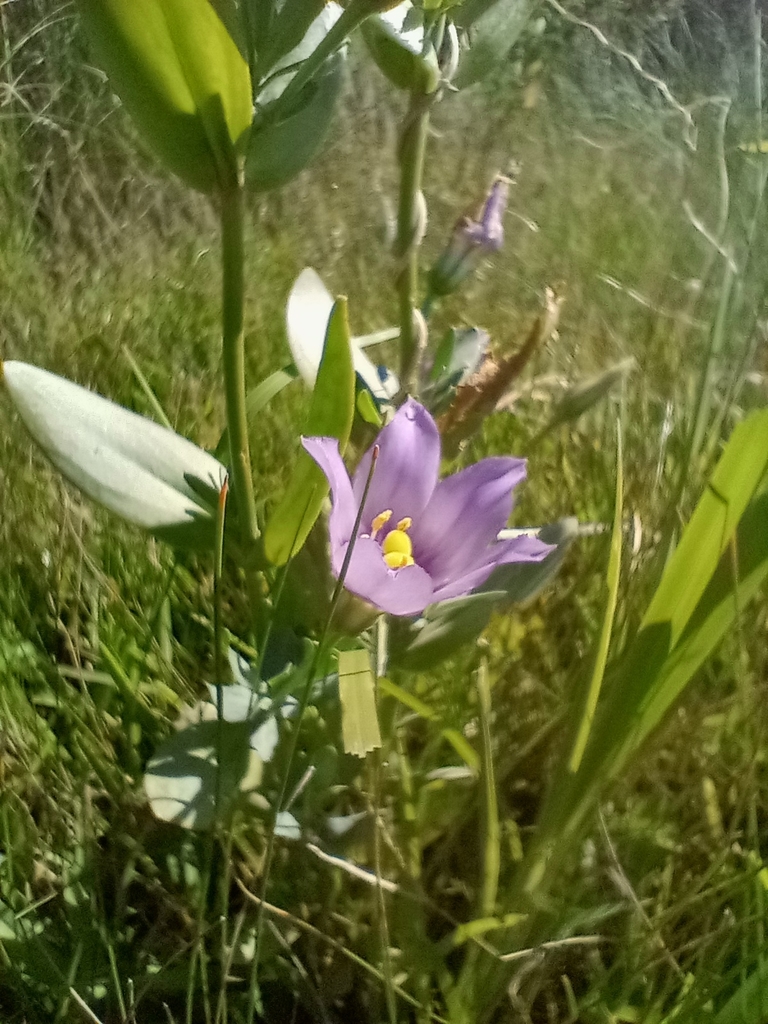
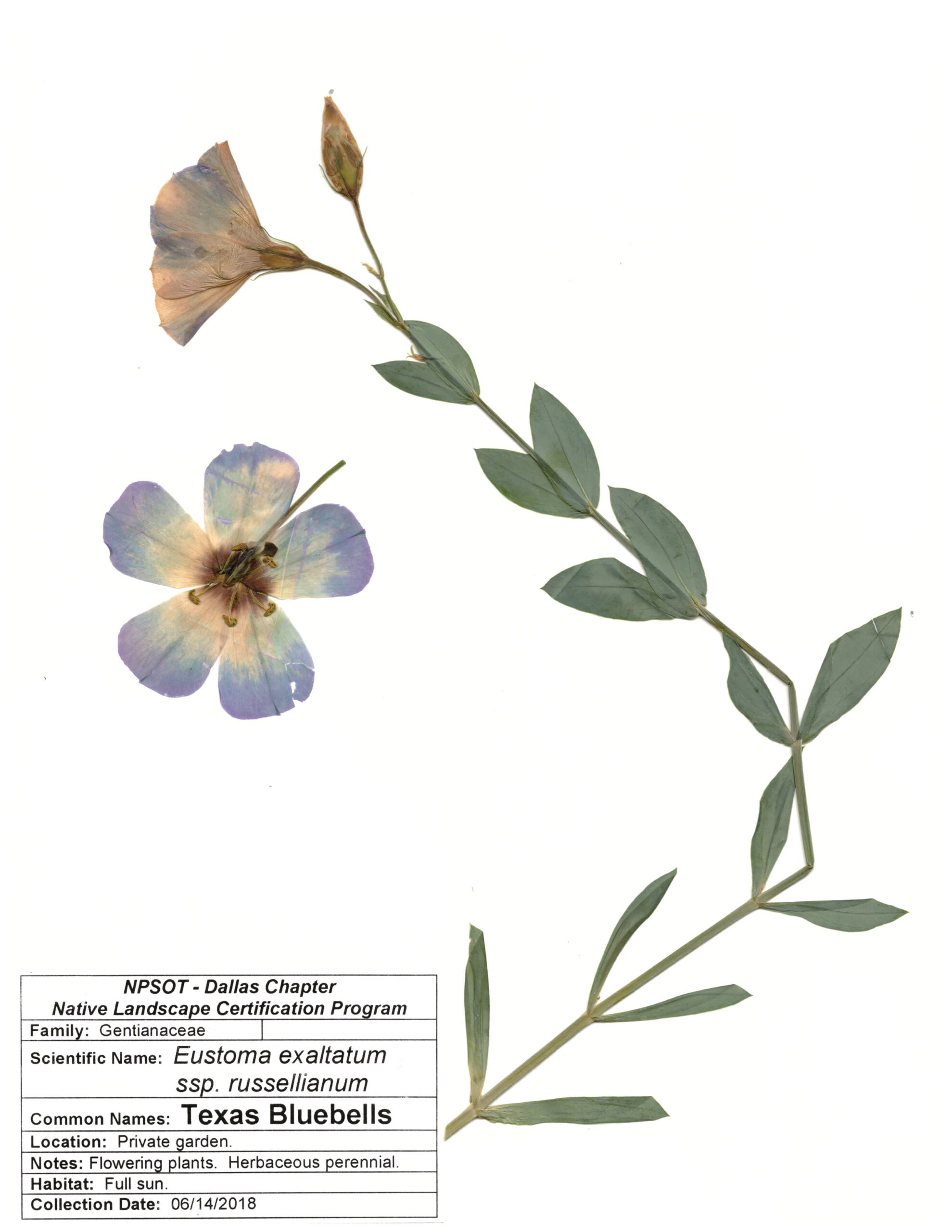
Blooms March-November. Grows as short-lived perennial or annual depending on growing conditions. The plants are 1-3 feet high with smooth, erect stems and branches. The leaves are long and oval with pointed tips. Texas Bluebells have large, bell-shaped flowers, with bluish-purple petals, which are constricted into a small tube at the base. The throat has prominent purple markings. The fruit is a capsule.
Material Treatment Method Collection References
Seed No Treatment Stage 1 (10-12 days): Maintain soil temperature at 20 to 22˚C. Keep media evenly moist but not saturated. Do not cover or bury the seed. Light is required for germination. Stage 2 (14-21 days): Maintain soil temperature at 20 to 22°C. Reduce moisture levels once radicals emerge. Allow the soil to dry out slightly before watering to control algae growth. Irrigate early in the day so foliage is dry by nightfall. Stage 3 (28-35 days): Maintain soil temperature at 18 to 20°C. Allow media to dry thoroughly between irrigations. Avoid extreme wilting, which can induce rosetting. Stage 4 (7 days): Maintain soil temperature at 17 to 18°C. Allow media to dry thoroughly between irrigations. Avoid permanent wilting, which can induce rosetting. Do not hold the plugs until rootbound as this induces rosetting. Transplant should be when the seedlings reach a height of 5 cm. Seedling grows very slowly, 4 leaves will develop in about 2 months. It blooms about 5 months after sowing. Collect seed in June, when seeds inside capsule are black. Eustoma exaltatum are usually grown from seed, which should be sown in early spring. Seeds should be planted in a moist mixture of moss and peat. 1) https://travaldo.blogspot.com/2021/05/eustoma-exaltatum-seaside-gentian-care-and-culture.html 2) https://earthone.io/plant/eustoma%20exaltatum?srsltid=AfmBOorMKnualL8J_GzvaCNouptqDtRoddH9fYYabUNKHmk_MHdzZ35q 3) https://www.wildflower.org/expert/show.php?id=6237&frontpage=true
Stem Cutting For cuttings, take a healthy stem cutting, dip it in rooting hormone, and plant it in a moist, well-draining medium. https://earthone.io/plant/eustoma%20exaltatum?srsltid=AfmBOorMKnualL8J_GzvaCNouptqDtRoddH9fYYabUNKHmk_MHdzZ35q

About the Region

Fall Symposium 2025 Logo - Teach for the Future

Salado, the location of our Fall 2025 Symposium, lies at the intersection of two ecoregions: the Edwards Plateau (Limestone Cut Plain) and Blackland Prairie (Northern Blackland Prairie).

The Edwards Plateau area is also called the Hill Country; however, this general term covers a much larger area extending farther north. Spring-fed creeks are found throughout the region; deep limestone canyons, rivers, and lakes (reservoirs) are common. Ashe juniper is perhaps the most common woody species found throughout the region. Additional woody species include various species of oak, with live oak (Quercus fusiformis) being the most common. Sycamores (Platanus occidentalis) and bald cypress (Taxodium distichum) border waterways. This area is well known for its spring wildflower displays, though they may be viewed in spring, late summer, and fall, as well. According to Texas Parks and Wildlife, average annual rainfall in the Edwards Plateau ranges from 15 to 34 inches.

The Blackland Prairie extends from the Red River south to San Antonio, bordered on the west by the Edwards Plateau and the Cross Timbers, and on the east by the Post Oak Savannah. Annual rainfall averages 30 to 40 inches, with higher averages to the east. This region is dominated by prairie species. The most common grass species include little bluestem (Schizachyrium scoparium) and Indian grass (Sorghastrum nutans) in the uplands and switchgrass (Panicum virgatum) in the riparian areas and drainages. Common herbaceous flowering plants include salvias, penstemons, and silphiums. This area has suffered greatly from overgrazing and agricultural use. Few intact areas remain, though many of the plants can be found along county roadsides throughout the region.

Our fall Symposium host chapter, the Tonkawa Chapter, includes both of these ecoregions.

Source: Wildflowers of Texas by Michael Eason