Prairie Flax

Linum lewisii

Other common name(s):

Wild Blue Flax, Lewis Flax, Lewis's Flax

Family:

Linaceae (Flax Family)

Plant Ecoregion Distribution Map

This map uses data from the US EPA. EPA  servers have been offline frequently so maps may not display. We are working on a solution.

Chihuahuan Deserts, Southwestern Tablelands
Chihuahuan Basins and Playas, Chihuahuan Desert Grasslands, Chihuahuan Montane Woodlands, Low Mountains and Bajadas, Stockton Plateau
Canadian/Cimarron Breaks, Caprock Canyons Badlands Breaks, Flat Tablelands and Valleys

Plant Characteristics

Growth Form

Herbaceous

Height

1
to
1.5
ft.

Spread

.5
to
1
ft.

Leaf Retention

Semi Evergreen

Lifespan

Perennial

Habitat and Care Requirements

Soil Type(s)

Sand, Gravelly, Well Drained, Dry

Light Requirement

Sun

Water Requirement

Medium

Native Habitat

Grassland, Woodland

Bloom and Attraction

Bloom Color

Blue, Purple

Bloom Season

Spring, Summer

Seasonal Interest

Seeds, Forage, Pollen

Wildlife Benefit

Browsers, Butterflies, Birds, Bees

Maintenance

Easy to grow. Heat and drought tolerant. Plant in masses or with tall grasses and wildflowers to hide the plant’s leggy stems. Deadhead if seedlings are not desired. Works well in rocky gardens, borders or containers. Native habitat: woodland, prairie, meadow. Propagation: seed.

Comments

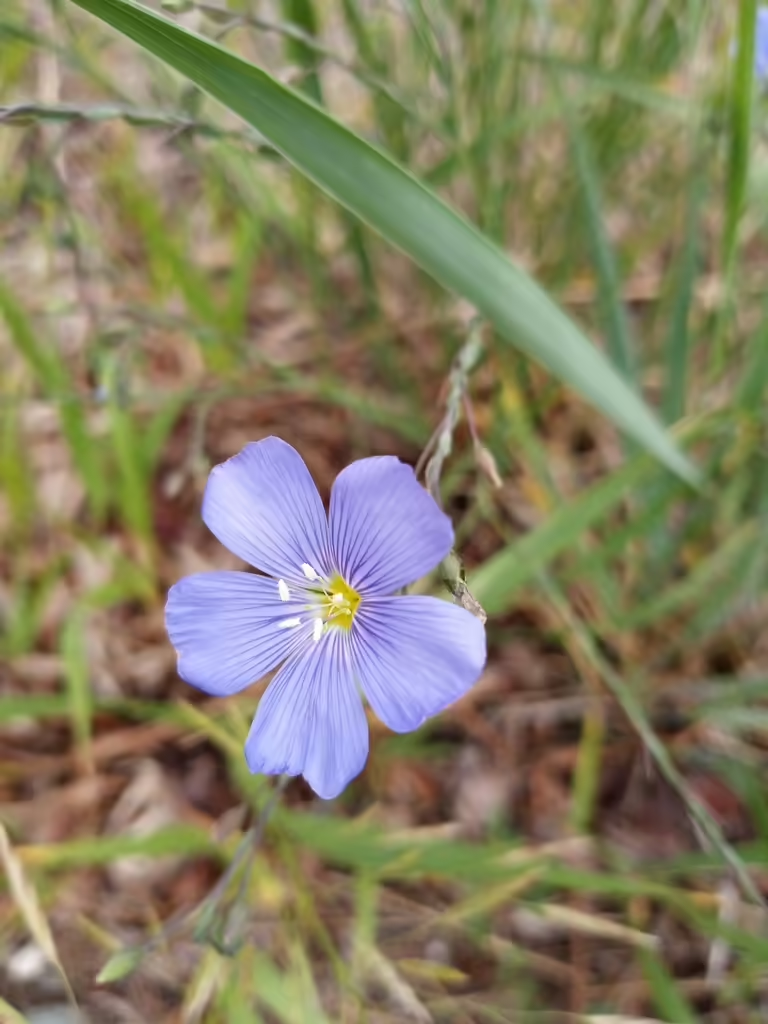
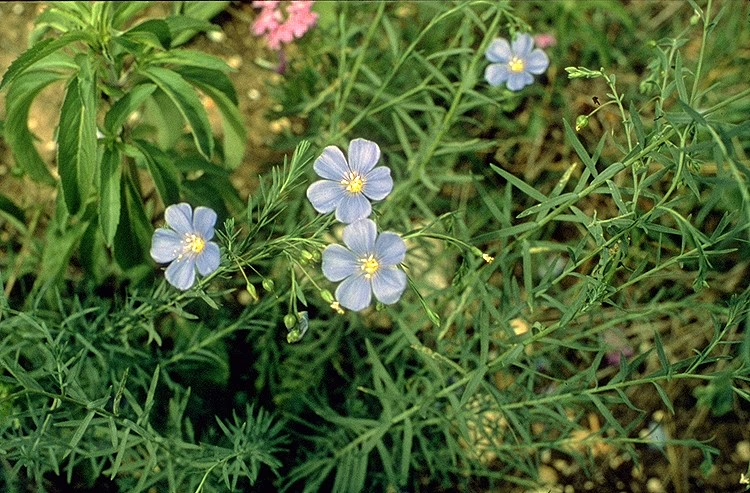
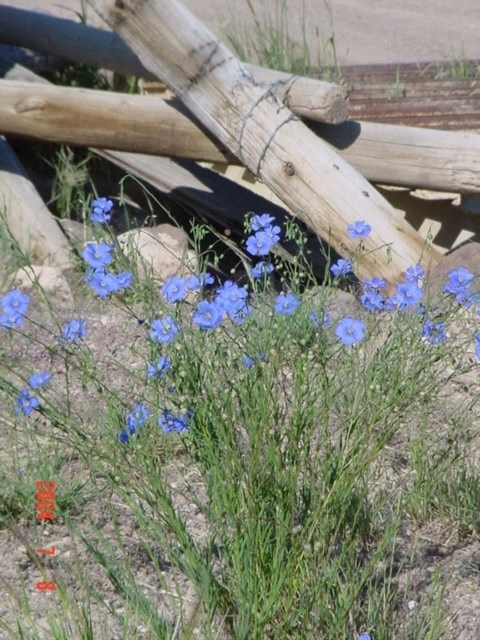
Blooms March-September. Stems tend to lean at an angle. It is leafy when the plant is young, gradually losing its leaves as it matures. Leaves are linear to narrowly lanceolate. Each stem produces several saucer shaped flowers, blooming from the bottom up, each one lasting only a day. Flowers are pale blue, with 5 petals, veined in darker blue. The fruit is a round, smooth, shiny brown capsule.
Material Treatment Method Collection References
Seed No Treatment No pre-treatment necessary other than cold, dry storage. Start at least 4 weeks before outdoor night temperatures are reliably in the 10 C (50 F) range. Plant seed 3 mm (1/8 inch) deep in pots. Keep moist but not soggy and very warm (21 C - 70 F). When seedlings are 5 cm (2 in.) tall, transplant into the garden spaced 30 cm (1 ft.) apart. Outdoors: Sow seed 3 mm (1/8 inch) deep outdoors in either late fall or early spring. Outdoors Alternative: In late fall through to mid-winter fill plastic pots with a slightly moistened, sterile, soil-less growing mix. Sow seed 3 mm (1/8 inch) deep in the growing mix and label the pots. Place the pots outdoors in an area where they will experience the snow and cold of winter. The seed will germinate in the pots in spring as the weather warms up. Be sure to water the pots regularly in spring and once the plants are 5 cm (2 inches) tall, transplant them into your garden. Collect seeds July to late August. Seeds shatter once capsules open, then mature seeds can be collected. It is reported that dry seeds stored at – 15°C for 15 years did not show any reduction in viability 1) https://www.wildflowerfarm.com/linum-lewisii-blue-flax.html#:~:text=Indoors:%20No%20pre%2Dtreatment%20necessary,transplant%20them%20into%20your%20garden. 2) https://courses.washington.edu/esrm412/protocols/2012/LILE3.pdf 3) https://earthone.io/plant/linum%20lewisii
Clump Division Replant clumps in well-prepared soil. separate clumps of the plant in early spring or fall https://earthone.io/plant/linum%20lewisii

About the Region

Fall Symposium 2025 Logo - Teach for the Future

Salado, the location of our Fall 2025 Symposium, lies at the intersection of two ecoregions: the Edwards Plateau (Limestone Cut Plain) and Blackland Prairie (Northern Blackland Prairie).

The Edwards Plateau area is also called the Hill Country; however, this general term covers a much larger area extending farther north. Spring-fed creeks are found throughout the region; deep limestone canyons, rivers, and lakes (reservoirs) are common. Ashe juniper is perhaps the most common woody species found throughout the region. Additional woody species include various species of oak, with live oak (Quercus fusiformis) being the most common. Sycamores (Platanus occidentalis) and bald cypress (Taxodium distichum) border waterways. This area is well known for its spring wildflower displays, though they may be viewed in spring, late summer, and fall, as well. According to Texas Parks and Wildlife, average annual rainfall in the Edwards Plateau ranges from 15 to 34 inches.

The Blackland Prairie extends from the Red River south to San Antonio, bordered on the west by the Edwards Plateau and the Cross Timbers, and on the east by the Post Oak Savannah. Annual rainfall averages 30 to 40 inches, with higher averages to the east. This region is dominated by prairie species. The most common grass species include little bluestem (Schizachyrium scoparium) and Indian grass (Sorghastrum nutans) in the uplands and switchgrass (Panicum virgatum) in the riparian areas and drainages. Common herbaceous flowering plants include salvias, penstemons, and silphiums. This area has suffered greatly from overgrazing and agricultural use. Few intact areas remain, though many of the plants can be found along county roadsides throughout the region.

Our fall Symposium host chapter, the Tonkawa Chapter, includes both of these ecoregions.

Source: Wildflowers of Texas by Michael Eason