

Carolina Wolfberry

Lycium carolinianum

Other common name(s):

Carolina Desert-thorn, Creeping Wolfberry, Christmas Berry

Family:

Solanaceae (Nightshade Family)

Plant Ecoregion Distribution Map

This map uses data from the US EPA. EPA  servers have been offline frequently so maps may not display. We are working on a solution.

Gulf Coast Prairies and Marshes, Southern Texas Plains
Coastal Sand Plain, Floodplains and Low Terraces4, Laguna Madre Barrier Island and Coastal Marshes, Lower Rio Grande Alluvial Floodplain, Lower Rio Grande Valley, Mid-Coast Barrier Islands and Coastal Marshes, Northern Humid Gulf Coastal Prairies, Southern Subhumid Gulf Coastal Prairies, Texas-Louisiana Coastal Marshes
Rio Grande Floodplain and Terraces, Texas-Tamaulipan Thornscrub

Plant Characteristics

Growth Form

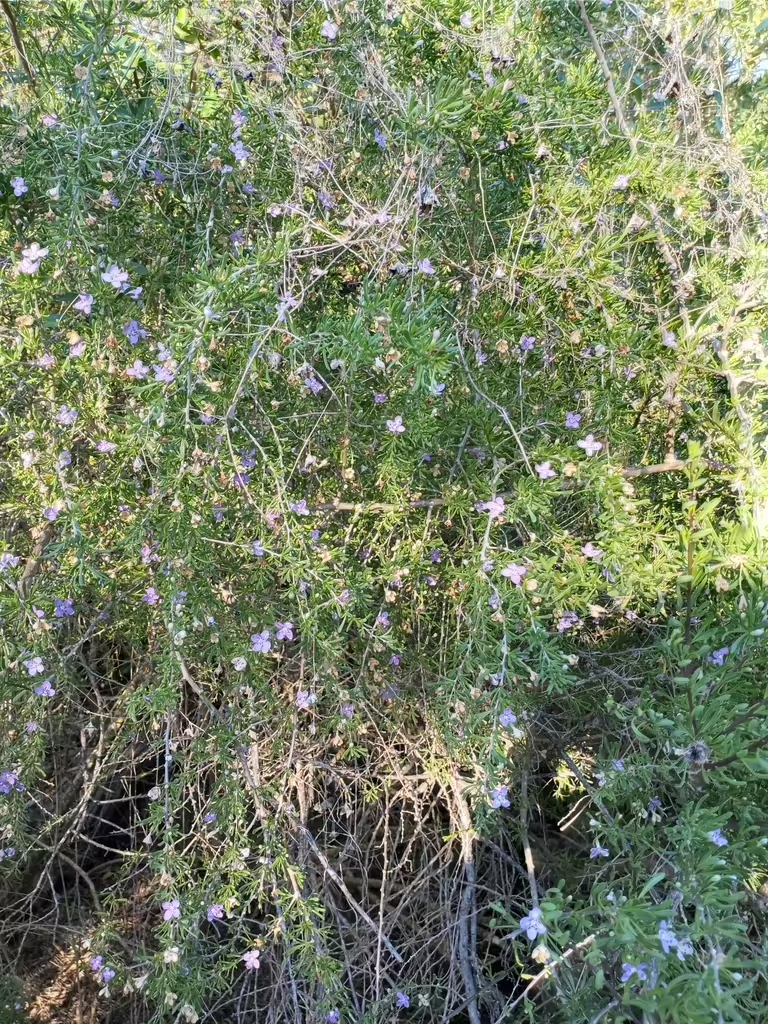
Shrub

Height

4
to
6
ft.

Spread

2
to
3
ft.

Leaf Retention

Evergreen

Lifespan

Perennial

Habitat and Care Requirements

Soil Type(s)

Sand, Loam, Clay, Well Drained, Moist

Light Requirement

Sun, Part Shade

Water Requirement

High

Native Habitat

Wetland or Riparian

Bloom and Attraction

Bloom Color

Purple

Bloom Season

Spring, Summer, Winter, Fall

Seasonal Interest

Fruit, Forage, Nectar

Wildlife Benefit

Butterflies, Birds, Small Mammals, Nectar Insects, Deer, Hummingbirds, Bees

Maintenance

Very adaptable, it grows in a variety of soils. Its leaves, flowers, and berries add year round interest in addition to providing food and cover for wildlife Can be used in hedges, screens, beds, borders, and coastal gardens, and for erosion control. Although it is evergreen, leaves may drop in dry weather, returning after a rain. Native habitat: ditches, ravines, depressions, swamps, marshes. Salt tolerant, Propagation: seed.

Comments

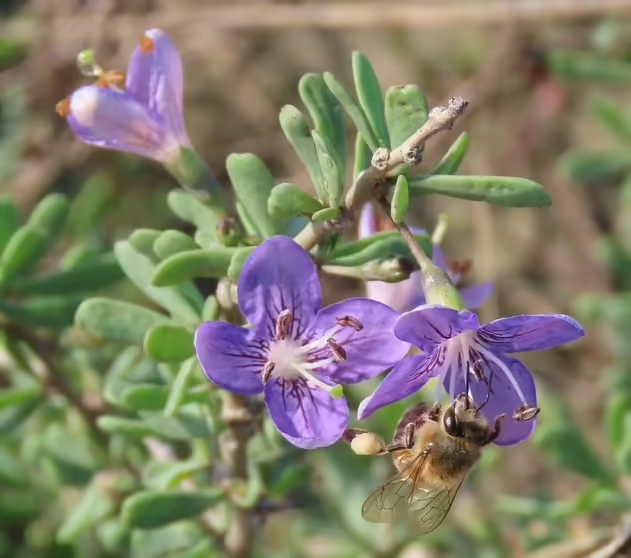
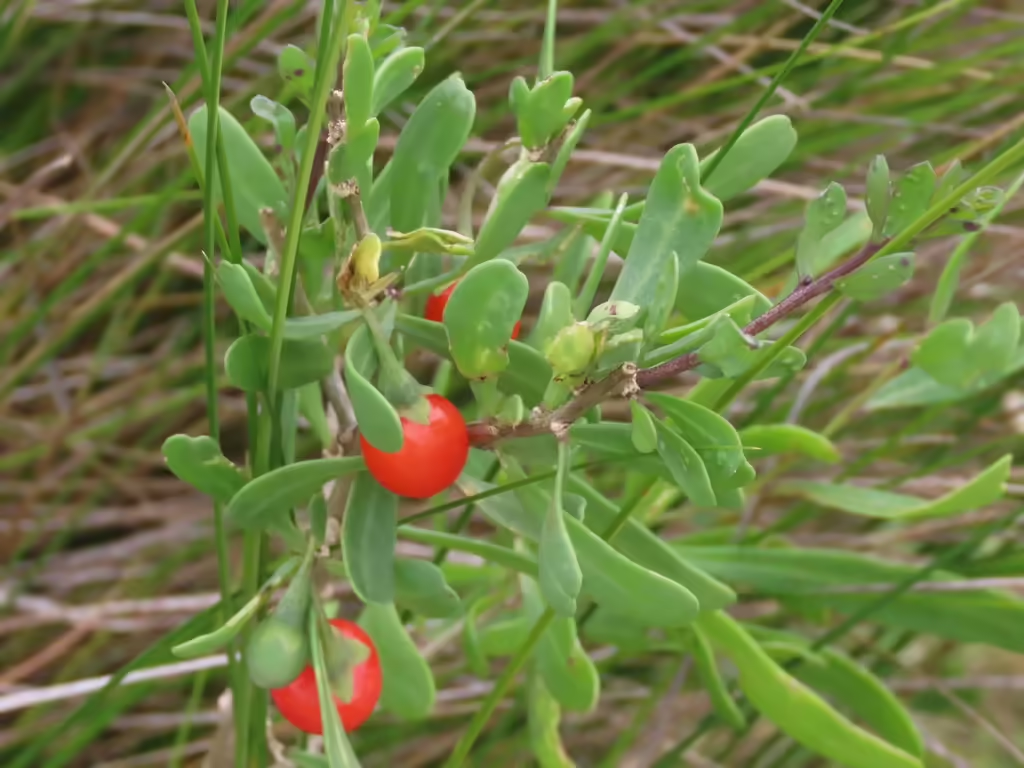
Blooms Dec-Jan. Grows year round in its native region. The spiny branches of this shrub are erect to spreading, with somewhat succulent leaves. The four-petaled, tubular, purple flowers mostly occur singly. The fruit is a red berry.
Material Treatment Method Collection References
Seed Stratification Stratify seeds at 41 degrees for 60-120 days to overcome dormancy. Sow seeds on the surface of a sterile seed-starting medium. Press seeds lightly into the soil but do not cover them, as they need light to germinate. Keep the soil moist and cover the seeds with plastic to maintain humidity. Place in a warm, bright area and remove the plastic upon seeing growth. Once seedlings emerge, they need careful attention to develop into healthy plants. Gradually expose seedlings to sunlight to avoid scorching. Ensure the soil remains moist but not waterlogged. When large enough, transplant seedlings into individual pots with well-draining soil. 1) https://greg.app/propagate-lycium-carolinianum/#:~:text=Sow%20seeds%20on%20the%20surface,the%20plastic%20upon%20seeing%20growth. 2) https://propagate.one/how-to-propagate-lycium-carolinianum/
Stem Cutting Remove lower leaves to prevent rot, but leave a few at the top to sustain photosynthesis. Choose a rooting medium: well-draining soil or clear water for easy root monitoring. Consider using a rooting hormone to encourage faster root development. Plant the cutting in the medium, ensuring the cut end is submerged but leaves remain dry. Maintain consistent moisture and provide adequate light, avoiding direct sunlight. Look for stems that are firm and green, indicating health and vigor. Use sterilized cutting tools to prevent infection. Make a clean cut below a node at a 45-degree angle to maximize rooting potential. Transition rooted cuttings to soil if they were started in water. Ensure the soil is well-draining to prevent root rot. Keep the soil moist but not waterlogged, providing a nurturing environment for growth. Monitor for signs of new growth, which indicates successful propagation. 1) https://greg.app/propagate-lycium-carolinianum/#:~:text=Sow%20seeds%20on%20the%20surface,the%20plastic%20upon%20seeing%20growth. 2) https://propagate.one/how-to-propagate-lycium-carolinianum/
Clump division Division Use a sharp, clean tool to divide the root clump, ensuring each section has a healthy root system and multiple growth points. Replant the divisions immediately, maintaining the same planting depth as the original. Water the new divisions well to help establish roots. Keep the soil consistently moist but not waterlogged. Provide a layer of mulch to maintain soil moisture and temperature. Monitor the plants for signs of stress and adjust care as needed. Water the plant thoroughly the day before to moisten the soil. Carefully dig around the plant, starting a few inches from the base to avoid damaging the roots. Lift the clump from the ground and gently shake off excess soil. https://greg.app/propagate-lycium-carolinianum/#:~:text=Sow%20seeds%20on%20the%20surface,the%20plastic%20upon%20seeing%20growth.
Stem Layering Air Layering: Wrap the exposed area with damp sphagnum moss, securing it with plastic wrap to retain moisture. Monitor the wrapped section until roots develop, then sever the new plant from the parent and pot it. Ground Layering: Bend a low-growing branch to the ground and make a small cut on the underside. Bury the wounded section in soil, leaving the tip exposed. Anchor with a stone or stake, and wait for roots to form before cutting and transplanting. Initial Care Needs; Maintain consistent moisture in the soil, aiming for a damp but not soggy environment to avoid root rot. Protect the young plants from direct sunlight; they require a period of acclimatization to their new surroundings. Transplant them into individual containers with a well-draining potting mix once signs of growth appear. Select a healthy branch and gently scrape away a small ring of bark to expose the cambium. https://greg.app/propagate-lycium-carolinianum/#:~:text=Sow%20seeds%20on%20the%20surface,the%20plastic%20upon%20seeing%20growth. 2) https://propagate.one/how-to-propagate-lycium-carolinianum/

About the Region

Fall Symposium 2025 Logo - Teach for the Future

Salado, the location of our Fall 2025 Symposium, lies at the intersection of two ecoregions: the Edwards Plateau (Limestone Cut Plain) and Blackland Prairie (Northern Blackland Prairie).

The Edwards Plateau area is also called the Hill Country; however, this general term covers a much larger area extending farther north. Spring-fed creeks are found throughout the region; deep limestone canyons, rivers, and lakes (reservoirs) are common. Ashe juniper is perhaps the most common woody species found throughout the region. Additional woody species include various species of oak, with live oak (Quercus fusiformis) being the most common. Sycamores (Platanus occidentalis) and bald cypress (Taxodium distichum) border waterways. This area is well known for its spring wildflower displays, though they may be viewed in spring, late summer, and fall, as well. According to Texas Parks and Wildlife, average annual rainfall in the Edwards Plateau ranges from 15 to 34 inches.

The Blackland Prairie extends from the Red River south to San Antonio, bordered on the west by the Edwards Plateau and the Cross Timbers, and on the east by the Post Oak Savannah. Annual rainfall averages 30 to 40 inches, with higher averages to the east. This region is dominated by prairie species. The most common grass species include little bluestem (Schizachyrium scoparium) and Indian grass (Sorghastrum nutans) in the uplands and switchgrass (Panicum virgatum) in the riparian areas and drainages. Common herbaceous flowering plants include salvias, penstemons, and silphiums. This area has suffered greatly from overgrazing and agricultural use. Few intact areas remain, though many of the plants can be found along county roadsides throughout the region.

Our fall Symposium host chapter, the Tonkawa Chapter, includes both of these ecoregions.

Source: Wildflowers of Texas by Michael Eason