
Winged Loosestrife

Lythrum alatum

Other common name(s):

Wing-angle Loosestrife, Winged Lythrum

Family:

Lythraceae (Loosestrife Family)

Plant Ecoregion Distribution Map

This map uses data from the US EPA. EPA  servers have been offline frequently so maps may not display. We are working on a solution.

Central Great Plains, Cross Timbers, East Central Texas Plains, Gulf Coast Prairies and Marshes, Texas Blackland Prairies, Western Gulf Coastal Plain
Broken Red Plains, Limestone Plains
Carbonate Cross Timbers, Eastern Cross Timbers, Grand Prairie, Limestone Cut Plain, Western Cross Timbers
Bastrop Lost Pines, Floodplains and Low Terraces2, Northern Post Oak Savanna, Northern Prairie Outliers, San Antonio Prairie, Southern Post Oak Savanna
Coastal Sand Plain, Floodplains and Low Terraces4, Laguna Madre Barrier Island and Coastal Marshes, Lower Rio Grande Alluvial Floodplain, Lower Rio Grande Valley, Mid-Coast Barrier Islands and Coastal Marshes, Northern Humid Gulf Coastal Prairies, Southern Subhumid Gulf Coastal Prairies, Texas-Louisiana Coastal Marshes
Floodplains and Low Terraces1, Northern Blackland Prairie, Southern Blackland Prairie
Flatwoods, Floodplains and Low Terraces3, Pleistocene Fluvial Terraces, Southern Tertiary Uplands

Plant Characteristics

Growth Form

Herbaceous

Height

2
to
3
ft.

Spread

2
to
3
ft.

Leaf Retention

Deciduous

Lifespan

Perennial

Habitat and Care Requirements

Soil Type(s)

Sand, Loam, Clay, Poor Drainage, Moist

Light Requirement

Sun

Water Requirement

Medium

Native Habitat

Grassland

Bloom and Attraction

Bloom Color

Pink, Purple

Bloom Season

Spring, Summer

Seasonal Interest

Nectar, Pollen

Wildlife Benefit

Butterflies, Nectar Insects, Hummingbirds, Bees

Maintenance

A versatile plant that will grow in fields, wet meadows, ditches, roadsides, pond edges, and streams. Because Winged Loosestrife is naturally found in wet meadows, it is a good plant for the lower slopes of rain gardens or the dry fringe. Plant it with other late summer blooming natives. Not to be confused with the non-native Purple Loosestrife (Lythrum salicaria). Propagation: seed.

Comments

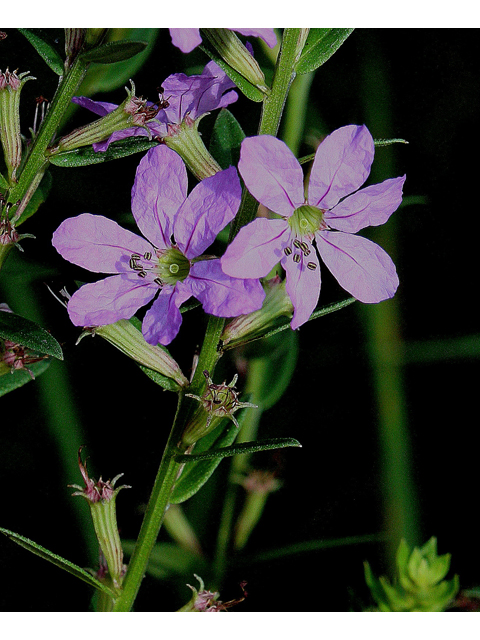
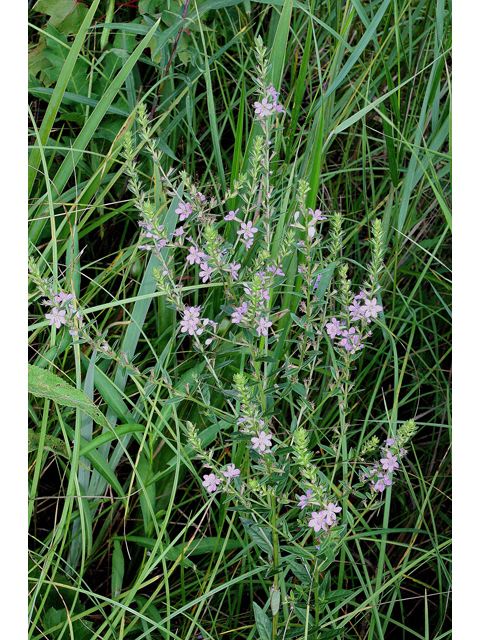
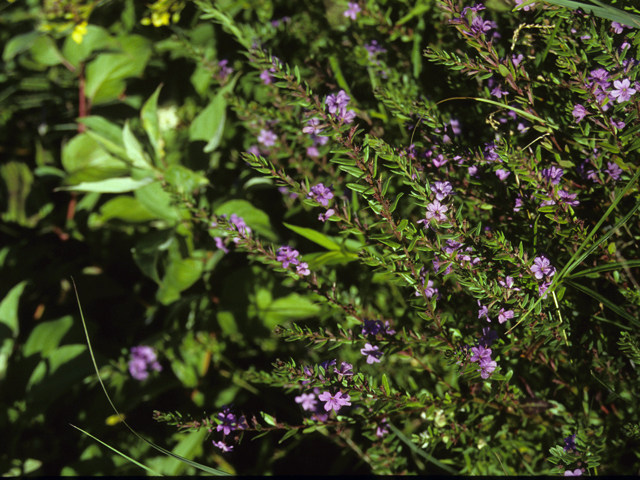
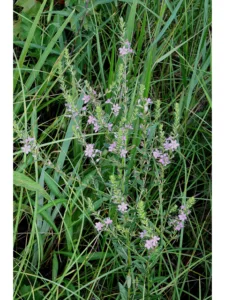
Blooms May-September. Grows in a dense ball almost like a short shrub, with lance shaped leaves. Single pale, purple flowers bloom on short stalks that arise from leaf axils. Petals have a darker purple mid-vein and resemble the texture of wrinkled tissue paper. The fruit is a capsule containing tiny seeds.
Material Treatment Method Collection References
Clump Division divide mature plants in early spring or fall. Ensure the new divisions have adequate moisture to establish roots. https://earthone.io/plant/lythrum%20alatum
Seed No Treatment Direct sow winged loosestrife seeds in late fall; since they need light to germinate, plant them on the surface of the soil.This purple loosestrife seed can also be started indoors 6-8 weeks before planting in the spring. After the flowers fade, a slender pod will develop. Since the tiny seeds easily blows away, shake the seed out of the pods as soon as they open. Store the winged loosestrife seed in a cool, dry place. 1) https://www.everwilde.com/store/Lythrum-alatum-WildFlower-Seed.html 2) https://www.picturethisai.com/care/propagate/Lythrum_alatum.html
Seed Stratification For spring planting, mix the Lythrum Alatum seeds with moist sand and store them in the refrigerator for 60 days before planting. Keep the soil lightly moist until germination. Plant the stratified seeds in early spring. Use a well-drained seed starting mix in pots or trays. Sprinkle the seeds lightly on the surface of the soil and barely cover them with a thin layer of soil or vermiculite. Place the pots or trays in a location that receives indirect light and maintains a consistent temperature. Keep the soil moist but not waterlogged. Germination should occur within 3-4 weeks. Once the seedlings have developed a couple of sets of true leaves and are sturdy enough, transplant them to individual pots or directly into the garden. Ensure the transplantation is done on a cloudy day or in the evening to reduce stress on the young plants. After the flowers fade, a slender pod will develop. Since the tiny seeds easily blows away, shake the seed out of the pods as soon as they open. Store the winged loosestrife seed in a cool, dry place. 1) https://www.everwilde.com/store/Lythrum-alatum-WildFlower-Seed.html 2) https://www.picturethisai.com/care/propagate/Lythrum_alatum.html

About the Region

Fall Symposium 2025 Logo - Teach for the Future

Salado, the location of our Fall 2025 Symposium, lies at the intersection of two ecoregions: the Edwards Plateau (Limestone Cut Plain) and Blackland Prairie (Northern Blackland Prairie).

The Edwards Plateau area is also called the Hill Country; however, this general term covers a much larger area extending farther north. Spring-fed creeks are found throughout the region; deep limestone canyons, rivers, and lakes (reservoirs) are common. Ashe juniper is perhaps the most common woody species found throughout the region. Additional woody species include various species of oak, with live oak (Quercus fusiformis) being the most common. Sycamores (Platanus occidentalis) and bald cypress (Taxodium distichum) border waterways. This area is well known for its spring wildflower displays, though they may be viewed in spring, late summer, and fall, as well. According to Texas Parks and Wildlife, average annual rainfall in the Edwards Plateau ranges from 15 to 34 inches.

The Blackland Prairie extends from the Red River south to San Antonio, bordered on the west by the Edwards Plateau and the Cross Timbers, and on the east by the Post Oak Savannah. Annual rainfall averages 30 to 40 inches, with higher averages to the east. This region is dominated by prairie species. The most common grass species include little bluestem (Schizachyrium scoparium) and Indian grass (Sorghastrum nutans) in the uplands and switchgrass (Panicum virgatum) in the riparian areas and drainages. Common herbaceous flowering plants include salvias, penstemons, and silphiums. This area has suffered greatly from overgrazing and agricultural use. Few intact areas remain, though many of the plants can be found along county roadsides throughout the region.

Our fall Symposium host chapter, the Tonkawa Chapter, includes both of these ecoregions.

Source: Wildflowers of Texas by Michael Eason