
Emory Oak

Quercus emoryi

Other common name(s):

Black Oak, Holly Oak, Apache Oak, Desert Live Oak, Western Black Oak, Roble Negro, Bellota

Family:

Fagaceae (Beech Family)

Plant Ecoregion Distribution Map

This map uses data from the US EPA. EPA  servers have been offline frequently so maps may not display. We are working on a solution.

Chihuahuan Deserts
Chihuahuan Desert Grasslands, Chihuahuan Montane Woodlands, Low Mountains and Bajadas

Plant Characteristics

Growth Form

Tree

Height

30
to
40
ft.

Spread

30
to
40
ft.

Leaf Retention

Semi Evergreen

Lifespan

Perennial

Habitat and Care Requirements

Soil Type(s)

Sand, Loam, Deep, Well Drained, Moist, Dry

Light Requirement

Sun, Part Shade

Water Requirement

Low, Medium

Native Habitat

Grassland

Bloom and Attraction

Bloom Color

Yellow

Bloom Season

Spring

Seasonal Interest

Nuts, Forage, Nectar, Larval Host

Wildlife Benefit

Browsers, Butterflies, Birds, Small Mammals, Deer, Moths

Maintenance

Emory Oak is the most characteristic tree of the oak woodland in mountains along the Mexican border. Drought tolerant. Grows in a variety of soils. Slower growing than some, but forms a stately canopy. In Texas it grows only in the mountains above 5,000 ft. near Alpine or Fort Davis and possibly in deep sands in the Pandhandle with supplemental watering. It is in the red oak group and therefore more susceptible to oak wilt. Prune only during the hottest and coldest months. Paint pruning wounds to help prevent oak wilt. Propagation: seed.

Comments

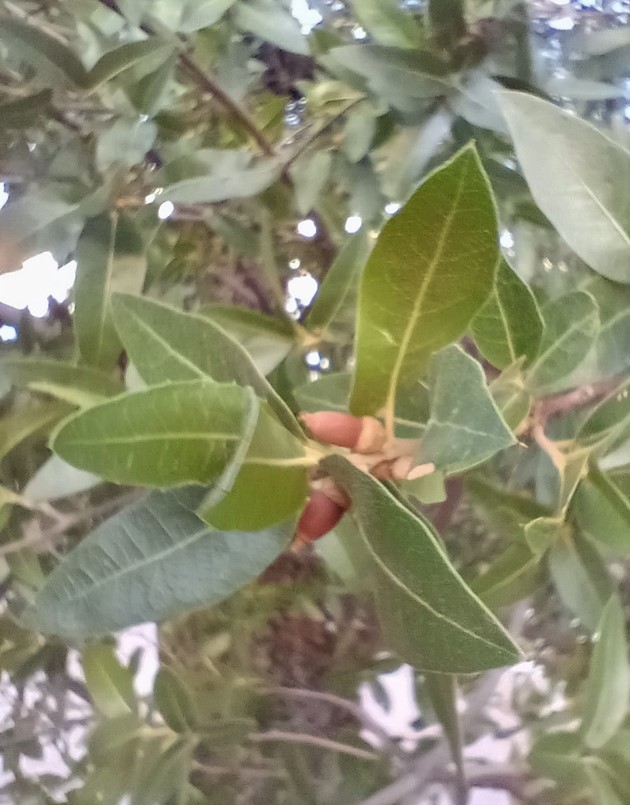
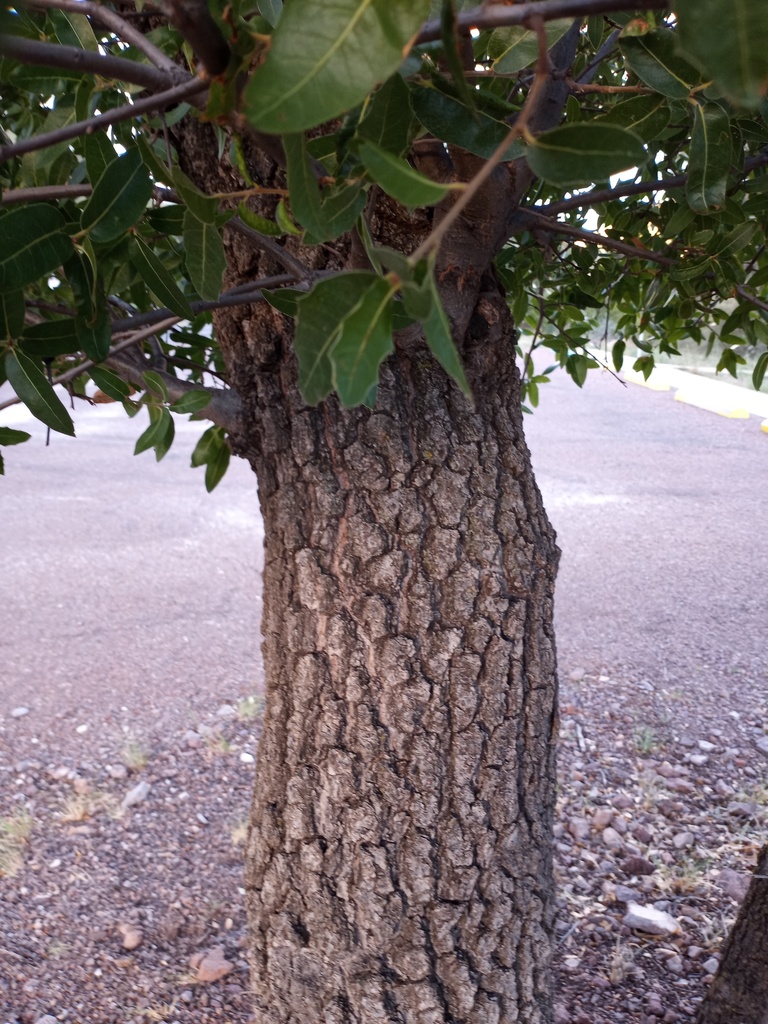
Blooms March-May. An oak with a round crown, very roughly furrowed black bark, and nearly evergreen leaves. Glossy, leathery leaves, resemble holly leaves. Tiny flowers are clustered on catkins. Red acorns have a yellow cap. Larval host: Oculea Silkmoth.

References

1) Griffith, Bryce, Omernick & Rodgers (2007). Ecoregions of Texas, 2) Wasowski, Sally and Wasowski, Andy, Native Texas Plants, Landscaping Region by Region, 1988, 1991, pg 340. 3) Miller, George O., Landscaping with Native Plants of Texas 2nd Ed., 2013, pg 48. 4) http://bonap.net/TDC/Image/Map?taxonType=Species&taxonId=12110&locationType=County&mapType=Normal. 5) https://www.wildflower.org/plants/result.php?id_plant=QUEM. 6) https://portal.torcherbaria.org/portal/taxa/index.php?taxon=Quercus+emoryi&formsubmit=Search+Terms, 7) https://www.itis.gov/servlet/SingleRpt/SingleRpt?search_topic=TSN&search_value=19328#null, 9) https://gardeningwithsoule.net/five-evergreen-oaks-for-the-southwest/
Material Treatment Method Collection References
Seed Stratification The tree is known to have a deep taproot and should therefore be planted into its final position as quickly as possible. The seeds may need to be stratified, or exposed to a period of cold temperatures, before planting to encourage germination. It is important to sown the seed quickly as it is prone to desiccation and loses vigor quickly. 1) https://apps.cals.arizona.edu/arboretum/taxon.aspx?id=242#:~:text=Cultivation%20Notes:%20Quercus%20emoryi%20can,than%20two%20seasons%20(3). 2) https://plantiary.com/plant/quercus-emoryi_18593.html
Softwood Cutting Rooting hormone may be necessary to encourage new root growth. The cuttings should be planted in a well-drained soil mix and kept consistently moist until new growth and roots have developed. Cuttings should be taken from the new growth of the plant, usually in the early spring, https://plantiary.com/plant/quercus-emoryi_18593.html
Seed No Treatment Emory oak acorns mature in one season Germination occurs during the summer shortly after maturation. There is no seed dormancy. Most germination occurs within 30 days after acorns drop from the tree; acorns are viable for about 60 days. In field trials, Emory oak acorns had lower viability and germination at the soil surface (5%) than 3 inches (7.5 cm) beneath the soil (29%) Emory oak germination is strongly positively correlated with moisture during the summer rainy season. Favorable environmental conditions for Emory oak germination and establishment occur infrequently, about once in a decade. https://www.fs.usda.gov/database/feis/plants/tree/queemo/all.html

About the Region

Fall Symposium 2025 Logo - Teach for the Future

Salado, the location of our Fall 2025 Symposium, lies at the intersection of two ecoregions: the Edwards Plateau (Limestone Cut Plain) and Blackland Prairie (Northern Blackland Prairie).

The Edwards Plateau area is also called the Hill Country; however, this general term covers a much larger area extending farther north. Spring-fed creeks are found throughout the region; deep limestone canyons, rivers, and lakes (reservoirs) are common. Ashe juniper is perhaps the most common woody species found throughout the region. Additional woody species include various species of oak, with live oak (Quercus fusiformis) being the most common. Sycamores (Platanus occidentalis) and bald cypress (Taxodium distichum) border waterways. This area is well known for its spring wildflower displays, though they may be viewed in spring, late summer, and fall, as well. According to Texas Parks and Wildlife, average annual rainfall in the Edwards Plateau ranges from 15 to 34 inches.

The Blackland Prairie extends from the Red River south to San Antonio, bordered on the west by the Edwards Plateau and the Cross Timbers, and on the east by the Post Oak Savannah. Annual rainfall averages 30 to 40 inches, with higher averages to the east. This region is dominated by prairie species. The most common grass species include little bluestem (Schizachyrium scoparium) and Indian grass (Sorghastrum nutans) in the uplands and switchgrass (Panicum virgatum) in the riparian areas and drainages. Common herbaceous flowering plants include salvias, penstemons, and silphiums. This area has suffered greatly from overgrazing and agricultural use. Few intact areas remain, though many of the plants can be found along county roadsides throughout the region.

Our fall Symposium host chapter, the Tonkawa Chapter, includes both of these ecoregions.

Source: Wildflowers of Texas by Michael Eason