
Blackjack Oak

Quercus marilandica

Other common name(s):

Barren Oak, Black Oak, Jack Oak

Family:

Fagaceae (Beech Family)

Plant Ecoregion Distribution Map

This map uses data from the US EPA. EPA  servers have been offline frequently so maps may not display. We are working on a solution.

Central Great Plains, Cross Timbers, East Central Texas Plains, Edwards Plateau, Gulf Coast Prairies and Marshes, Texas Blackland Prairies, Western Gulf Coastal Plain
Broken Red Plains, Limestone Plains
Carbonate Cross Timbers, Eastern Cross Timbers, Grand Prairie, Limestone Cut Plain, Western Cross Timbers
Bastrop Lost Pines, Floodplains and Low Terraces2, Northern Post Oak Savanna, Northern Prairie Outliers, San Antonio Prairie, Southern Post Oak Savanna
Balcones Canyonlands, Edwards Plateau Woodland, Llano Uplift
Floodplains and Low Terraces4, Laguna Madre Barrier Island and Coastal Marshes, Mid-Coast Barrier Islands and Coastal Marshes, Northern Humid Gulf Coastal Prairies, Southern Subhumid Gulf Coastal Prairies, Texas-Louisiana Coastal Marshes
Floodplains and Low Terraces1, Northern Blackland Prairie, Southern Blackland Prairie
Flatwoods, Floodplains and Low Terraces3, Pleistocene Fluvial Terraces, Red River Bottomlands, Southern Tertiary Uplands, Tertiary Uplands

Plant Characteristics

Growth Form

Tree

Height

14
to
45
ft.

Spread

14
to
45
ft.

Leaf Retention

Deciduous

Lifespan

Perennial

Habitat and Care Requirements

Soil Type(s)

Sand, Gravelly, Dry

Light Requirement

Part Shade

Water Requirement

Low

Native Habitat

Woodland

Bloom and Attraction

Bloom Color

White, Red, Green

Bloom Season

Spring

Seasonal Interest

Nuts, Forage, Nectar, Larval Host, Nesting Material

Wildlife Benefit

Browsers, Butterflies, Birds, Small Mammals, Deer

Maintenance

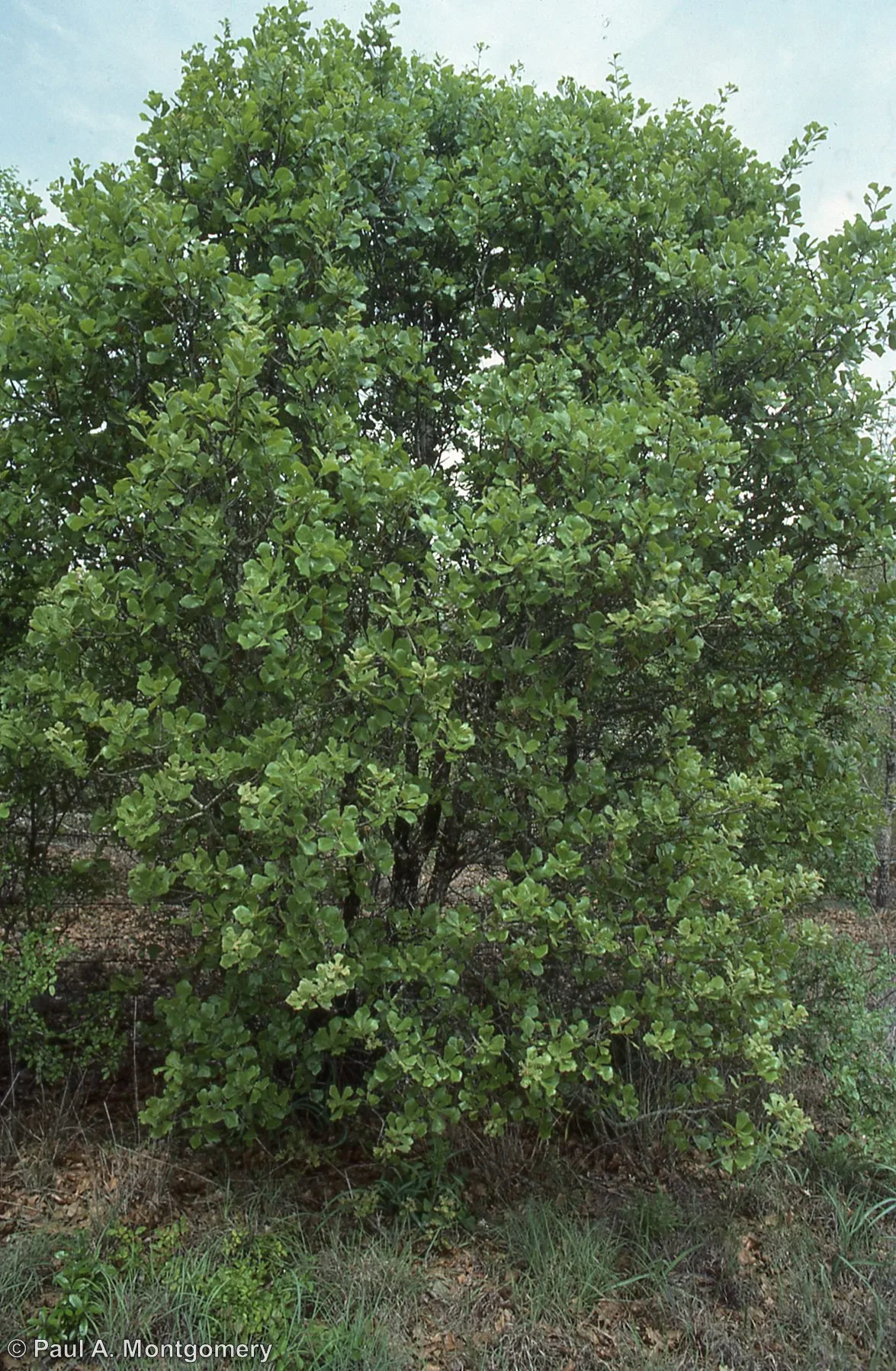
When given good soil and room it develops a more symmetrical form attractive for landscapes. Slow growing and long lived. In nature it is more scrubby, and sometimes grows in colonies. It is in the red oak group and therefore more susceptible to oak wilt. Prune only during the hottest and coldest months. Paint pruning wounds to help prevent oak wilt. Propagation: seed.

Comments

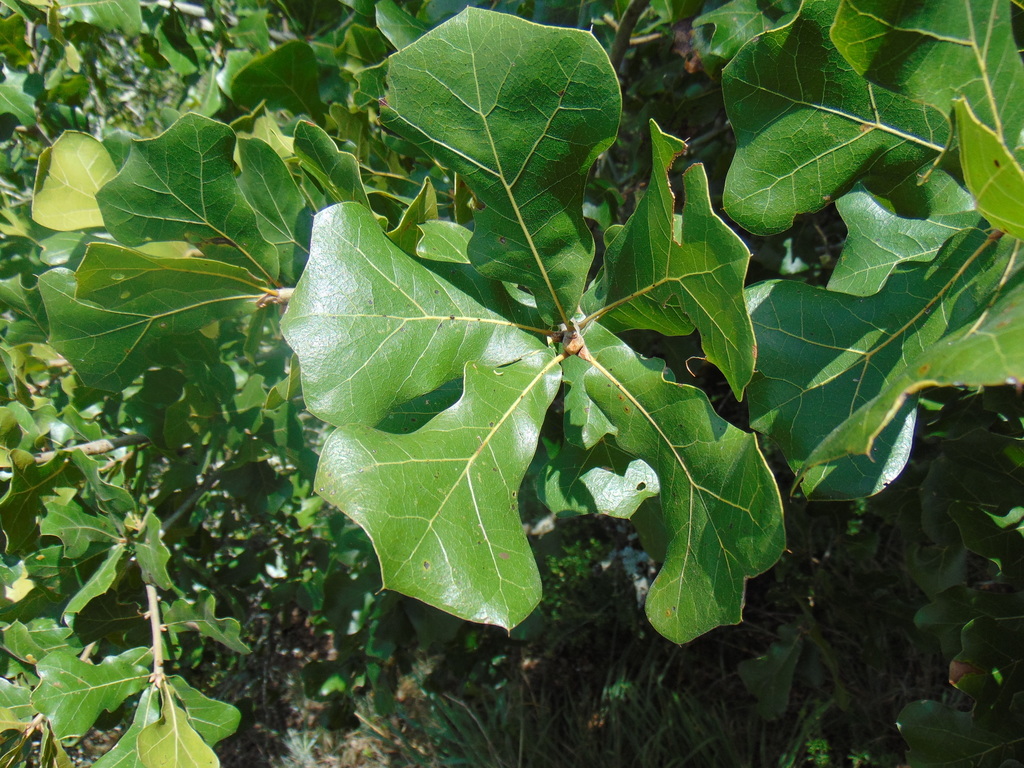
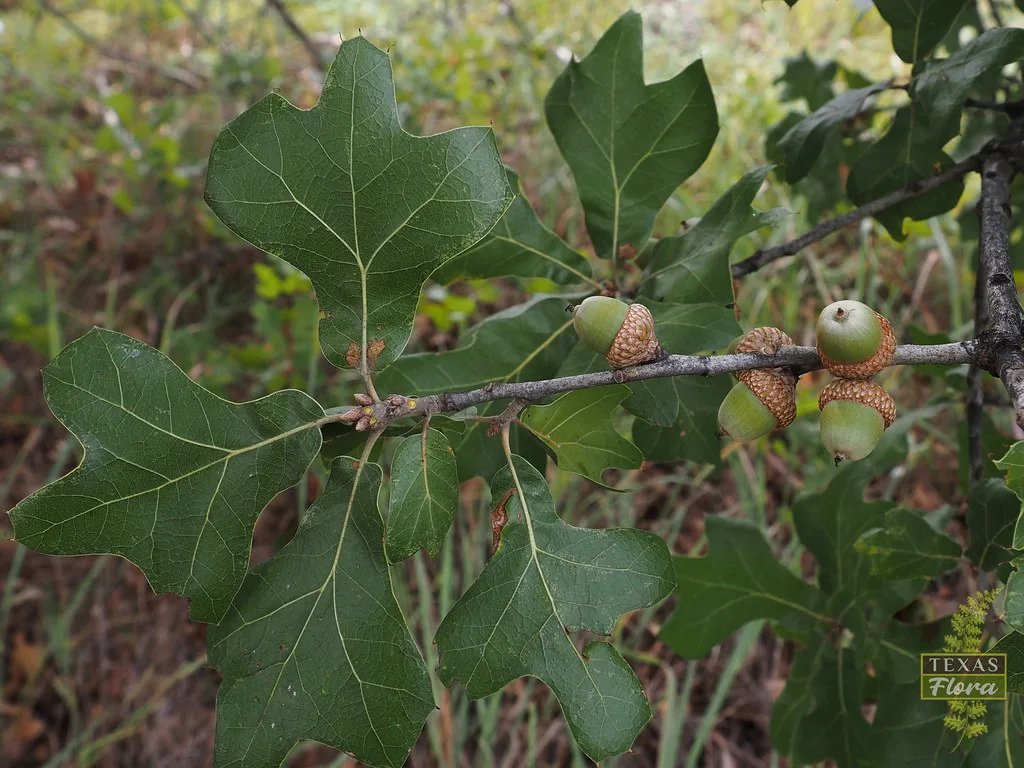
Blooms March-May. A small to medium tree with a short, nearly black trunk. Leaves are wedge shaped, shallowly lobed, glossy dark green, turning dull reddish-brown in fall. Tiny flowers are arranged on a catkin. The fruit is an acorn. Larval host: Horace’s Duskywing, White M hairstreak.

References

1) Griffith, Bryce, Omernick & Rodgers (2007). Ecoregions of Texas. 2) Miller, George O., Landscaping with Native Plants of Texas 2nd Ed., 2013, pg 48. 3) Wasowski and Wasowski, Native Texas Plants Landscaping Region by Region, 1991, pg. 344. 4) https://www.wildflower.org/plants/result.php?id_plant=QUMA3. 5) https://portal.torcherbaria.org/portal/taxa/index.php?taxon=Quercus+marilandica&formsubmit=Search+Terms. 6) http://bonap.net/TDC/Image/Map?taxonType=Species&taxonId=12145&locationType=County&mapType=Normal. 7) https://www.itis.gov/servlet/SingleRpt/SingleRpt?search_topic=TSN&search_value=19374#null
Material Treatment Method Collection References
Seed No Treatment Seeds quickly lose viability if it is allowed to dry out. It can be stored moist and cool overwinter but is best sown as soon as it is ripe in an outdoor seed bed, though it must be protected from mice, squirrels etc. Small quantities of seed can be sown in deep pots in a cold frame. Plants produce a deep taproot and need to be planted out into their permanent positions as soon as possible, in fact seed sown in situ will produce the best trees[11]. Trees should not be left in a nursery bed for more than 2 growing seasons without being moved or they will transplant very badly. To propagate in pots, prepare a potting mix made of equal parts sand and peat moss. Fill pots with the mixture and plant the acorns about 1 inch deep. Keep the pots in a warm and well-lit area, and keep the soil moist. After 6-8 weeks, the acorns should begin to sprout. Once the seedlings have grown to 2-3 inches in height, they can be carefully transplanted into larger containers or planted in the ground. The newly propagated plants will need to be watered regularly and protected from harsh weather conditions during their early growth stages. With proper care, they will grow into healthy trees over time. Seeds (acorns) collected by hand picking or flailing it from tree as soon as acorns can be removed from caps-avoid collecting acorns that have been on the ground for several weeks. collect acorns from mature trees in the fall. Choose healthy acorns that are free of pests and damage. Clean the acorns by removing any debris or foreign objects and soak them in water overnight. 1) https://www.npsot.org/wp-admin/post.php?post=16793&action=edit 2) https://npn.rngr.net/renderNPNProtocolDetails?selectedProtocolIds=fagaceae-quercus-499&referer=wildflower 3) https://plantiary.com/plant/quercus-marilandica_3621.html#:~:text=To%20propagate%20this%20plant%2C%20you,into%20healthy%20trees%20over%20time. 4) https://www.picturethisai.com/care/Quercus_marilandica.html#:~:text=How%20to%20Propagate%20Blackjack%20oak?&text=Blackjack%20oak%20propagates%20easily%20through,the%20soil%20is%20well%2Ddraining.
Seed Stratification Seeds (acorns) to be stratified in damp sphagnum peat moss for three or four months in 36 to 40 degrees Fahrenheit refrigerator. Acorns planted into individual pots deep enough to accommodate taproot or in flats to start off several seedlings, before transplanting them into individual pots. Do not let acorns dry. 1) https://npn.rngr.net/renderNPNProtocolDetails?selectedProtocolIds=fagaceae-quercus-499&referer=wildflower 2) https://www.picturethisai.com/care/Quercus_marilandica.html#:~:text=How%20to%20Propagate%20Blackjack%20oak?&text=Blackjack%20oak%20propagates%20easily%20through,the%20soil%20is%20well%2Ddraining.
Semi-harwood Cutting Once you've selected your cuttings, it’s time to prepare them for rooting. Begin by trimming the leaves from the lower half of each cutting to reduce moisture loss. Next, make a small cut at the bottom of the cutting. This wounding process encourages rooting by increasing the surface area for water absorption. Using a rooting hormone can significantly enhance your success rate. Opt for a rooting hormone that contains auxins, which are natural plant hormones that promote root development. Before planting, dip the cut end of each cutting into the rooting hormone. This simple step can make a big difference in how well your cuttings take root. Creating the right environment is essential for rooting success. Maintain high humidity levels between 70-80% by using a humidity dome or covering the cuttings with a plastic bag. Temperature also plays a vital role; keep the rooting area at a steady 70-75°F (21-24°C). Additionally, provide indirect sunlight to prevent scorching, ensuring your cuttings receive the light they need without the risk of damage. start by selecting semi-hardwood cuttings taken in late summer or earlBlackjack Oakor cuttings that arootstockches long and have at least 2-3 healthy leaf nodes. Choosing healthy stems is crucial; ensure they are free from any signs of disease or pests. This attention to detail will set the foundation for successful rooting. 1) https://greg.app/propagate-blackjack-oak/#:~:text=%F0%9F%8C%B1%20Selecting%20the%20Right%20Cuttings,is%20essential%20for%20rooting%20success. 2) https://www.picturethisai.com/care/Quercus_marilandica.html#:~:text=How%20to%20Propagate%20Blackjack%20oak?&text=Blackjack%20oak%20propagates%20easily%20through,the%20soil%20is%20well%2Ddraining.

About the Region

Fall Symposium 2025 Logo - Teach for the Future

Salado, the location of our Fall 2025 Symposium, lies at the intersection of two ecoregions: the Edwards Plateau (Limestone Cut Plain) and Blackland Prairie (Northern Blackland Prairie).

The Edwards Plateau area is also called the Hill Country; however, this general term covers a much larger area extending farther north. Spring-fed creeks are found throughout the region; deep limestone canyons, rivers, and lakes (reservoirs) are common. Ashe juniper is perhaps the most common woody species found throughout the region. Additional woody species include various species of oak, with live oak (Quercus fusiformis) being the most common. Sycamores (Platanus occidentalis) and bald cypress (Taxodium distichum) border waterways. This area is well known for its spring wildflower displays, though they may be viewed in spring, late summer, and fall, as well. According to Texas Parks and Wildlife, average annual rainfall in the Edwards Plateau ranges from 15 to 34 inches.

The Blackland Prairie extends from the Red River south to San Antonio, bordered on the west by the Edwards Plateau and the Cross Timbers, and on the east by the Post Oak Savannah. Annual rainfall averages 30 to 40 inches, with higher averages to the east. This region is dominated by prairie species. The most common grass species include little bluestem (Schizachyrium scoparium) and Indian grass (Sorghastrum nutans) in the uplands and switchgrass (Panicum virgatum) in the riparian areas and drainages. Common herbaceous flowering plants include salvias, penstemons, and silphiums. This area has suffered greatly from overgrazing and agricultural use. Few intact areas remain, though many of the plants can be found along county roadsides throughout the region.

Our fall Symposium host chapter, the Tonkawa Chapter, includes both of these ecoregions.

Source: Wildflowers of Texas by Michael Eason