
Willow Oak

Quercus phellos

Other common name(s):

Swamp Willow Oak, Pin Oak, Peach Oak

Family:

Fagaceae (Beech Family)

Plant Ecoregion Distribution Map

This map uses data from the US EPA. EPA  servers have been offline frequently so maps may not display. We are working on a solution.

Gulf Coast Prairies and Marshes, Western Gulf Coastal Plain
Northern Humid Gulf Coastal Prairies
Flatwoods, Floodplains and Low Terraces3, Pleistocene Fluvial Terraces, Red River Bottomlands, Southern Tertiary Uplands, Tertiary Uplands

Plant Characteristics

Growth Form

Tree

Height

30
to
60
ft.

Spread

40
to
60
ft.

Leaf Retention

Deciduous

Lifespan

Perennial

Habitat and Care Requirements

Soil Type(s)

Sand, Loam, Clay, Moist

Light Requirement

Sun, Part Shade

Water Requirement

Medium, High

Native Habitat

Woodland, Wetland or Riparian

Bloom and Attraction

Bloom Color

Yellow

Bloom Season

Spring

Seasonal Interest

Fall Color, Nuts, Larval Host

Wildlife Benefit

Butterflies, Birds, Small Mammals, Nectar Insects

Maintenance

Relatively fast growth rate. Keep well watered to get established. Grows best in areas with long, hot summers and mild, short winters. Native habitat: along rivers, in floodplains and deltas. If necessary, prune for shape. Shallow rooted, avoid planting near homes or other structures. Easily transplanted. It is in the red oak group and therefore more susceptible to oak wilt. Prune only during the hottest and coldest months. Paint pruning wounds to help prevent oak wilt. Propagation: seed.

Comments

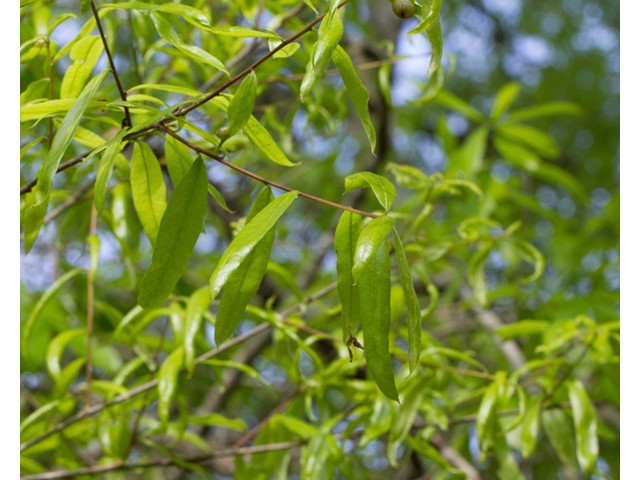
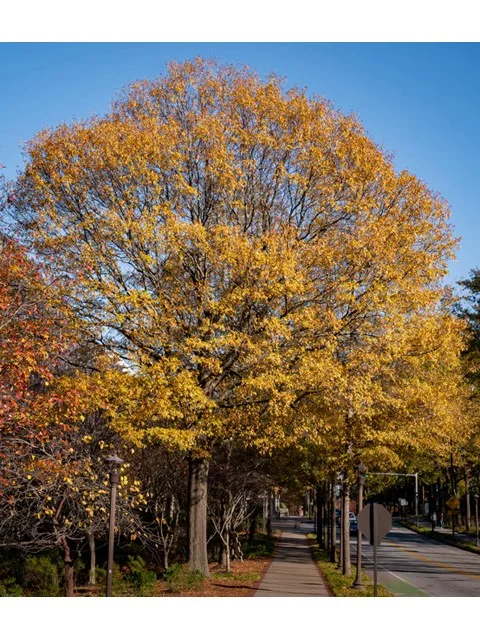
Blooms March-May. The straight trunk supports a cone-shaped crown which becomes round at maturity. Long, narrow, shiny leaves, have a bristle tip similar to willow leaves. May turn yellow in fall. Tiny flowers are clustered on catkins. The fruit is an acorn. Larval host: White M hairstreak, Horace’s Duskywing.
Material Treatment Method Collection References
Seed No Treatment Best if sown immediately as acorns lose viability quickly in storage. Plant immediately outdoors or in deep containers to accomodate long initial taproot. Best quality acorns are picked or shaken from the tree. Collect when color has changed to brown. 1) https://www.wildflower.org/plants/result.php?id_plant=QUPH 2) https://pfaf.org/user/Plant.aspx?LatinName=Quercus+phellos#:~:text=Plant%20Propagation,they%20will%20transplant%20very%20badly.
Seed Stratification These acorns exhibit dormancy that is typically broken through cold moist stratification for 60 to 90 days at approximately 4°C, after which they are sown in spring in well-drained media such as a mix of sand and peat. Germination rates under these conditions generally range from 70% to 90% when sown in controlled nursery environments, with radicle emergence occurring within 2 to 4 weeks post-stratification at temperatures around 20–30°C. 1) https://grokipedia.com/page/Quercus_phellos 2) https://www.wildflower.org/plants/result.php?id_plant=QUPH
Softwood Cutting Cuttings, typically 10–15 cm long, are treated with indole-3-butyric acid (IBA) at concentrations of 3,000–8,000 ppm to promote root development, yielding success rates of 50–80% under mist propagation systems with bottom heat. Seedlings require careful management during early growth, with transplanting recommended when young to minimize root disturbance and accommodate the developing taproot. Planting depth should ensure the root collar is at or slightly above soil level to prevent constriction. Vegetative propagation of Quercus phellos is less common due to the challenges associated with rooting mature tissues, but it can be achieved through softwood cuttings taken in summer from juvenile stock plants. https://grokipedia.com/page/Quercus_phellos

About the Region

Fall Symposium 2025 Logo - Teach for the Future

Salado, the location of our Fall 2025 Symposium, lies at the intersection of two ecoregions: the Edwards Plateau (Limestone Cut Plain) and Blackland Prairie (Northern Blackland Prairie).

The Edwards Plateau area is also called the Hill Country; however, this general term covers a much larger area extending farther north. Spring-fed creeks are found throughout the region; deep limestone canyons, rivers, and lakes (reservoirs) are common. Ashe juniper is perhaps the most common woody species found throughout the region. Additional woody species include various species of oak, with live oak (Quercus fusiformis) being the most common. Sycamores (Platanus occidentalis) and bald cypress (Taxodium distichum) border waterways. This area is well known for its spring wildflower displays, though they may be viewed in spring, late summer, and fall, as well. According to Texas Parks and Wildlife, average annual rainfall in the Edwards Plateau ranges from 15 to 34 inches.

The Blackland Prairie extends from the Red River south to San Antonio, bordered on the west by the Edwards Plateau and the Cross Timbers, and on the east by the Post Oak Savannah. Annual rainfall averages 30 to 40 inches, with higher averages to the east. This region is dominated by prairie species. The most common grass species include little bluestem (Schizachyrium scoparium) and Indian grass (Sorghastrum nutans) in the uplands and switchgrass (Panicum virgatum) in the riparian areas and drainages. Common herbaceous flowering plants include salvias, penstemons, and silphiums. This area has suffered greatly from overgrazing and agricultural use. Few intact areas remain, though many of the plants can be found along county roadsides throughout the region.

Our fall Symposium host chapter, the Tonkawa Chapter, includes both of these ecoregions.

Source: Wildflowers of Texas by Michael Eason