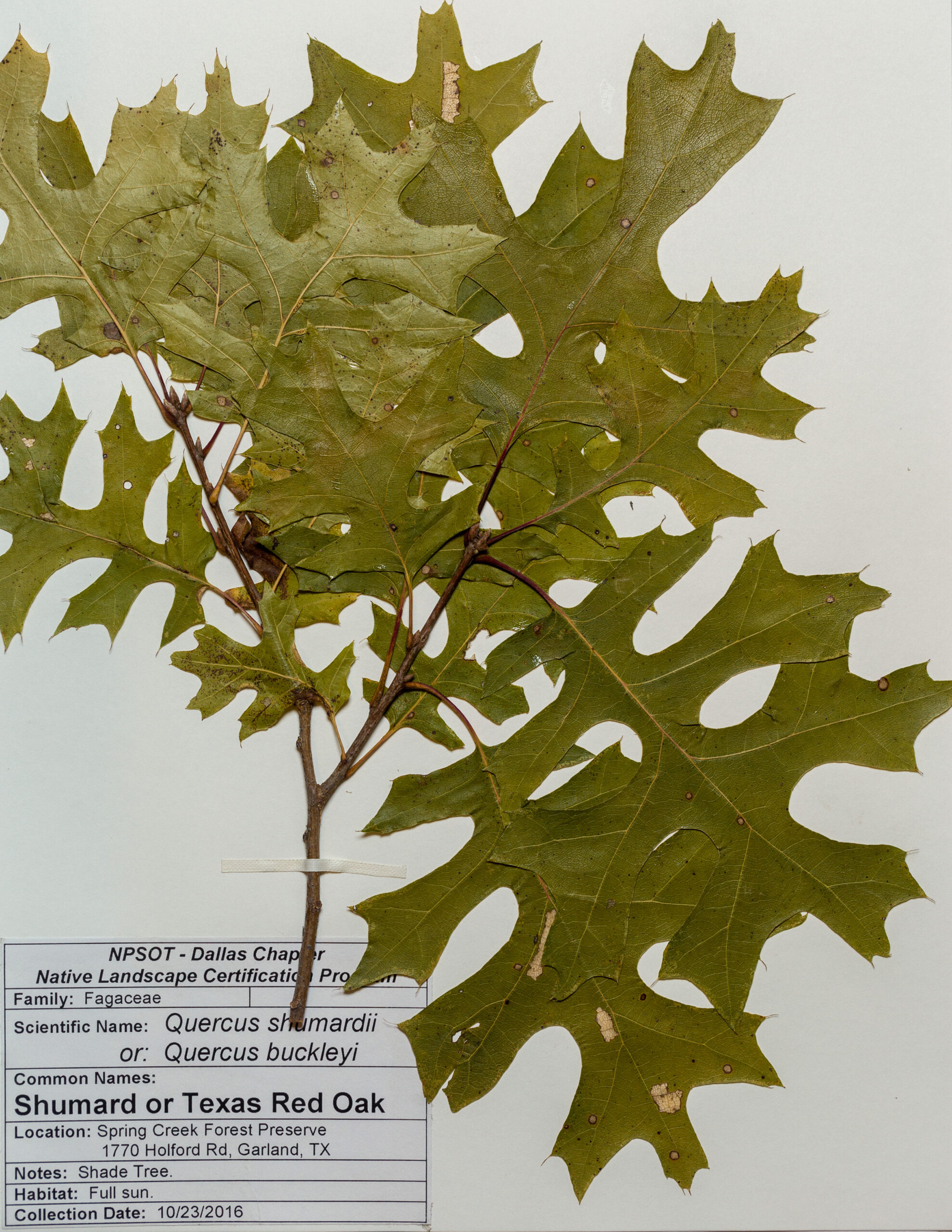

Shumard Oak

Quercus shumardii

Other common name(s):

Shumard Oak, Shumard's Oak, Shumard Red Oak, Southern Red Oak, Swamp Red Oak, Spotted Oak

Family:

Fagaceae (Beech Family)

Plant Ecoregion Distribution Map

This map uses data from the US EPA. EPA  servers have been offline frequently so maps may not display. We are working on a solution.

Cross Timbers, East Central Texas Plains, Gulf Coast Prairies and Marshes, Texas Blackland Prairies, Western Gulf Coastal Plain
Carbonate Cross Timbers, Eastern Cross Timbers, Grand Prairie, Limestone Cut Plain, Western Cross Timbers
Bastrop Lost Pines, Floodplains and Low Terraces2, Northern Post Oak Savanna, Northern Prairie Outliers, San Antonio Prairie, Southern Post Oak Savanna
Northern Humid Gulf Coastal Prairies
Floodplains and Low Terraces1, Northern Blackland Prairie
Floodplains and Low Terraces3, Pleistocene Fluvial Terraces, Red River Bottomlands, Southern Tertiary Uplands

Plant Characteristics

Growth Form

Tree

Height

30
to
120
ft.

Spread

50
to
60
ft.

Leaf Retention

Deciduous

Lifespan

Perennial

Habitat and Care Requirements

Soil Type(s)

Sand, Loam, Clay, Limestone, Caliche, Deep, Moist, Dry

Light Requirement

Sun, Part Shade

Water Requirement

Medium

Native Habitat

Woodland, Wetland or Riparian

Bloom and Attraction

Bloom Color

White, Green

Bloom Season

Spring

Seasonal Interest

Fall Color, Nuts, Larval Host

Wildlife Benefit

Butterflies, Birds, Small Mammals

Maintenance

An attractive shade tree. Similar to the Texas Oak (Quercus buckleyi), but prefers deeper soils and tends to grow taller and straighter. Can hybridize. A very adaptable oak with a relatively fast growth rate. This species is drought tolerant and also withstands short-term flooding. Native habitat: moist forests and stream bottoms. Foliage provides attractive fall color. It is in the red oak group and therefore more susceptible to oak wilt. Prune only during the hottest and coldest months. Paint pruning wounds to help prevent oak wilt. Propagation: seed.

Comments

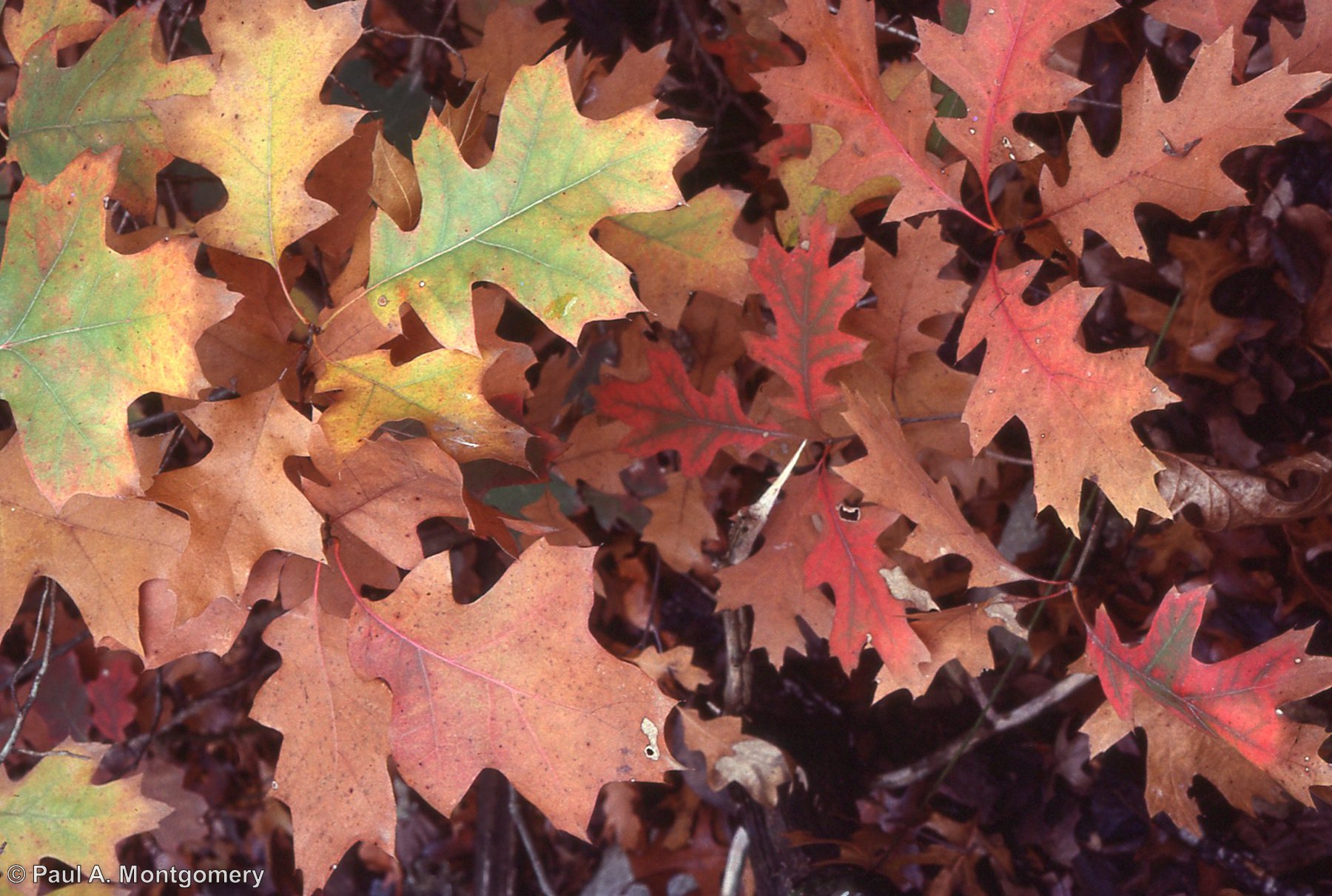
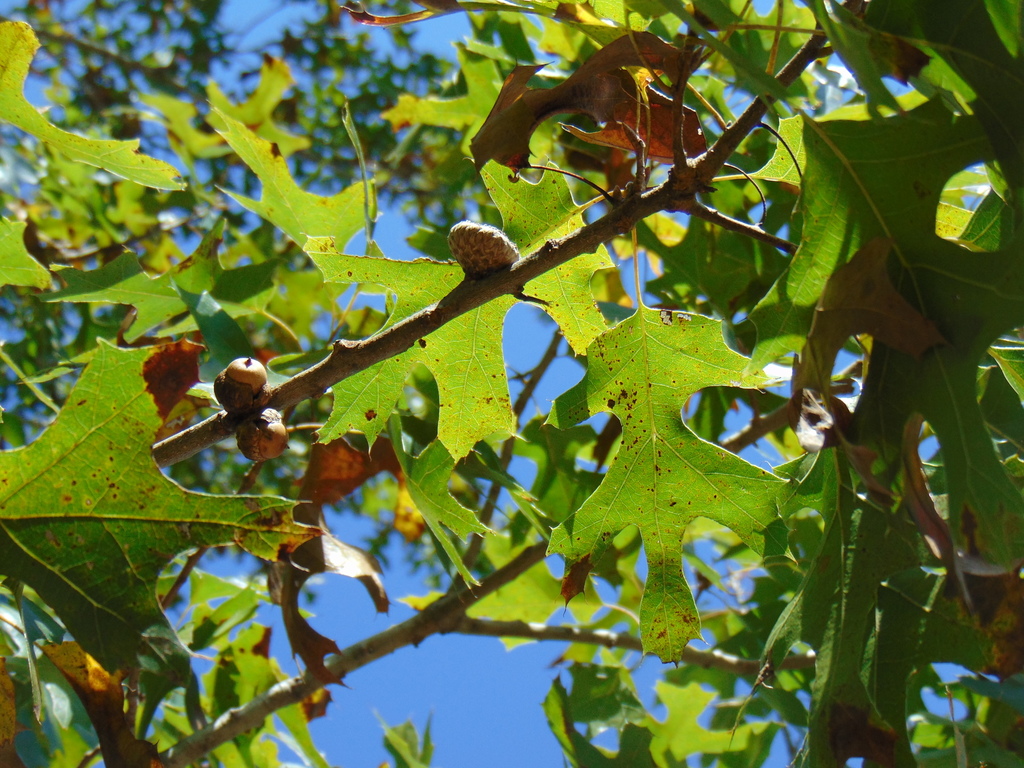
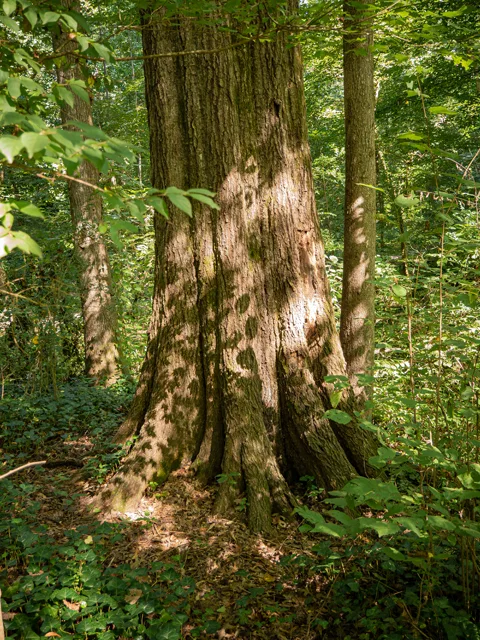
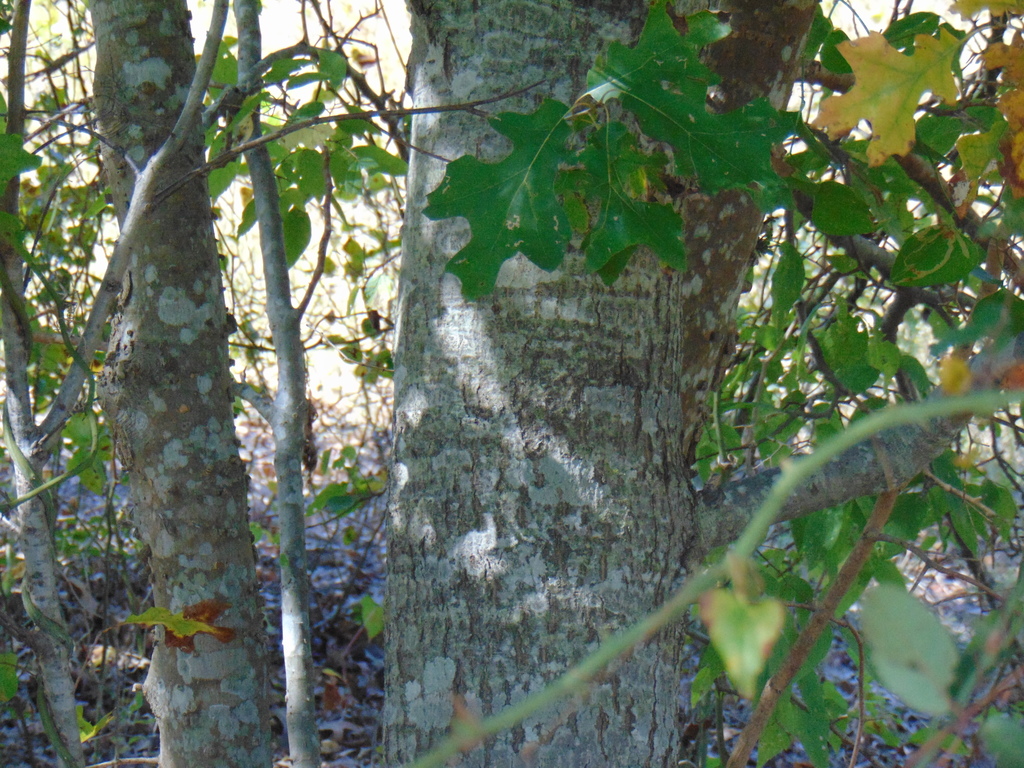
Blooms March-May. A columnar trunked tree, with pyramidal crown, becoming more open at maturity. Bark is thick, smooth and grayish, becoming furrowed and darker gray. Leaves grow up to 7 inches long, with 2 to 4 pairs of pointed lobes and tips, and a woolly surface on lower leaf vein axils. Tiny flowers are arranged on a catkin. Larval host: Horace’s Duskywing Butterfly.

References

1) Griffith, Bryce, Omernick & Rodgers (2007). Ecoregions of Texas. 2) Miller, George O., Landscaping with Native Plants of Texas 2nd Ed., 2013, pg 48. 3) Wasowski and Wasowski, Native Texas Plants Landscaping Region by Region, 1991, pg. 344. 4) https://www.wildflower.org/plants/result.php?id_plant=QUSH. 5) https://portal.torcherbaria.org/portal/taxa/index.php?taxon=Quercus+shumardii&formsubmit=Search+Terms. 6) http://bonap.net/TDC/Image/Map?taxonType=Species&taxonId=11986&locationType=County&mapType=Normal. 7) https://www.itis.gov/servlet/SingleRpt/SingleRpt?search_topic=TSN&search_value=19417#null
Material Treatment Method Collection References
Seed No Treatment Best if sown immediately as acorns lose viability quickly in storage. Plant immediately outdoors or in deep containers to accomodate long initial taproot. They sprout immediately without dormancy period. Soaking seeds in hot water for at least 15 minutes helps to prevent weevil infestation. After the soaking plant directly into a large container. The Shumard oak grows best in moist but well-drained loamy soils Best quality acorns are picked or shaken from the tree. Collect when color has changed to brown. Seed may be floated in water to help determine viability. Seed that floats is normally poorly filled and has low or no viability. Floaters are discarded, while the seed that sinks is retained for planting. 1) https://apps.cals.arizona.edu/arboretum/taxon.aspx?id=838#:~:text=Cultivation%20Notes:%20Like%20most%20oaks,a%20low%20toxicity%20(1). 2) https://www.wildflower.org/plants/result.php?id_plant=QUSH 3) https://www.nrcs.usda.gov/plantmaterials/wvpmcot12018.pdf
Stem Cutting Dip the cuttings in rooting hormone to stimulate root developent and increase the chances of success when propagating. It helps to accelerate the rooting process, which is beneficial for the relatively slow-rooting oak species. Trays are used to hold the potting mix and maintain the cuttings in a controlled environment. They allow for ease of transport during the propagation process. Enrich the planting site with compost and ensure that the soil has good drainage and the appropriate pH level to foster robust growth in shumard oak. Placing a clear plastic dome over the propagation tray creates a greenhouse-like environment with high humidity, which is beneficial for the cuttings of shumard oak to prevent them from drying out before they can establish roots. Maintain consistent moisture, but avoid over-saturation. Allow the soil to dry out slightly between watering to prevent rot. Once the cutting of shumard oak has established roots, gradually introduce it to less humid conditions by opening the plastic bag or humidity dome for increasing periods each day. After a week, remove the cover completely. Transplant the rooted cutting to a larger pot filled with standard potting soil and ensure it receives full sun to partial shade. Water the young shumard oak deeply to encourage deep root growth, allowing the soil to dry slightly between waterings. Protect from extreme weather conditions and pests, and supplement with fertilizer according to shumard oak's growth stages and the soil's nutrient content. Select disease-free branches for cutting propagation. Ensure the cuttings are from vigorous and healthy parts of the parent plant to increase the chances of successful propagation. 1) https://www.picturethisai.com/care/propagate/Quercus_shumardii.html#:~:text=Shumard%20oak%20can%20be%20propagated,or%20seed%20is%20kept%20moist. 2) https://apps.cals.arizona.edu/arboretum/taxon.aspx?id=838#:~:text=Cultivation%20Notes:%20Like%20most%20oaks,a%20low%20toxicity%20(1).

About the Region

Fall Symposium 2025 Logo - Teach for the Future

Salado, the location of our Fall 2025 Symposium, lies at the intersection of two ecoregions: the Edwards Plateau (Limestone Cut Plain) and Blackland Prairie (Northern Blackland Prairie).

The Edwards Plateau area is also called the Hill Country; however, this general term covers a much larger area extending farther north. Spring-fed creeks are found throughout the region; deep limestone canyons, rivers, and lakes (reservoirs) are common. Ashe juniper is perhaps the most common woody species found throughout the region. Additional woody species include various species of oak, with live oak (Quercus fusiformis) being the most common. Sycamores (Platanus occidentalis) and bald cypress (Taxodium distichum) border waterways. This area is well known for its spring wildflower displays, though they may be viewed in spring, late summer, and fall, as well. According to Texas Parks and Wildlife, average annual rainfall in the Edwards Plateau ranges from 15 to 34 inches.

The Blackland Prairie extends from the Red River south to San Antonio, bordered on the west by the Edwards Plateau and the Cross Timbers, and on the east by the Post Oak Savannah. Annual rainfall averages 30 to 40 inches, with higher averages to the east. This region is dominated by prairie species. The most common grass species include little bluestem (Schizachyrium scoparium) and Indian grass (Sorghastrum nutans) in the uplands and switchgrass (Panicum virgatum) in the riparian areas and drainages. Common herbaceous flowering plants include salvias, penstemons, and silphiums. This area has suffered greatly from overgrazing and agricultural use. Few intact areas remain, though many of the plants can be found along county roadsides throughout the region.

Our fall Symposium host chapter, the Tonkawa Chapter, includes both of these ecoregions.

Source: Wildflowers of Texas by Michael Eason