
Texas Sage

Salvia texana

Other common name(s):

Blue Sage

Family:

Lamiaceae (Mint Family)

Plant Ecoregion Distribution Map

This map uses data from the US EPA. EPA  servers have been offline frequently so maps may not display. We are working on a solution.

Central Great Plains, Cross Timbers, Edwards Plateau
Limestone Plains, Red Prairie
Limestone Cut Plain, Western Cross Timbers
Balcones Canyonlands, Edwards Plateau Woodland, Llano Uplift, Semiarid Edwards Plateau

Plant Characteristics

Growth Form

Herbaceous

Height

1
to
1.5
ft.

Spread

1
to
1.5
ft.

Leaf Retention

Deciduous

Lifespan

Perennial

Habitat and Care Requirements

Soil Type(s)

Rocky, Limestone, Caliche, Well Drained, Dry

Light Requirement

Sun, Part Shade

Water Requirement

Low

Native Habitat

Grassland

Bloom and Attraction

Bloom Color

Blue, Purple

Bloom Season

Spring

Seasonal Interest

Nectar, Pollen

Wildlife Benefit

Butterflies, Bees

Maintenance

A small plant that can be easily overwhelmed by larger species, so best used in borders, in mass, shortgrass meadow, rock gardens, or the edge of limestone prairies. Very similar to Salvia engelmannii, Salvia texana has a longer bloom period and smaller, darker flowers. Native habitat: well-drained limestone soils and on hills from north-central Texas (Denton County). Propagation: seed.

Comments

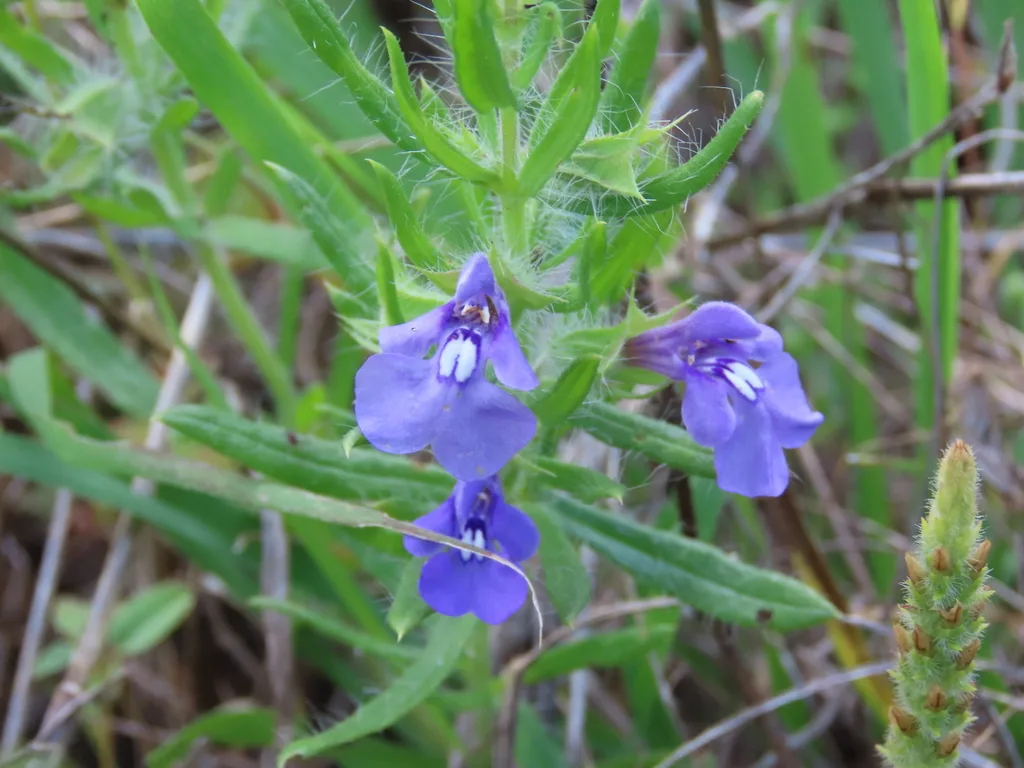
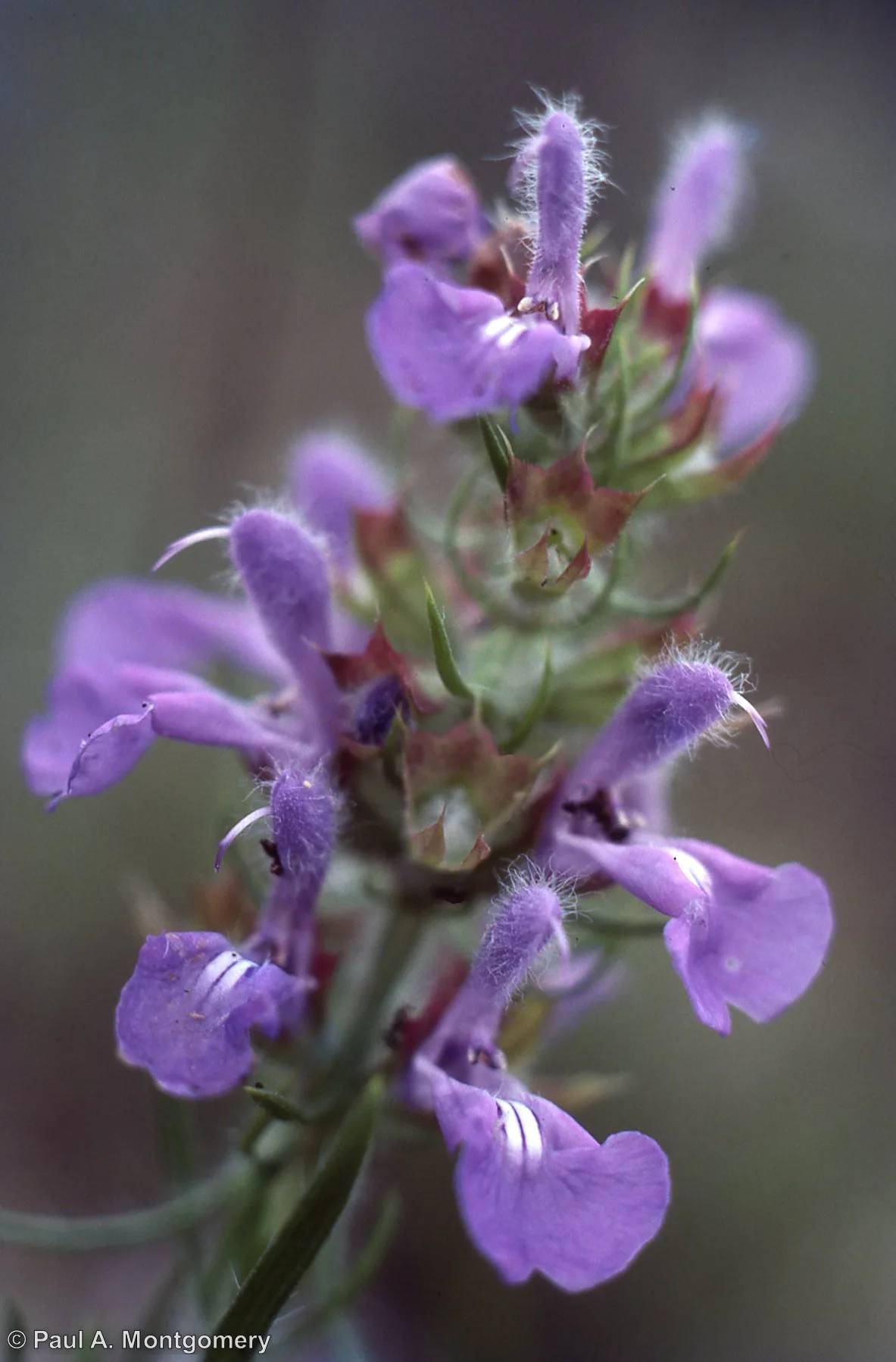
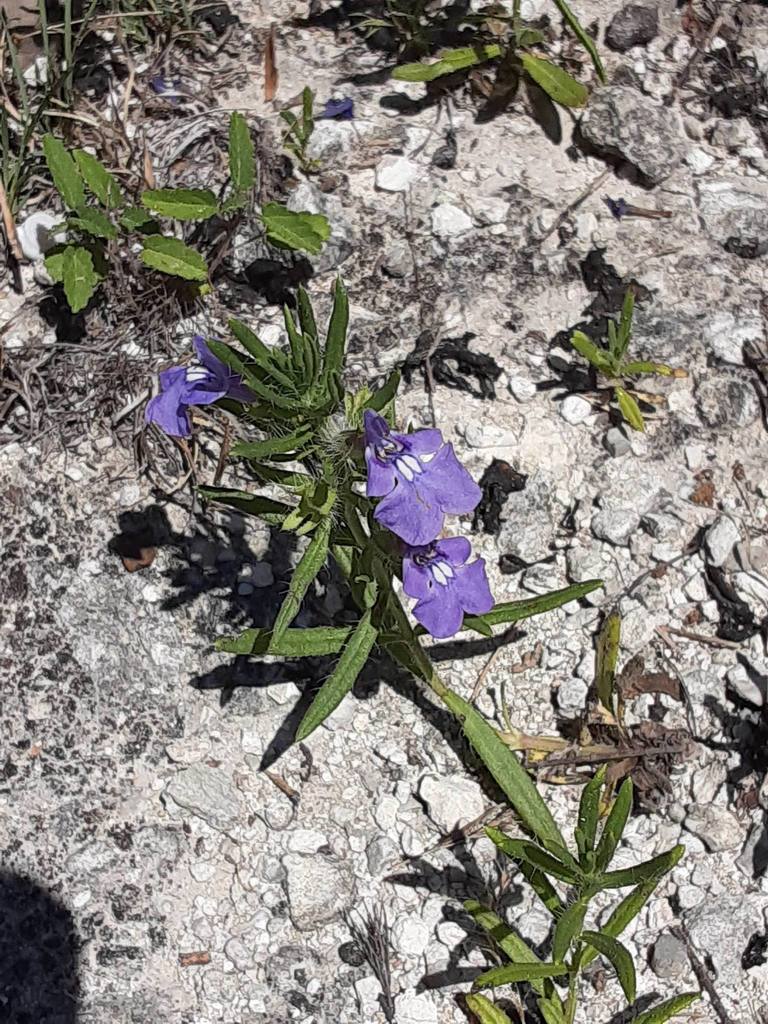
Blooms March-May. An upright plant with one to many stems and small, fuzzy, lance-shaped, aromatic leaves. The small purple blooms are followed by a 4 to 3-sided nutlet. The nutlet is dull brown, rounded on back, and flat on 2 inward faces.

References

1) Griffith, Bryce, Omernick & Rodgers (2007). Ecoregions of Texas. 2) Miller, George O., Landscaping with Native Plants of Texas 2nd Ed., 2013, pg 48, 3) Wasowski and Wasowski, Native Texas Plants Landscaping Region by Region, 1991, pg. 207, 209, 4) https://www.wildflower.org/plants/result.php?id_plant=SATE3. 5) http://bonap.net/TDC/Image/Map?taxonType=Species&taxonId=13676&locationType=County&mapType=Normal 6) https://www.itis.gov/servlet/SingleRpt/SingleRpt?search_topic=TSN&search_value=32693#null, 7) chrome-extension://efaidnbmnnnibpcajpcglclefindmkaj/https://w3.biosci.utexas.edu/prc/K12/pdf/Salvia%20texana
Material Treatment Method Collection References
Seed Scarification Soak texas sage seeds in warm water for 24 hours prior to sowing. This helps to break the dormancy of the seeds, increasing the germination rate. Plant the pre-treated seeds in the prepared soil mix. Place the seeds on the soil surface and lightly cover with a thin layer of soil no more than 1/4 inch deep. This will allow for optimal exposure to light, which is necessary for germination. Maintain the soil evenly moist but not waterlogged. Keep the sowing area at a consistent temperature ideally between 65-75°F. Collect seeds from mature plants after they’ve finished flowering. Once harvested, let the seeds dry completely before storing them away for future planting. 1) https://www.picturethisai.com/care/propagate/Salvia_texana.html 2) https://greg.app/propagate-texas-sage/
Stem Cutting Remove the lower leaves but leave 2-3 leaves at the top to support photosynthesis. Apply a rooting hormone to the cut end and plant in a well-draining propagation medium. Provide bright, indirect light and maintain consistent moisture in the propagation medium, but avoid waterlogging. Take cuttings in late spring to early summer when the new growth is soft and pliable. Look for those that are green, flexible, and non-flowering, and take cuttings that are 4-6 inches long, ensuring each has at least two leaf nodes for optimal growth. 1) https://www.picturethisai.com/care/propagate/Salvia_texana.html 2) https://greg.app/propagate-texas-sage/
Stem Layering Create a 1-inch long incision about one-third through the stem. This cut will encourage root development. Dust the cut area with rooting hormone. This step boosts the chances of successful rooting. Cover the cut area with sphagnum moss and secure it with plastic wrap to help retain moisture for root growth. Ensure the air layering site receives indirect sunlight to keep the moss moist until roots develop. After 4-6 weeks, look for visible roots. Once roots are established, cut below the new roots and transplant your new Texas Sage. Look for a flexible stem that is at least one year old. This ensures that the stem has enough vigor to support new growth. https://greg.app/propagate-texas-sage/

About the Region

Fall Symposium 2025 Logo - Teach for the Future

Salado, the location of our Fall 2025 Symposium, lies at the intersection of two ecoregions: the Edwards Plateau (Limestone Cut Plain) and Blackland Prairie (Northern Blackland Prairie).

The Edwards Plateau area is also called the Hill Country; however, this general term covers a much larger area extending farther north. Spring-fed creeks are found throughout the region; deep limestone canyons, rivers, and lakes (reservoirs) are common. Ashe juniper is perhaps the most common woody species found throughout the region. Additional woody species include various species of oak, with live oak (Quercus fusiformis) being the most common. Sycamores (Platanus occidentalis) and bald cypress (Taxodium distichum) border waterways. This area is well known for its spring wildflower displays, though they may be viewed in spring, late summer, and fall, as well. According to Texas Parks and Wildlife, average annual rainfall in the Edwards Plateau ranges from 15 to 34 inches.

The Blackland Prairie extends from the Red River south to San Antonio, bordered on the west by the Edwards Plateau and the Cross Timbers, and on the east by the Post Oak Savannah. Annual rainfall averages 30 to 40 inches, with higher averages to the east. This region is dominated by prairie species. The most common grass species include little bluestem (Schizachyrium scoparium) and Indian grass (Sorghastrum nutans) in the uplands and switchgrass (Panicum virgatum) in the riparian areas and drainages. Common herbaceous flowering plants include salvias, penstemons, and silphiums. This area has suffered greatly from overgrazing and agricultural use. Few intact areas remain, though many of the plants can be found along county roadsides throughout the region.

Our fall Symposium host chapter, the Tonkawa Chapter, includes both of these ecoregions.

Source: Wildflowers of Texas by Michael Eason