Texas Bluebonnets: A Play In Three Acts

By Dr. Byron D. Augustin, San Antonio and Fredericksburg Chapters
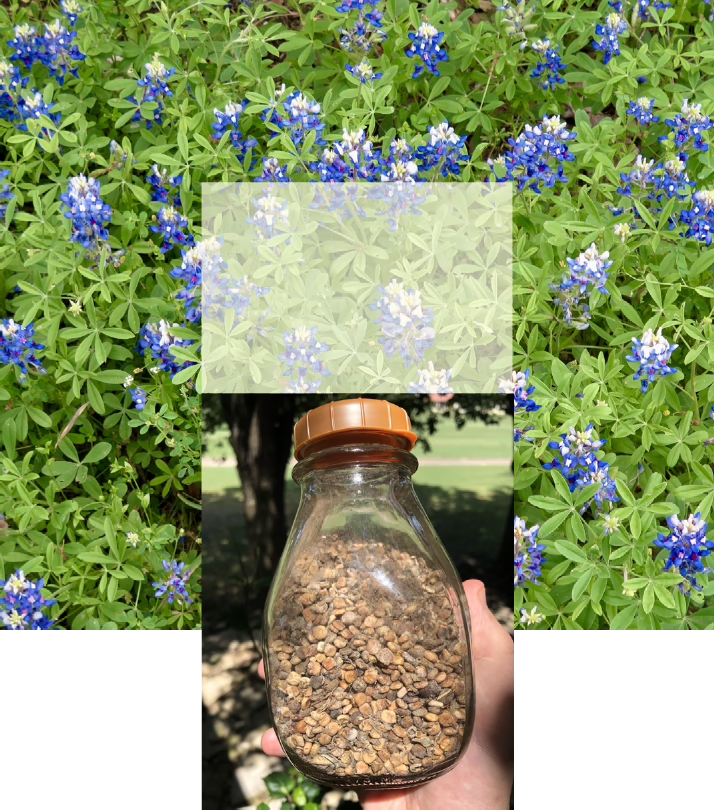
Bluebonnet opening image

Few flowers are as closely tied to Texas identity as the bluebonnet. One reason Texans never seem to tire of them is that “bluebonnet” does not refer to a single plant but to a family of six state-recognized species, from the familiar Texas Bluebonnet (Lupinus texensis) to Sandyland Bluebonnet (Lupinus subcarnosus) and the dramatic West Texas species Big Bend/Chisos Bluebonnet (Lupinus havardii).

The story begins long before spring color. Most bluebonnets start life in autumn, when dormant seeds finally germinate after the right mix of rain and temperature. Through winter the plants hug the ground as rosettes, directing much of their energy below the surface to establish strong roots.
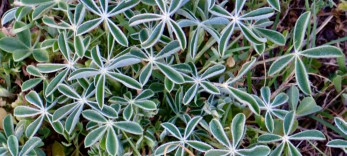
Bluebonnet rosettes

That underground work matters. Bluebonnets partner with rhizobium bacteria to convert atmospheric nitrogen into a usable form, which helps explain why these plants can thrive without the kind of fertilizing people often assume flowers require.

Spring is the showiest act. As stems bolt upward, each flowering spike forms dozens of florets designed to reward and guide pollinators. The banner, wing, and keel petals are not just beautiful structures; they are part of an elegant system that helps bees and butterflies land, feed, and pollinate the plant.
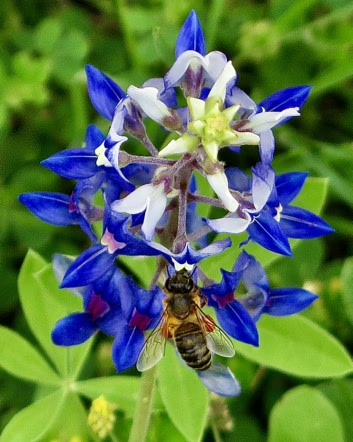
Western honey bee on a bluebonnet
A western honey bee straddes the keel petals while gathering nectar and pollen.

The final act comes after the bloom. Mature seed pods dry, tense, and then split in a burst of explosive dehiscence, flinging seeds away from the parent plant. Some germinate the following season, while others can wait years for favorable conditions.

Seen this way, bluebonnets are more than a roadside spectacle. They are a year-round story of adaptation, pollination, patience, and renewal, one that rewards Texans who stop to notice more than the brief spring display.

Did you like this article? It’s from our Summer 2026 Texas Native Plants magazine. Read more here

Summer 2026 Texas Native Plants

About the Region

Fall Symposium 2025 Logo - Teach for the Future

Salado, the location of our Fall 2025 Symposium, lies at the intersection of two ecoregions: the Edwards Plateau (Limestone Cut Plain) and Blackland Prairie (Northern Blackland Prairie).

The Edwards Plateau area is also called the Hill Country; however, this general term covers a much larger area extending farther north. Spring-fed creeks are found throughout the region; deep limestone canyons, rivers, and lakes (reservoirs) are common. Ashe juniper is perhaps the most common woody species found throughout the region. Additional woody species include various species of oak, with live oak (Quercus fusiformis) being the most common. Sycamores (Platanus occidentalis) and bald cypress (Taxodium distichum) border waterways. This area is well known for its spring wildflower displays, though they may be viewed in spring, late summer, and fall, as well. According to Texas Parks and Wildlife, average annual rainfall in the Edwards Plateau ranges from 15 to 34 inches.

The Blackland Prairie extends from the Red River south to San Antonio, bordered on the west by the Edwards Plateau and the Cross Timbers, and on the east by the Post Oak Savannah. Annual rainfall averages 30 to 40 inches, with higher averages to the east. This region is dominated by prairie species. The most common grass species include little bluestem (Schizachyrium scoparium) and Indian grass (Sorghastrum nutans) in the uplands and switchgrass (Panicum virgatum) in the riparian areas and drainages. Common herbaceous flowering plants include salvias, penstemons, and silphiums. This area has suffered greatly from overgrazing and agricultural use. Few intact areas remain, though many of the plants can be found along county roadsides throughout the region.

Our fall Symposium host chapter, the Tonkawa Chapter, includes both of these ecoregions.

Source: Wildflowers of Texas by Michael Eason