Highland Lakes Chapter

Texas Tree Diversity Field Trip – April 22

A wonderful rain the night before and slightly chilly temperatures made the joint field trip with the Highland Lakes Native Plant Society of Texas and the Highland Lakes Birding and Wildflower Society to a native tree nursery in Bertram even more exciting.

All the trees looked fantastic after their cleansing shower! The wildflowers perked up with Mother Nature’s watering. And a little bit of mud was a small price to pay for such a fun and educational field trip.

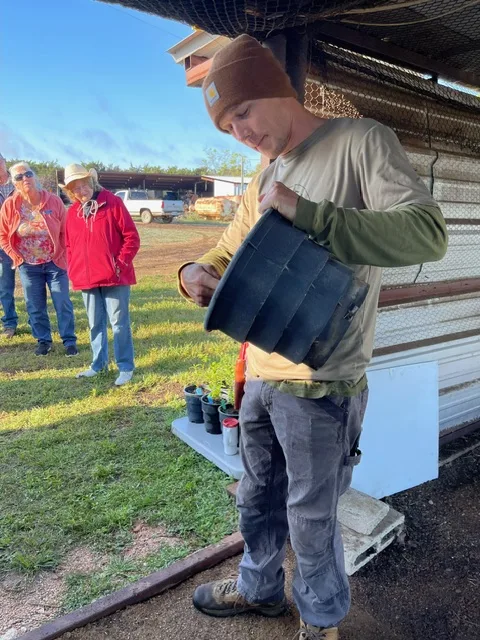
ISA Certified Arborist James Green gave the eighteen people who attended a “show and tell” about many of the trees in his nursery.

He talked about the traits and qualities of each tree, the provenance of most of the trees, and a bit about the best habitat and care for the trees.

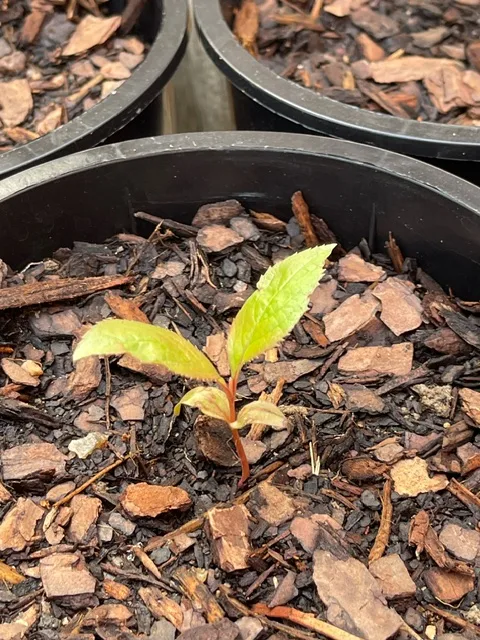
The participants learned what to do for a tree that has lost its main trunk and is resprouting from the base. James taught us how to properly plant a tree from the pot into the ground using the native soil where the tree will be growing. We learned the best way to grow oak trees from acorns.

Having the opportunity to see, learn about and purchase some rare or hard-to-find native Texas trees—especially trees from the Texas Hill Country—was quite the treat.
About the Region

Fall Symposium 2025 Logo - Teach for the Future

Salado, the location of our Fall 2025 Symposium, lies at the intersection of two ecoregions: the Edwards Plateau (Limestone Cut Plain) and Blackland Prairie (Northern Blackland Prairie).

The Edwards Plateau area is also called the Hill Country; however, this general term covers a much larger area extending farther north. Spring-fed creeks are found throughout the region; deep limestone canyons, rivers, and lakes (reservoirs) are common. Ashe juniper is perhaps the most common woody species found throughout the region. Additional woody species include various species of oak, with live oak (Quercus fusiformis) being the most common. Sycamores (Platanus occidentalis) and bald cypress (Taxodium distichum) border waterways. This area is well known for its spring wildflower displays, though they may be viewed in spring, late summer, and fall, as well. According to Texas Parks and Wildlife, average annual rainfall in the Edwards Plateau ranges from 15 to 34 inches.

The Blackland Prairie extends from the Red River south to San Antonio, bordered on the west by the Edwards Plateau and the Cross Timbers, and on the east by the Post Oak Savannah. Annual rainfall averages 30 to 40 inches, with higher averages to the east. This region is dominated by prairie species. The most common grass species include little bluestem (Schizachyrium scoparium) and Indian grass (Sorghastrum nutans) in the uplands and switchgrass (Panicum virgatum) in the riparian areas and drainages. Common herbaceous flowering plants include salvias, penstemons, and silphiums. This area has suffered greatly from overgrazing and agricultural use. Few intact areas remain, though many of the plants can be found along county roadsides throughout the region.

Our fall Symposium host chapter, the Tonkawa Chapter, includes both of these ecoregions.

Source: Wildflowers of Texas by Michael Eason
