Using the Invasive Plant Database

By Deedy Wright, New Braunfels Chapter

Invasive plants are not just a nuisance in the landscape. They’re also one of the biggest threats to conservation efforts today, along with habitat destruction, climate change, and pollution. Managing and controlling them is an important aspect of conservation work that’s being done to protect native ecosystems and preserve biodiversity.

An invasive plant is a species that is not native to a particular region or environment and whose introduction has caused or is likely to cause environmental or economic harm. According to the National Invasive Species Information Center, invasives thrive without cultivation; expand into natural areas displacing the native plants; disrupt the established balance of plants, insects and wildlife in native ecosystems; and reproduce aggressively, often using multiple methods.

The mission of the Invasive Plant Committee is to convey the harm caused by invasive plants, to provide informational resources to identify and manage invasive plants, to support invasive plant removal, and to restore habitats with native plant alternatives.

The Fight Against Invasives

To assist the Society’s members, chapters, and groups in the elimination of invasives, the committee has developed an Invasive Plant Database to help identify the plants and learn the damage they do.

The database is searchable by common or scientific name. It offers a wealth of information on invasive plants and the environmental damage they cause, along with suggestions for native alternatives. The alternative suggestions are linked to the Society’s native plant database with extensive information on the natives.

The Invasive Plant Database can be found on our website under the Resources menu. If you haven’t already visited, please be sure to check it out soon!

Here’s an example of the kind of useful information you’ll find:

Sample Entry: Lantana camara
Large Leaf Lantana (Lantana camara)

Description:

Native to the West Indies, Large Leaf Lantana is a deciduous, scrambling shrub to 6 feet or more in height. Stems are square, haired, and often armed with small prickles. Leaves are rough like sandpaper. Flowers darken in color with age, generally changing from white to pink or lavender, or yellow to orange or red. Hybridizes with other lantanas to form plants with all yellow flowers.

Ecological Threat:

Large Leaf Lantana is considered by many scientists as one of world’s worst invasives. It takes over gardens, wild areas, and economic production. It is dangerous to animals and children because it produces attractive berries which, when not fully ripe, are very poisonous.
They can cause liver failure or even death in livestock animals such as cattle, sheep, goats or horses, and also in wild animals. Even cattle that don’t eat enough berries to be fatal are usually unfit for human consumption due to health concerns.

The unripe fruit can also be dangerous to children, and in a home garden setting children have been poisoned by eating the unripe fruit. The plant can form dense, impenetrable thickets, and release chemicals from roots and stems that suppress growth of nearby plants.
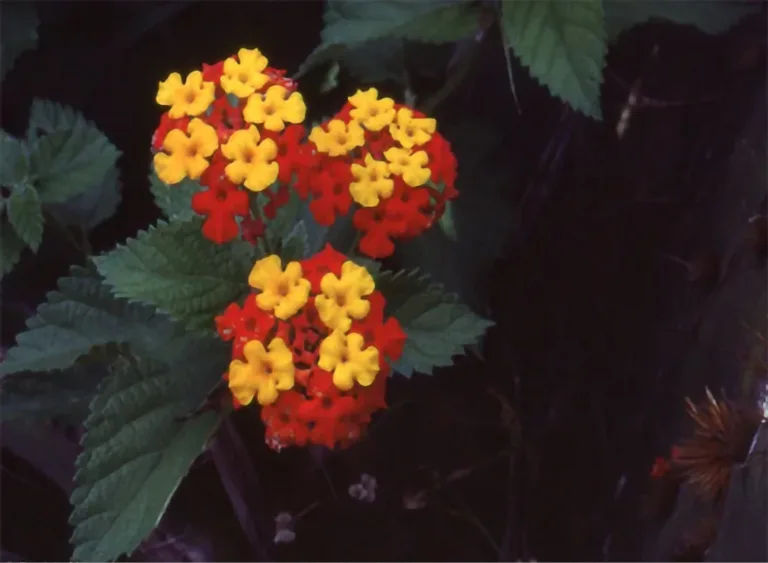
Native Alternatives:

Texas Lantana (Lantana horrida syn. L. urticoides), Photo by Paul A. Montgomery.
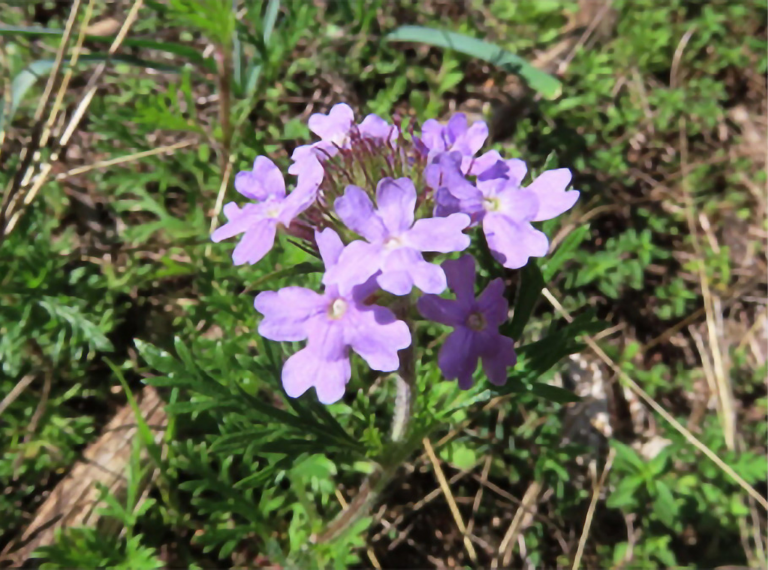
Prairie Verbena (Glandularia bipinnatifida), Photo by Claire Sorenson
Black Dalea (Dalea frutescens), Photo by Joseph A. Marcus.

Spread the Word

A section called “Spread the Word,” found by clicking on the blue box on the committee’s web page, offers members ideas for getting out information on invasive plants and the damage they do. The newest idea is a rack card that chapters or individuals can create using the Canva platform online. Canva can be downloaded free of charge. Instructions for using Canva to create the cards, using the template provided, are included. Be sure to follow the instructions carefully and don’t skip any steps. It’s as easy as copy/paste–really!

On the template’s front side are pre-formatted boxes for the picture of an invasive plant and information about the damage it can do. On the back there are pre-formatted boxes for up to three native alternatives for that invasive. Each alternative plant has the QR code to its entry in the Society’s native plant database to provide detailed information about the plant. (Canva instructions include how to create the QR codes. It’s easy, y’all!) The cards can be printed for distribution at nurseries or libraries or uploaded to share via Facebook, email, or other digital methods.

Please use these resources to help educate the public about the dangers of invasives and encourage better choices with native plants!

Deedy Wright is a member of the Invasive Plants Committee. She can be reached at deedy_wright@outlook.com.

Did you like this article? It’s from our Winter 2024 Texas Native Plants magazine. Read more here
About the Region

Fall Symposium 2025 Logo - Teach for the Future

Salado, the location of our Fall 2025 Symposium, lies at the intersection of two ecoregions: the Edwards Plateau (Limestone Cut Plain) and Blackland Prairie (Northern Blackland Prairie).

The Edwards Plateau area is also called the Hill Country; however, this general term covers a much larger area extending farther north. Spring-fed creeks are found throughout the region; deep limestone canyons, rivers, and lakes (reservoirs) are common. Ashe juniper is perhaps the most common woody species found throughout the region. Additional woody species include various species of oak, with live oak (Quercus fusiformis) being the most common. Sycamores (Platanus occidentalis) and bald cypress (Taxodium distichum) border waterways. This area is well known for its spring wildflower displays, though they may be viewed in spring, late summer, and fall, as well. According to Texas Parks and Wildlife, average annual rainfall in the Edwards Plateau ranges from 15 to 34 inches.

The Blackland Prairie extends from the Red River south to San Antonio, bordered on the west by the Edwards Plateau and the Cross Timbers, and on the east by the Post Oak Savannah. Annual rainfall averages 30 to 40 inches, with higher averages to the east. This region is dominated by prairie species. The most common grass species include little bluestem (Schizachyrium scoparium) and Indian grass (Sorghastrum nutans) in the uplands and switchgrass (Panicum virgatum) in the riparian areas and drainages. Common herbaceous flowering plants include salvias, penstemons, and silphiums. This area has suffered greatly from overgrazing and agricultural use. Few intact areas remain, though many of the plants can be found along county roadsides throughout the region.

Our fall Symposium host chapter, the Tonkawa Chapter, includes both of these ecoregions.

Source: Wildflowers of Texas by Michael Eason