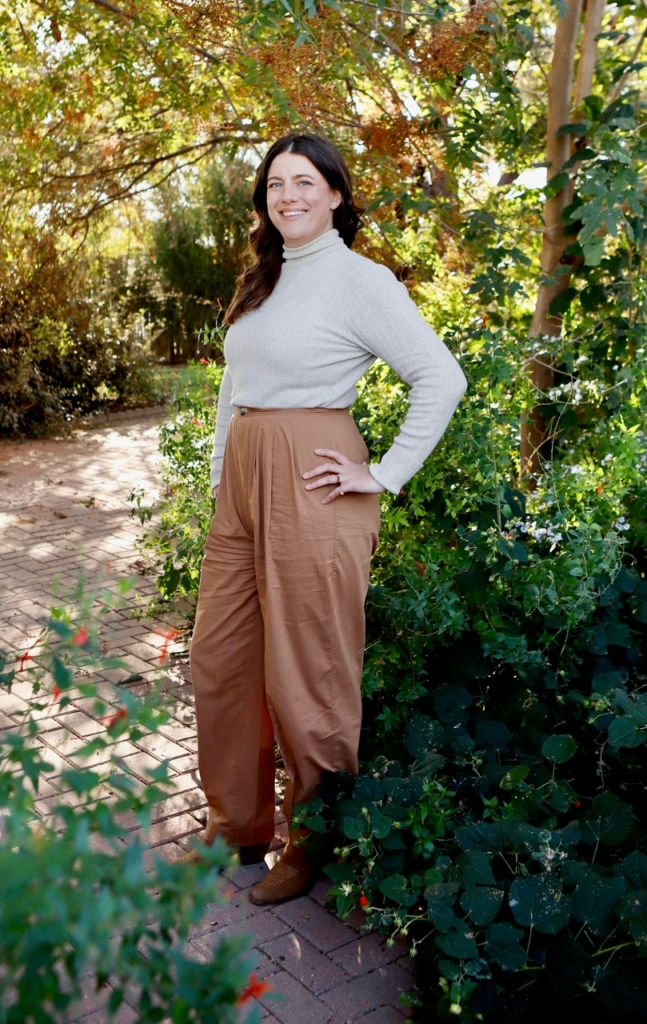
FREDERICKSBURG, Tex. The Native Plant Society of Texas, a Texas nonprofit organization promoting the conservation, study, and utilization of Texas native plants and plant habitats, happily announces the selection of Mary Sirgo as its new executive director. Ms. Sirgo begins her work with the Society on November 17, 2025.
Sirgo is a native Texan whose 15-year career has been motivated by a desire to serve and protect the natural world. She previously worked as director of strategic initiatives for Watersong Wild Space, a riparian forest campus in Midland, TX, featuring an 86-acre urban playa lake. She advanced the preserve’s mission through projects such as a PBS documentary on playa lakes, a community wellness program offering free outdoor classes, and the creation of on-demand, nature-based education resources. Sirgo holds a degree in geosciences from the University of Texas Permian Basin, where she focused on the ancient processes that shape and sustain ecosystems.
“In our search for a dynamic leader to move the Society forward, we were so thrilled to find Mary Sirgo,” said Laura Legett, president of the Native Plant Society of Texas. “Mary’s strategic insights and her deep-rooted appreciation for Texas’ natural heritage make her a great fit for our team. She recognizes the Society’s potential to be the leading voice for native plant advocacy in Texas and the nation, and we are confident that her leadership will expand our impact as a conservation organization.”
As executive director, Sirgo will serve as the Society’s primary representative in the community, and she’ll be responsible for managing the organization’s staff, volunteer leaders, and daily operations.
“I’m honored to join the Native Plant Society of Texas at such an exciting time for conservation,” said Sirgo. “I am eager to build on the Society’s strong foundation of education and advocacy, and to help more Texans discover the beauty, resilience, and ecological importance of our native landscapes.”
The Native Plant Society of Texas is a 501(c)(3) nonprofit organization that was founded in 1981, following organizational efforts begun by Texas politico and wildflower preservationist Carroll Abbott. Now with more than 30 chapters and 5,800 members across the state, the Society seeks a future where native habitats are managed as critically beneficial natural assets and where healthy ecosystems are valued as essential to our quality of life. Learn more about the Society at www.npsot.org.