San Antonio Chapter

Wings in the Wildscape Demonstration Garden: A Story in Photos

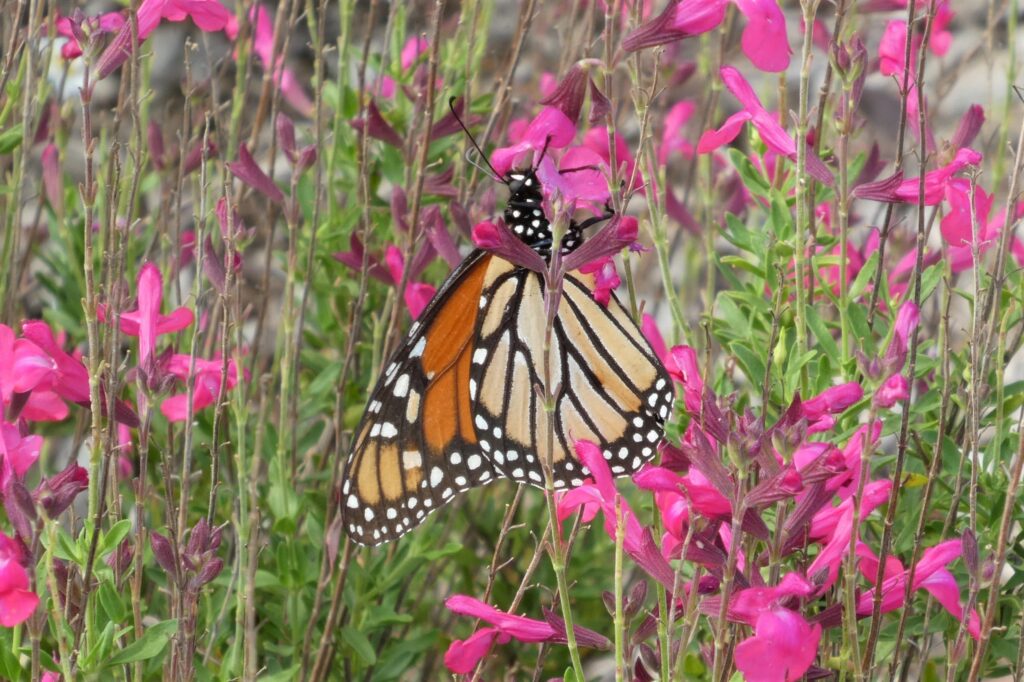
Image of Butterfly on a Pink Flower

May 2023 Presentation by Patsy Kuentz
Wings in the Wildscape Demonstration Garden: A Story in Photos

Patsy Kuentz, is member of our NPSOT chapter, a Certified Alamo Area Master Naturalist, and also a longtime birder who helps conduct monthly bird surveys at Phil Hardberger Park. Although she’s been fascinated by butterflies since childhood, the COVID-19-era quarantine free time sparked her further interest in learning more about butterflies and improving her photography skills so she could document their interaction with plants.

In her slideshow presentation, Patsy Kuentz offers a brief history of the Wildscape Demonstration Garden at Phil Hardberger Park followed by a photographic perspective on how the native plants there provide local, native fauna with food, shelter, and a safe place to raise their families.

 

View Recording of Lecture

About the Region

2026 Fall Symposium Logo

This low-elevations region of Texas extends inland from the barrier islands, about 60 or so miles, and stretches from Brownsville to Louisiana. In total, it covers about 9.5 million acres, with a high point of 150 feet in elevation. More than 1000 species of plants can be found in this region. On the southern end, species more common in Mexico (such as Sabal mexicana) and Central America occur.

The barrier islands provide us with dune systems, and clay flats to the inland side, which have species found in these areas alone. Many plants here, such as Ipomoea pes-caprae (beach morning glory), can be found throughout tropical regions of the globe. I’ve encountered the same species on the beaches of Guam.

Once inland, vast marshes and wet prairies occur. Occasionally, oak (Quercus fusiformis) groves can be found. Common grasses include species of Bothriochloa, Paspalum, and Sporobolus; eastern gamagrass (Tripsacum dactyloides); and switchgrass (Panicum species). Many rivers and creeks cut through the Gulf Prairies, and along these riparian areas various species of trees, Sabal minor, and other plants adapted to clay soils can be found. Due to overgrazing, farming, and fire suppression, woody species such as mesquite (Prosopis glandulosa) and huisache (Acacia farnesiana), and invasive species such as chinaberry (Melia azedarach), Brazilian pepper (Schinus terebinthifolius), and Chinese tallow (Sapium sebiferum) have increased and displaced our native flora.

Source: Wildflowers of Texas by Michael Eason