Winners announced for 2025 Contests

The Native Plant Society of Texas has announced the winners of its 2025 contests. Contests  allow members to showcase their talent and enthusiasm for native plants. Since 2020 the contests have been completely virtual. Wnners were announced and certificates presented during the banquet at the Fall Symposium held this year in Salado. 

There were three contests, all involving forms of communication – chapter newsletters, video, and photography. A panel of judges looked at each entry and awarded points using an evaluation form. Scores were added up and the resulting totals determined the winners.
Chapter Newsletter Contest

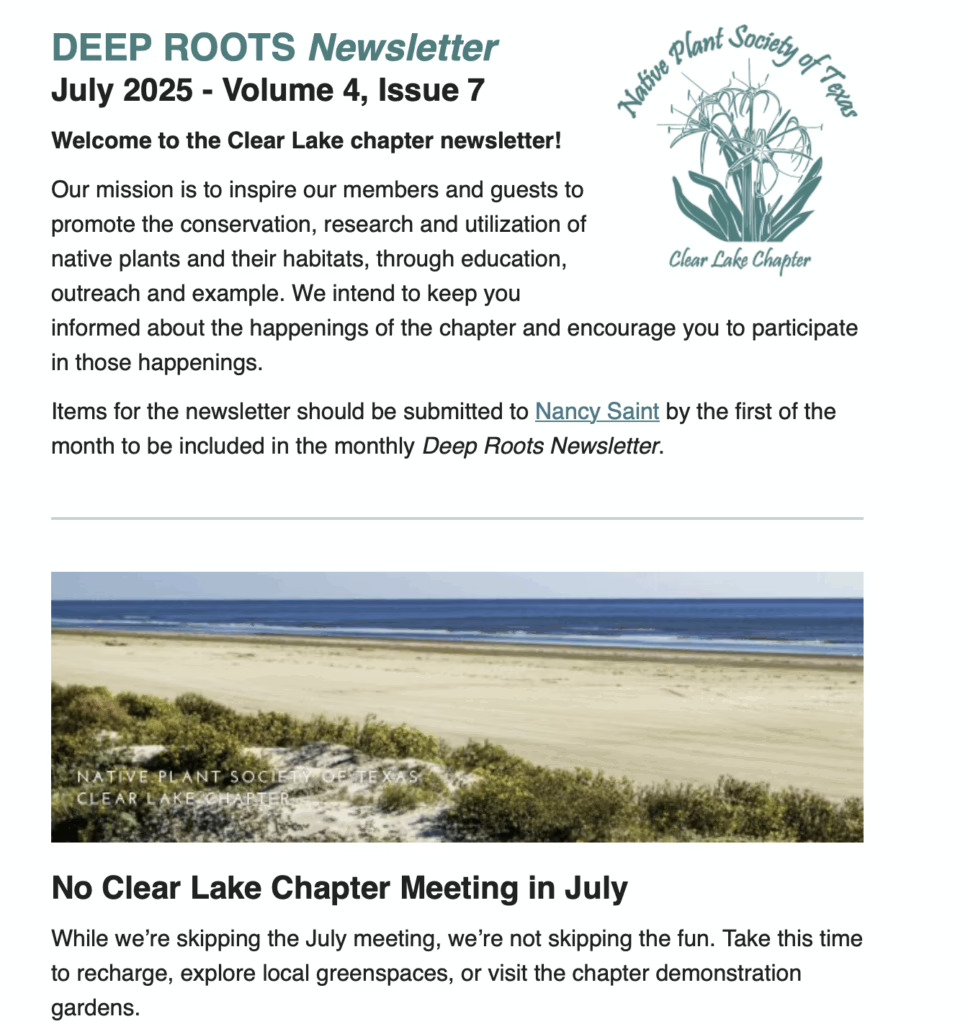
Clear Lake narrowly edged out San Antonio to win the newsletter contest. Editor Nancy Saint submitted the July 2025 edition for the contest. You can download and read the entry here.

The judges commented on the large number of members contributing to the newsletter.

Video Contest

Congratulations to Shaun McCoshum of the South Texas Chapter for his winning video entitled “Plant Native and Design Like Nature”. 

Check out all the videos entered and this year and in previous years at our YouTube Channel

Photo Contest

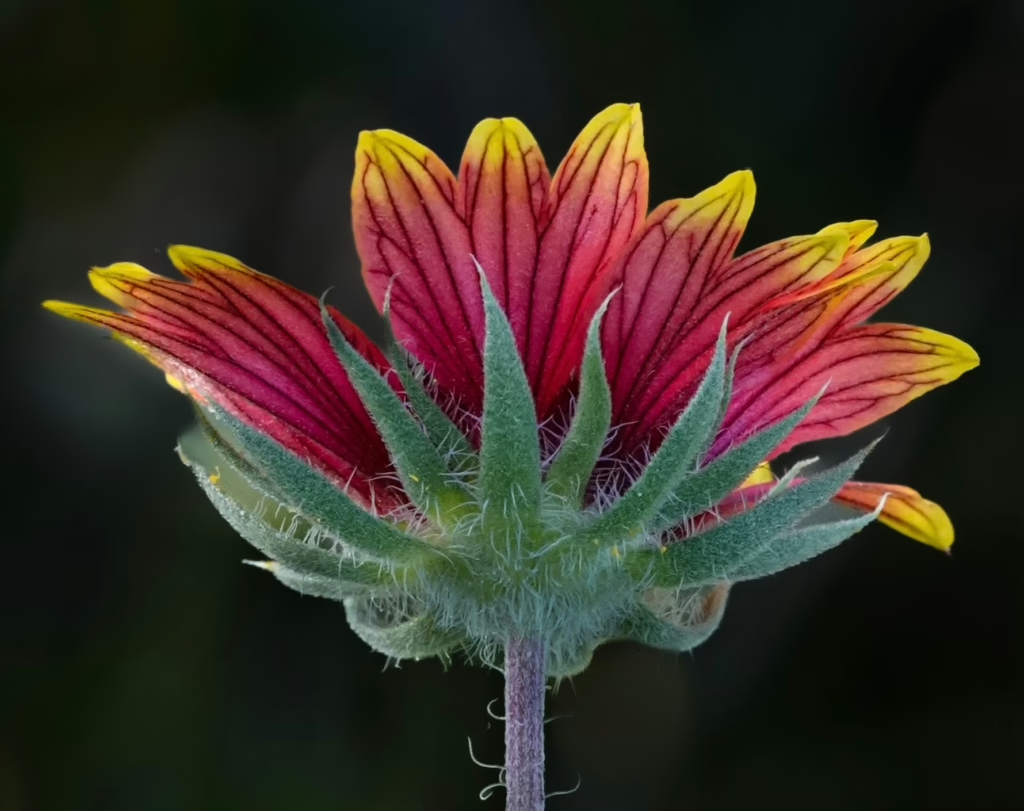
Linda Kuhn won best in show for her photo of Gaillardia pulchella taken in the Gulf Coast Prairies and Marshes ecoregion. 

The judges also selected a winning photo for each ecoregion in Texas for which there were sufficient entries.

Chihuahuan Deserts – Austin Kelly
Cross Timbers  – Jeff Harshefield (tie)
Cross Timbers  – Meghan James (tie)
East Central Texas Plains – Kristen Meaders
Edwards Plateau – Byron Augustin
Southern Texas Plains – Jamie Hart
Texas Blackland Prairies – Tom Lebsack
Western Gulf Coastal Plain  – Tom Lebsack 
 
You can see all  entries for 2025 and previous years at this link

The Judges

This contest could not have been possible without the many volunteer hours of our judges – Mary Beach, Robert Benson, Amy Birdwell, ​Vicki Blachman, Tracy Brown, Debbie Bush, Leah Fenley, ​Michel Fissell, and Jan Rogers​


About the Region

Fall Symposium 2025 Logo - Teach for the Future

Salado, the location of our Fall 2025 Symposium, lies at the intersection of two ecoregions: the Edwards Plateau (Limestone Cut Plain) and Blackland Prairie (Northern Blackland Prairie).

The Edwards Plateau area is also called the Hill Country; however, this general term covers a much larger area extending farther north. Spring-fed creeks are found throughout the region; deep limestone canyons, rivers, and lakes (reservoirs) are common. Ashe juniper is perhaps the most common woody species found throughout the region. Additional woody species include various species of oak, with live oak (Quercus fusiformis) being the most common. Sycamores (Platanus occidentalis) and bald cypress (Taxodium distichum) border waterways. This area is well known for its spring wildflower displays, though they may be viewed in spring, late summer, and fall, as well. According to Texas Parks and Wildlife, average annual rainfall in the Edwards Plateau ranges from 15 to 34 inches.

The Blackland Prairie extends from the Red River south to San Antonio, bordered on the west by the Edwards Plateau and the Cross Timbers, and on the east by the Post Oak Savannah. Annual rainfall averages 30 to 40 inches, with higher averages to the east. This region is dominated by prairie species. The most common grass species include little bluestem (Schizachyrium scoparium) and Indian grass (Sorghastrum nutans) in the uplands and switchgrass (Panicum virgatum) in the riparian areas and drainages. Common herbaceous flowering plants include salvias, penstemons, and silphiums. This area has suffered greatly from overgrazing and agricultural use. Few intact areas remain, though many of the plants can be found along county roadsides throughout the region.

Our fall Symposium host chapter, the Tonkawa Chapter, includes both of these ecoregions.

Source: Wildflowers of Texas by Michael Eason