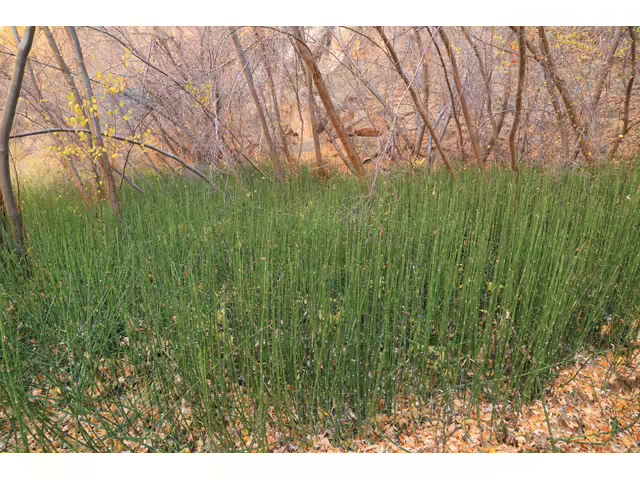

Horsetail

Equisetum hyemale spp. affine

Other common name(s):

Scouring-rush Horsetail, Scouring Rush, Canuela

Family:

Equisetaceae (Horsetail Family)

Plant Ecoregion Distribution Map

This map uses data from the US EPA. EPA  servers have been offline frequently so maps may not display. We are working on a solution.

Chihuahuan Deserts, Cross Timbers, Edwards Plateau, Gulf Coast Prairies and Marshes, Texas Blackland Prairies, Western Gulf Coastal Plain
Low Mountains and Bajadas
Eastern Cross Timbers, Grand Prairie
Edwards Plateau Woodland
Lower Rio Grande Alluvial Floodplain, Northern Humid Gulf Coastal Prairies
Floodplains and Low Terraces1, Northern Blackland Prairie
Flatwoods, Southern Tertiary Uplands

Plant Characteristics

Growth Form

Wetland

Height

2
to
3
ft.

Spread

2
to
3
ft.

Leaf Retention

Evergreen

Lifespan

Perennial

Habitat and Care Requirements

Soil Type(s)

Sand, Loam, Clay, Limestone, Poor Drainage, Moist

Light Requirement

Sun, Part Shade, Shade

Water Requirement

Medium

Native Habitat

Wetland or Riparian

Bloom and Attraction

Bloom Color

No Bloom

Bloom Season

No Bloom

Seasonal Interest

Forage

Wildlife Benefit

Beetles, Birds, Aquatic Wildlife

Maintenance

It can grow in shallow water or moist soil. A dense stand of scouring rush along the margin of an ornamental pool can be very attractive and will exclude weeds. It spreads easily so best to plant in a container with no holes to control growth. Set up a pond or a water collection tank near a downspout to supplement water. Propagation: clump division.

Comments

Common scouring rush is a spreading, reed-like plant. The stems are cylindrical, jointed, hollow, usually unbranched, and have rough longitudinal ridges. The tiny leaves are joined together around the stem, forming a narrow black-green band or sheath at each joint. Like other ferns and their relatives, scouring rush does not produce flowers or seeds. Reproduces by spores. The fruit is a cone. Horsetail Rush provides great cover for wetland birds, small mammals, reptiles, amphibians. aquatic insects will feed on the decayed plant matter. Beetles, weevils and sawflies feed on this plant. Most mammals do not feed on it because of the coarse fibers and silica deposits in the stems.
Previous Scientific Name(s): Equisetum praealtum, Equisetum hyemale var. affine
Material Treatment Method Collection References
Clump Division Carefully dig around the perimeter of the rough horsetail clump you wish to divide. Gently loosen the soil and lift the clump out of the ground, minimizing root damage. Rinse the soil from the roots of the rough horsetail clump to get a clear view of the root system and identify natural divisions. Divide the rough horsetail clump into sections using your hands or a sharp knife. Make sure each division has a portion of the root system as well as several stems. Trim any damaged or excessively long roots to encourage new growth and ease the replanting process. Choose an appropriate location for the new rough horsetail divisions that replicates its natural growing conditions. Rough horsetail thrives in moist, well-drained soil and can tolerate both full sun and partial shade. Plant each rough horsetail division at the same soil depth as it was previously growing. Space the divisions according to their expected mature size. Once the rough horsetail divisions are in the ground, water them thoroughly to settle the soil around the roots and eliminate any air pockets.Apply a layer of organic mulch around the newly planted rough horsetail divisions to retain moisture, regulate soil temperature, and suppress weeds. Keep an eye on the newly planted rough horsetail to ensure they establish well. Provide water as needed, especially during periods of drought or if you observe the soil drying out. Identify a healthy, mature rough horsetail plant that shows signs of vigorous growth. Look for a clump that has multiple stems and ensure that it has not been affected by pests or diseases. Clean your gardening tools with a solution of bleach and water to prevent the spread of disease. You will need a sharp shovel or spade for dividing the plant. Thoroughly water the soil around the rough horsetail clump a day before dividing to ease the extraction process and minimize stress on the plant. https://www.picturethisai.com/care/propagate/Equisetum_hyemale.html

About the Region

Fall Symposium 2025 Logo - Teach for the Future

Salado, the location of our Fall 2025 Symposium, lies at the intersection of two ecoregions: the Edwards Plateau (Limestone Cut Plain) and Blackland Prairie (Northern Blackland Prairie).

The Edwards Plateau area is also called the Hill Country; however, this general term covers a much larger area extending farther north. Spring-fed creeks are found throughout the region; deep limestone canyons, rivers, and lakes (reservoirs) are common. Ashe juniper is perhaps the most common woody species found throughout the region. Additional woody species include various species of oak, with live oak (Quercus fusiformis) being the most common. Sycamores (Platanus occidentalis) and bald cypress (Taxodium distichum) border waterways. This area is well known for its spring wildflower displays, though they may be viewed in spring, late summer, and fall, as well. According to Texas Parks and Wildlife, average annual rainfall in the Edwards Plateau ranges from 15 to 34 inches.

The Blackland Prairie extends from the Red River south to San Antonio, bordered on the west by the Edwards Plateau and the Cross Timbers, and on the east by the Post Oak Savannah. Annual rainfall averages 30 to 40 inches, with higher averages to the east. This region is dominated by prairie species. The most common grass species include little bluestem (Schizachyrium scoparium) and Indian grass (Sorghastrum nutans) in the uplands and switchgrass (Panicum virgatum) in the riparian areas and drainages. Common herbaceous flowering plants include salvias, penstemons, and silphiums. This area has suffered greatly from overgrazing and agricultural use. Few intact areas remain, though many of the plants can be found along county roadsides throughout the region.

Our fall Symposium host chapter, the Tonkawa Chapter, includes both of these ecoregions.

Source: Wildflowers of Texas by Michael Eason