NICE! Plant of the Month
(Echinacea spp.) (5 species in Texas)
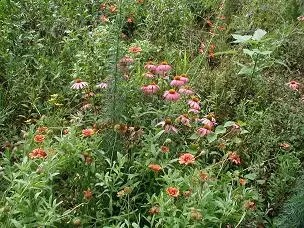
Family: Sunflower (Asteraceae)
Type: Perennial
Natural Habitat: Sandy and gravelly soils of prairies in the Hill Country with various species eastward to Virginia and north to Nebraska and Indiana.
Growth: 1-4′ tall depending on species or cultivar; most garden varieties 2′ tall.
Preferred Site and Use: In borders and as long-lasting cut or dried flowers.
Deer Resistance: Browsed heavily if not protected.
Wildlife: Lots of nectar for bees and butterflies; small seed-eating birds feed on achenes
Light Tolerance: Dappled shade, part shade, full sun. Flower color best with more light.
Flowers: The flower is about 3 inches across, and ray flowers range in color from dark-rose to pale-pink to white. The Greek word for the genus is echinos meaning “hedgehog”, reflecting the prominent cone-shaped mound of bristles at the center of the flower. The cone-shaped centers are where the flower gets its name.
Bloom Period: April through June; recent cultivars may bloom for longer periods.
Fruit: Achenes, June-August
Leaves: 3-10 in. long, lanceolate, alternate, mostly toward plant base, very rough to touch, margins entire.
Water Requirements: Most species moderate, E. purpurea accepts drought.
Soil Requirements: Sand, loam, clay; limestone; well-drained, good garden soil.
Maintenance: Good garden soil, consistent deadheading and extra water to extend bloom period to three full months, otherwise expect 4-6 weeks bloom.
Planting Instructions: Space plants one foot apart. Dig a hole at least two times wider than, but the same depth as the root ball in the nursery container. Sides of the hole should be irregular, not smooth. Remove plant from container, taking care to support the root ball. Loosen exterior roots gently with your fingers. If the plant is root-bound and cannot be loosened by hand, the outer roots may be cut in several places. Lift the plant by the root ball and place into the hole. Backfill hole, using soil that was dug out. Do not add any soil to the top of the root ball, but a thin layer of compost may be spread over the root ball and soil surface. Gently firm the soil with your hands, but do not tamp it down. Place 3-4 inches of mulch over the bare soil around, but not touching the plant base.
Watering Instructions: Water deeply after planting to settle soil around roots and again in 4-5 days. Then every 7-10 days, as needed, during the first growing season. Before watering, check for soil moisture at a depth of an inch or two at the edge of the root ball. Skip a watering after a rainfall of ½ to 1 inch. Maintain this watering schedule until the first fall. Reduce watering during the cool fall and winter months. In a “normal” year, no watering may be necessary during the fall and winter, but during a dry period, monthly watering may be needed. Second Spring and thereafter: Water monthly only during periods of drought. Once established, natives will survive with little supplemental irrigation. Note: plant will die back most winters and reappear in spring.
NICE! Tip: Purple coneflowers hybridize easily and reseed. As a result, if you’ve seen one, you haven’t seen them all! They also have purported medicinal value.
Look for the NICE! Plant of the Month signs and information sheets on your next visit to a participating Boerne nursery. And thank you for supporting native plants by using them in your landscapes.