

NICE! Plant of the Month
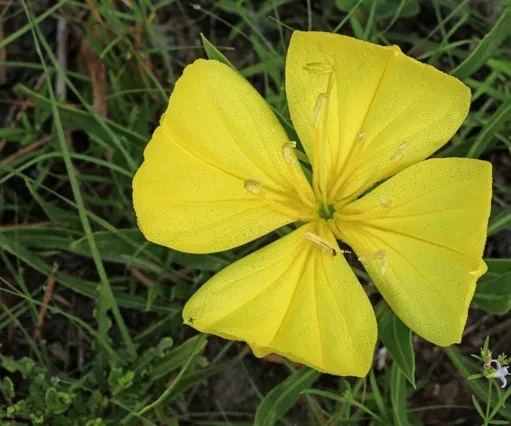
Oenothera macrocarpa
Family: Onagraceae
Other Common Names: Fluttermill, Big-fruit Evening Primrose
Type: Perennial; upright to sprawling
Natural Habitat: Limestone glades & bluffs, roadsides, rocky prairies & hillsides
Growth: 12-24 in. spreading to 1.5 ft
Deer Resistance: Leaves are eaten by white-tail deer
Wildlife: Attracts moths, bees & butterflies
Light Tolerance: Full sun to part shade
Flowers: 2-5 in, bright yellow, floral tube, blooming in the evening
Bloom Period: April to August
Fruit: Capsule
Our February plants of the month–yes, there is more than one—are Evening Primrose and Missouri Primrose, both belonging to the genus Oenothera. Does that name look like it’s derived from the Greek name for wine? Well, it just may be. Oinos is wine; theras is seeker. The Ancients used the roots from plants in this genus to flavor wines. There is another possible word origin. Wikipedia says the source also could be from the Greek onos theras meaning “donkey catcher.” That is not too far fetched, since the Evening Primrose Family name is Onagraceae, in Latin meaning food of the onager!
Pink Evening Primrose (Oenothera speciose) was previously featured in May 2007 as the plant of the month and that nice rendition appears with this article.
Missouri Primrose (Oenothera macrocarpa) is reported to occur naturally in Kendall and Comal Counties and is a spectacular landscape plant. The bright yellow flowers are large ranging up to five inches across, blooming, as does Evening Primrose, from mid-day to dark. Blooming so late in the day attracts pollinators such as hawk moths and crepuscular bees in the families Andrenidae, Apidae, Colletidae, and Halictidae. Protect all primroses from deer who relish the leaves.
The distinctive 2”-3” winged seed pod may contain 100 seeds that can be harvested when the pod starts to turn brown.
Planting Instructions: Space plants 9 to 12 inches apart. Dig a hole at least two times wider than, but the same depth as the root ball in the nursery container. Sides of the hole should be irregular, not smooth. Remove plant from container, taking care to support the root ball. Loosen exterior roots gently with your fingers. If the plant is root-bound and cannot be loosened by hand, the outer roots may be cut in several places. Lift the plant by the root ball and place into the hole. Backfill hole, using soil that was dug out. Do not add any soil to the top of the root ball. Gently firm the soil with your hands, but do not tamp it down. Place 3-4 inches of mulch over the bare soil around, but not touching the base of the plant.
Watering Instructions: Water deeply after planting to settle soil around roots. Then every 7-10 days, as needed, during the first growing season. Before watering, check for soil moisture at a depth of an inch or two at the edge of the root ball. Skip a watering after a rainfall of ½ to 1 inch. Maintain this watering schedule until the first fall. Reduce watering during the cool fall and winter months. In a “normal” year, no watering may be necessary during the fall and winter, but during a dry period, monthly watering may be needed. Second Spring and thereafter: Water monthly only during periods of drought. Once established, natives will survive with little supplemental irrigation.
NICE! Tip: You’ll love how attractive this flowering plant is to butterflies. Use mistflower in place of impatiens, petunias or begonias. If moisture is adequate this plant will spread by underground runners and will cover a larger area every year.
Look for the NICE! Plant of the Month signs and information sheets on your next visit to a participating Boerne nursery. And thank you for supporting native plants by using them in your landscapes.
