Honoring a Historic Site with Native Plants

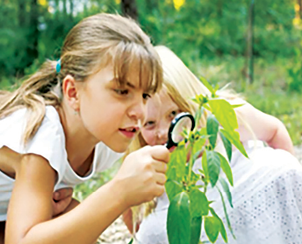
Teaching kids about natives fosters a deeper appreciation of the natural world

By Sharon Van Buskirk, Dallas Chapter

In the nearly four years since we organized the Friends of the Warren Ferris Cemetery in Dallas, we have seen our efforts to reclaim this pre-Civil War cemetery branch out to reach all kinds of people, firing up their interests in flora, fauna, education, history, science, art, and storytelling.

With the simple, albeit labor-intensive, act of ridding the cemetery grounds of invasive plant species, we embarked on a learn-as-you go lesson of discovery. More appropriate and sustainable plants were introduced. In time, not only did these “new kids on the block” take root, but we found that other species that had been suppressed were now stepping out of the shadows. A few examples include Cherry Laurels (Prunus caroliniana “Compacta”), Evergreen Sumac (Rhus virens), and Dwarf Palmetto (Sabal minor).

As the land was reverting to a more natural landscape, we saw an opportunity to enhance the discovery experience for wider audiences. We are instigating self-guided tours using QR-coded signage that can be easily updated as our recovery and reclamation efforts continue.

In further outreach, we have created and promoted our Constellation of Memories program. With template in hand, we are sharing: how to organize and bring this renewal to fruition. Our vision is to have a network of once-abandoned cemeteries brought back to life as living, breathing green oases, for all the community to enjoy. The reintroduction of native plants in these spaces, whether urban or rural, is a reclamation for future generations and a testimony to the people who have gone before us.

If you are in the Dallas area, drop by and see our little oasis for yourself. You can also keep up with us by visiting our website whenever the fancy strikes!

To get in touch with Friends of the Warren Ferris Cemetery, please email julie@julieannfineman.com.

Did you like this article? It’s from our Fall 2023 Texas Native Plants magazine. Read more here
Volume 41 | No. 4 | Fall 2023

About the Region

Fall Symposium 2025 Logo - Teach for the Future

Salado, the location of our Fall 2025 Symposium, lies at the intersection of two ecoregions: the Edwards Plateau (Limestone Cut Plain) and Blackland Prairie (Northern Blackland Prairie).

The Edwards Plateau area is also called the Hill Country; however, this general term covers a much larger area extending farther north. Spring-fed creeks are found throughout the region; deep limestone canyons, rivers, and lakes (reservoirs) are common. Ashe juniper is perhaps the most common woody species found throughout the region. Additional woody species include various species of oak, with live oak (Quercus fusiformis) being the most common. Sycamores (Platanus occidentalis) and bald cypress (Taxodium distichum) border waterways. This area is well known for its spring wildflower displays, though they may be viewed in spring, late summer, and fall, as well. According to Texas Parks and Wildlife, average annual rainfall in the Edwards Plateau ranges from 15 to 34 inches.

The Blackland Prairie extends from the Red River south to San Antonio, bordered on the west by the Edwards Plateau and the Cross Timbers, and on the east by the Post Oak Savannah. Annual rainfall averages 30 to 40 inches, with higher averages to the east. This region is dominated by prairie species. The most common grass species include little bluestem (Schizachyrium scoparium) and Indian grass (Sorghastrum nutans) in the uplands and switchgrass (Panicum virgatum) in the riparian areas and drainages. Common herbaceous flowering plants include salvias, penstemons, and silphiums. This area has suffered greatly from overgrazing and agricultural use. Few intact areas remain, though many of the plants can be found along county roadsides throughout the region.

Our fall Symposium host chapter, the Tonkawa Chapter, includes both of these ecoregions.

Source: Wildflowers of Texas by Michael Eason
