New Braunfels Chapter

Texas Bluebonnet – Lupinus texenis

Texas Bluebonnet 

Lupinus texensis
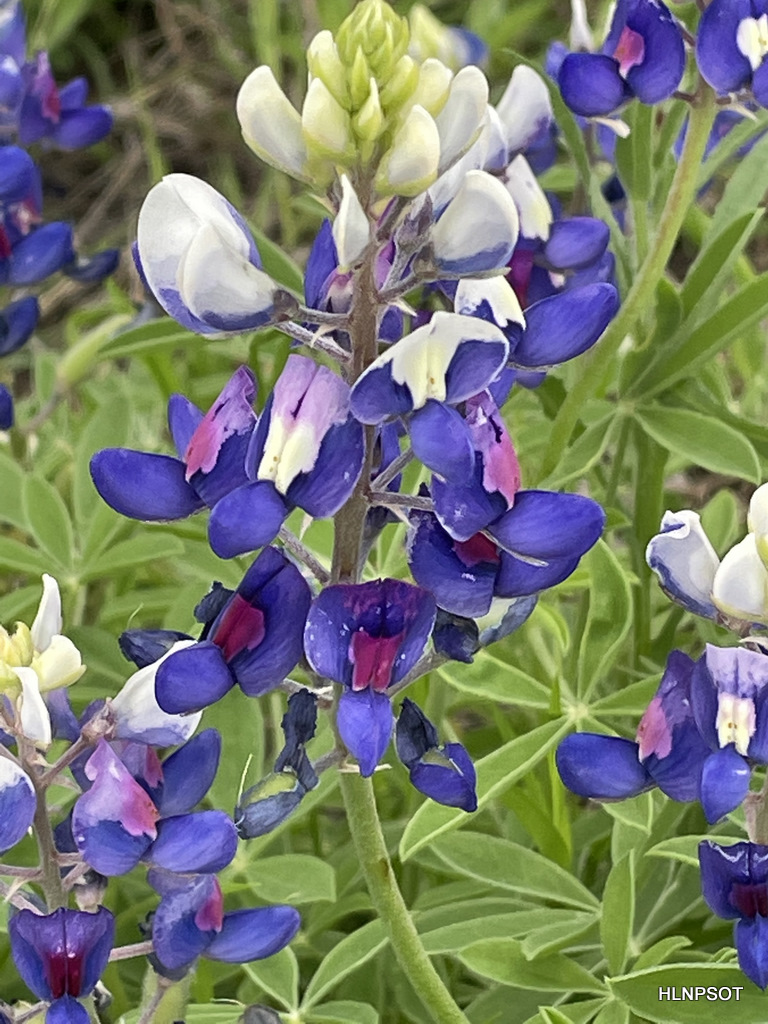
Close up of a bluebonnet against green foliage

February 2023 Plant of the Month

Our February Plant of the Month-The Texas Bluebonnet. Who knew the beautiful Bluebonnet could cause a 70-year battle? In March 1901 the Texas Legislature adopted Lupinus subcarnosus as the state flower. At the time, the legislators were unaware of another larger and brighter species of Bluebonnet, the Lupinus texensis. People fought hard for the legislature to change the state flower from the daintier species to the heartier. Finally in 1971, the politicians compromised to include both species as the state flower and included an umbrella clause for any similar species discovered. As it turns out, there are currently three additional species located in different regions of Texas — Big Bend/Chisos Bluebonnet (Lupinus. harvardii); Annual Lupine (Lupinus concinnus) in the Trans-Pecos region; and the Nebraska Lupine, Dune Bluebonnet (Lupinus plattensis) in the Texas Pan Handle. Most people consider Lupinus texenis as THE Texas Bluebonnet and is what is seen throughout the Hill Country and along the Texas highways.

By Leanne Courtney

 

About the Region

2026 Fall Symposium Logo

This low-elevations region of Texas extends inland from the barrier islands, about 60 or so miles, and stretches from Brownsville to Louisiana. In total, it covers about 9.5 million acres, with a high point of 150 feet in elevation. More than 1000 species of plants can be found in this region. On the southern end, species more common in Mexico (such as Sabal mexicana) and Central America occur.

The barrier islands provide us with dune systems, and clay flats to the inland side, which have species found in these areas alone. Many plants here, such as Ipomoea pes-caprae (beach morning glory), can be found throughout tropical regions of the globe. I’ve encountered the same species on the beaches of Guam.

Once inland, vast marshes and wet prairies occur. Occasionally, oak (Quercus fusiformis) groves can be found. Common grasses include species of Bothriochloa, Paspalum, and Sporobolus; eastern gamagrass (Tripsacum dactyloides); and switchgrass (Panicum species). Many rivers and creeks cut through the Gulf Prairies, and along these riparian areas various species of trees, Sabal minor, and other plants adapted to clay soils can be found. Due to overgrazing, farming, and fire suppression, woody species such as mesquite (Prosopis glandulosa) and huisache (Acacia farnesiana), and invasive species such as chinaberry (Melia azedarach), Brazilian pepper (Schinus terebinthifolius), and Chinese tallow (Sapium sebiferum) have increased and displaced our native flora.

Source: Wildflowers of Texas by Michael Eason