

Pre-order for trees & shrubs is open from August 8 to 23.
Purchase online, pick up on October 5 from 8 to 11 am.
Pick up Location (same location as in-person plant sale):
Environmental Institute of Houston (Google Map)
University of Houston-Clear Lake
North Office Annex (NOA) 1 Building
2700 Bay Area Blvd.
Houston, TX 77058
All sales final. Inventory is subject to availability. In the event that an item becomes unavailable, a refund will be issued for that item.
Note: We will have a limited inventory of other trees and shrubs available at our plant sale. Stay tuned for our fall plant sale catalog.
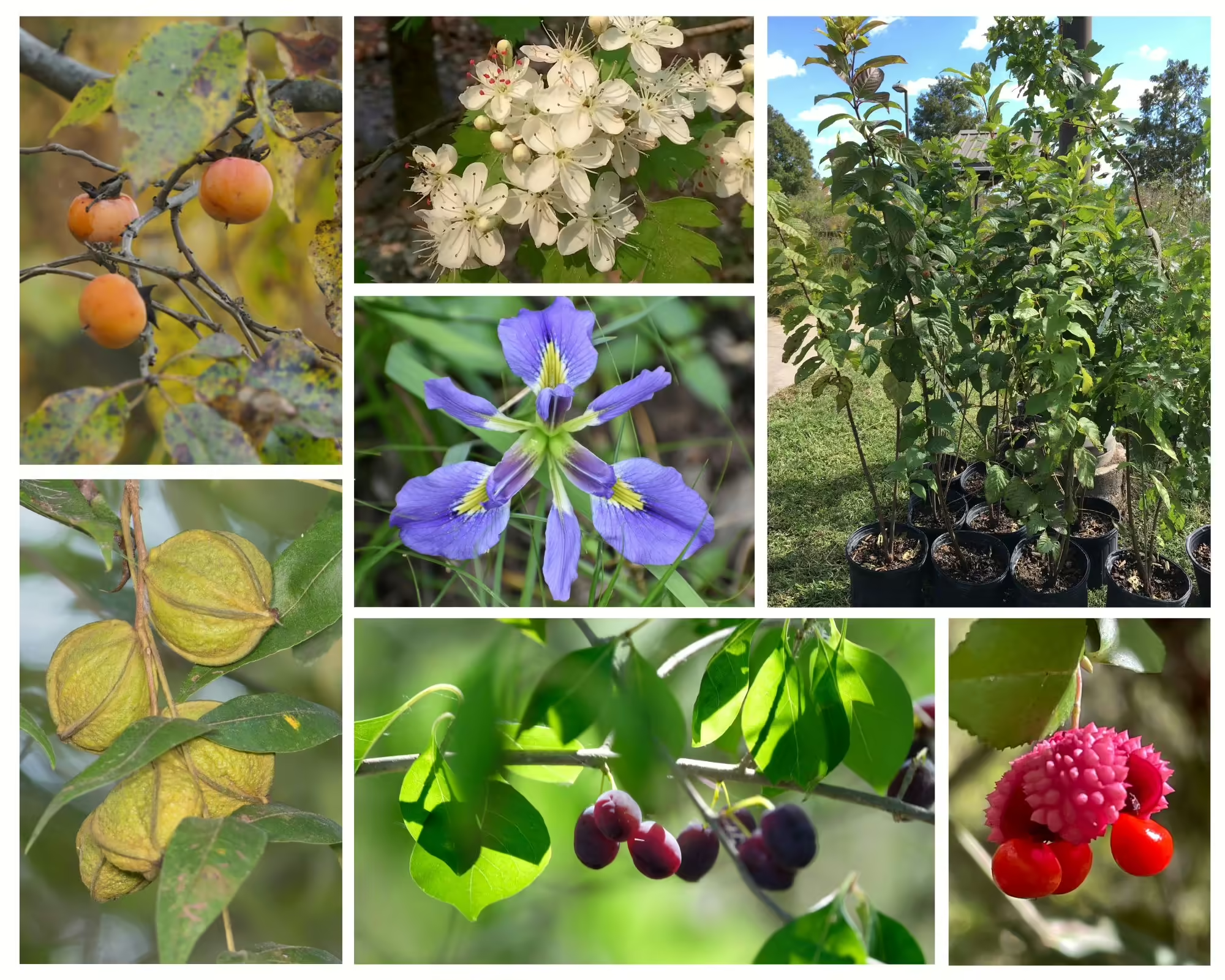
Available for Pre-order
Acer rubrum – Red Maple
Aesculus pavia – Red Buckeye
Amorpha fruticosa – Indigo
Asclepias incarnata – Swamp Milkweed
Asclepias viridis – Green Milkweed
Asimina triloba – Pawpaw
Carpinus caroliniana – Hornbeam
Carya aquatica – Water Hickory
Carya cordiformis – Bitternut Hickory
Cercis canadensis – Eastern Redbud
Chionanthus virginicus – Fringetree
Cornus drummondii – Roughleaf Dogwood
Crataegus marshallii – Parsley Hawthorn
Crataegus opaca – Mayhaw
Diospyros virginiana – Common Persimmon
Euonymus americanus – Strawberry Bush
Forestiera acuminata – Swamp Privet
Halesia diptera – Two-winged Silverbell
Hamamelis virginiana – Witch-hazel
Ilex decidua – Deciduous Holly
Ilex vomitoria – Yaupon Holly
Iris brevicaulis – Louisiana Iris
Lantana urticoides – Texas Lantana
Lindera benzoin – Spicebush
Lonicera sempervirens – Coral Honeysuckle
Magnolia virginiana – Sweetbay Magnolia
Malpigia sp. – Dwarf Barbados Cherry
Muhlenbergia capillaris – Gulf Coast Muhly
Nyssa sylvatica – Blackgum Tupelo
Pavonia sp. – Rock Rose
Persea borbonia – Red Bay
Pinus palustris – Longleaf Pine
Prunus mexicana – Mexican Plum
Ptelea trifoliata – Wafer Ash
Quercus alba – White Oak
Quercus lyrata – Overcup Oak
Quercus michauxii – Swamp Chestnut Oak
Quercus texana – Nuttalls Oak
Rivinea humilis – Pigeon Berry
Sabal minor – Dwarf Palmetto
Sambucus canadensis – Elderberry
Saururus cernuus – Lizard Tail
Sisyrinchium sp. – Blue-eyed Grass
Thelypteris kunthii – Wood Fern
Ungnadia speciosa – Mexican Buckeye
Viburnum dentatum – Arrowwood Viburnum
Zanthoxylum clava-herculis – Hercules Club
Zexmenia hispida – Zexmenia
These individual orders will be prepaid and picked up at the Plant Sale on October 5. The trees and shrubs catalog is in addition to the over 2,000 plants that will be available on October 5.
Resources
Plant Sale committee members talk about the importance and benefits of trees, how to select a tree for your yard, and how to plant a tree.
