Cross Timbers Chapter

Cross Timbers Chapter Meetings, Events and Volunteer Activities

Chapter Community Service Projects.

Join us and lend a hand.  These are a great way to meet fellow plant enthusiasts and learn about native plants while having fun and contributing to the community.

Our two major community service projects are:

  • Lake Mineral Wells State Park Pollinator Garden
  • Chandor Nature Trail

Upcoming Meetings and Events

Please click on the event for additional details.

July 2026

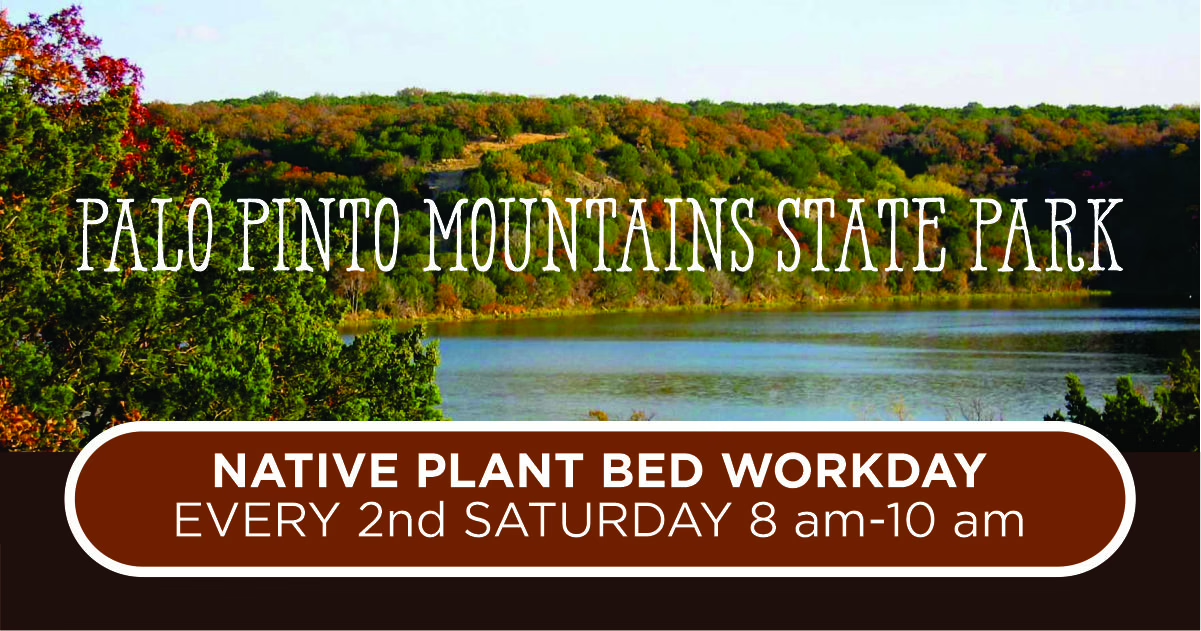
Palo Pinto Mountains Sate Park Native Plant Bed Workday, Volunteer Opportunity, Cross Timbers Chapter, Strawn, TX, Saturday, 07/11/2026 at 8 a.m.

Spruce Up Days Every 2nd Saturday we are planning to meet at the PPMSP Headquarters to spruce up the plant beds. Bring buckets, shovels, hand trowels, rakes, gloves, and sun protection. Please clean them (Master Gardeners wipe them down with bleach) before heading to the park to keep the spread of disease down. Next Date: […]
11 Jul
8:00 am - 10:00 am

Lake Mineral Wells State Park Pollinator Garden Work Day, Volunteer Opportunity, Cross Timbers Chapter, Mineral Wells, Saturday, 7/18/2026 at 9 a.m.

🌿 Calling All Native Plant Enthusiasts! 🌿  Be a Pollinator Protector! 🐝🌸 Join us for a morning of volunteer magic at Lake Mineral Wells State Park. 🌼✨ You can help maintain the pollinator garden at Lake Mineral Wells State Park! 🌼🦋 This wonderful community effort supports our local ecosystems and provides habitat to facilitate the important work of pollinators. This garden provides […]
18 Jul
9:00 am - 11:00 pm

Chandor Nature Trail “Spruce Up”, Volunteer Opportunity, Cross Timbers Chapter, Weatherford, Saturday, 07/25/2026 at 9 a.m.

Spruce Up Days Please join us for the Chandor Nature Trail “Spruce Up” volunteer day from 9 a.m. to 11 a.m.  Late comers are welcome. Interested volunteers can contact Cross Timbers trail steward Terri Taylor, at terriltay@sbcglobal.net. See you on the trail! If you can’t do manual labor be an education liason – community service […]
25 Jul
9:00 am - 11:00 am
No event found!

Cross Timbers Chapter Contact and Social Media

About the Region

2026 Fall Symposium Logo

This low-elevations region of Texas extends inland from the barrier islands, about 60 or so miles, and stretches from Brownsville to Louisiana. In total, it covers about 9.5 million acres, with a high point of 150 feet in elevation. More than 1000 species of plants can be found in this region. On the southern end, species more common in Mexico (such as Sabal mexicana) and Central America occur.

The barrier islands provide us with dune systems, and clay flats to the inland side, which have species found in these areas alone. Many plants here, such as Ipomoea pes-caprae (beach morning glory), can be found throughout tropical regions of the globe. I’ve encountered the same species on the beaches of Guam.

Once inland, vast marshes and wet prairies occur. Occasionally, oak (Quercus fusiformis) groves can be found. Common grasses include species of Bothriochloa, Paspalum, and Sporobolus; eastern gamagrass (Tripsacum dactyloides); and switchgrass (Panicum species). Many rivers and creeks cut through the Gulf Prairies, and along these riparian areas various species of trees, Sabal minor, and other plants adapted to clay soils can be found. Due to overgrazing, farming, and fire suppression, woody species such as mesquite (Prosopis glandulosa) and huisache (Acacia farnesiana), and invasive species such as chinaberry (Melia azedarach), Brazilian pepper (Schinus terebinthifolius), and Chinese tallow (Sapium sebiferum) have increased and displaced our native flora.

Source: Wildflowers of Texas by Michael Eason
