Fall 2025 Plant Sales
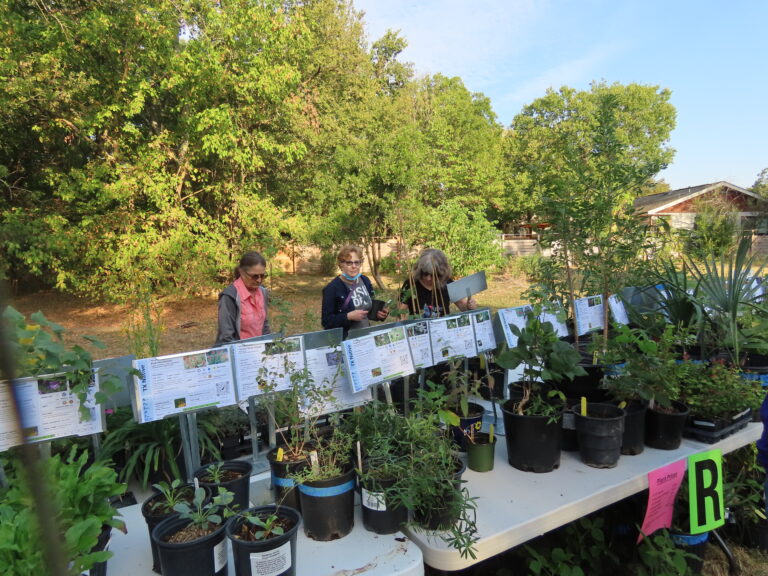
Fall is the best time to plant native flowers, shrubs, and trees, and many of our chapters have upcoming fall plant sales. Take advantage of this opportunity to easily obtain native plants suited to your ecoregion and along with making your space beautiful, you’ll be providing food and habitat for

Conservation Tips: Controlling Invasives, How to Know Your Soil Type
“I’m looking forward to sharing tips on how on how to be part of the conservation solution ,” said Warren Day, USDA District Conservationist in Fredericksburg, “How to use our soil information to keep our water clean and abundant, our soils healthy, and have resilient landscapes.”
Chapter Meeting: Native Wildflowers of Attwater Prairie Chicken NWR
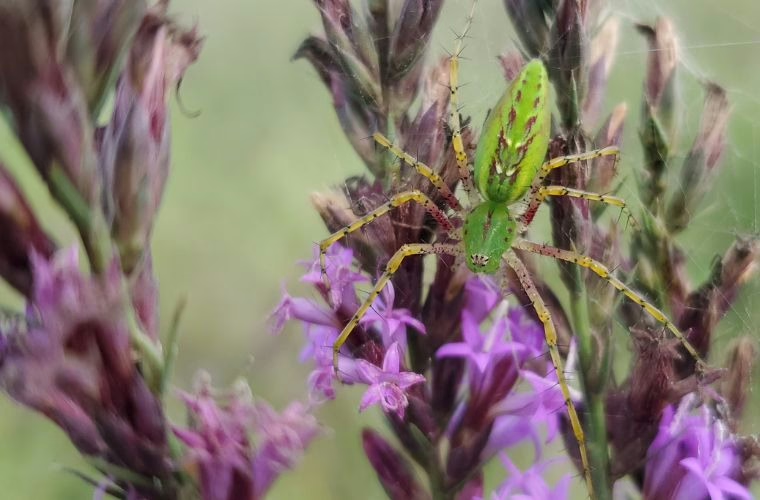
Discover 40 native wildflowers of the Attwater Prairie Chicken National Wildlife Refuge, home to rich prairie habitats and trails.
Accepting Grant Applications: September 1 – October 15, 2025
The Native Plant Society of Texas offers the following research grant to graduate students at Texas universities who are performing academic research related to Texas native plants and/or to the conservation and restoration of native plant habitats of Texas: Ann Miller Gonzalez Graduate Research Grant This research grant is named in

September chapter meeting – September 20
Lee Marlowe, the Sustainable Landscape Ecologist for the San Antonio River Authority, is the speaker for Highland Lakes Native Plant Society of Texas’s Chapter Meeting at the Marble Falls Library, 101 Main Street, from 1:00-3:00 p.m. on Saturday, 20 September. This meeting will count as one hour of Advanced Training
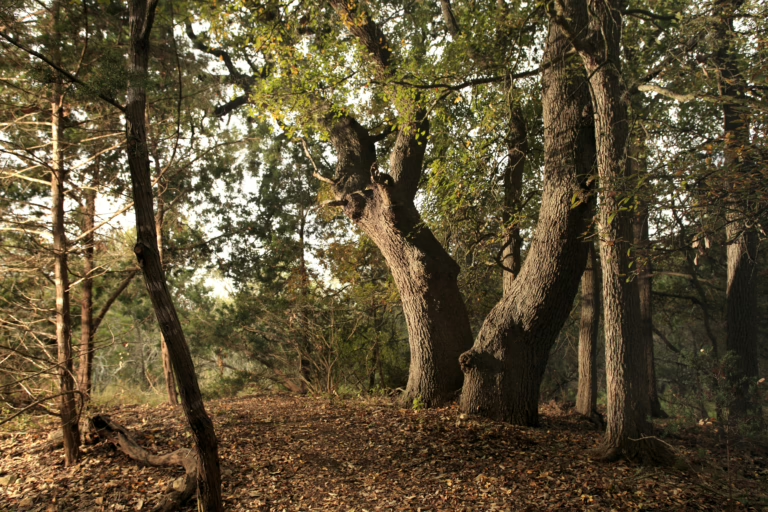
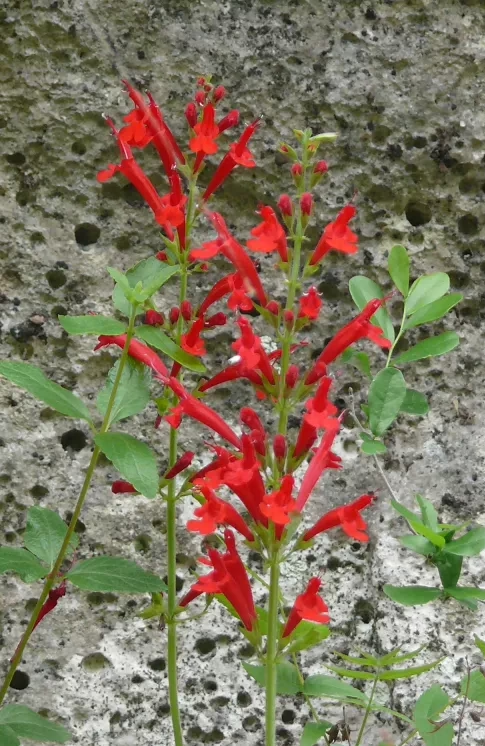
14 on the 14th: A Guide to Native Texas Plants for Shade
It is time for another #14onThe14th list! This month, we’re finding beauty in the shadows with 14 native plants that thrive in the SHADE!
Frostweed: A Late-Season Refuge for Pollinators
Frostweed (Verbesina virginica) is best known for its mesmerizing display of “ice ribbons” that appear at the first frost. However, the focus placed on this phenomenon overlooks a critical role it plays – a friend to a variety of pollinators.
Call for PATRICIA ROSE MANNING 2025 UNDERGRADUATE SCHOLARSHIP Applications
The Big Bend Chapter of the Native Plant Society of Texas is pleased to announce that the 2025 Patricia Rose Manning undergraduate scholarship applications are now ready to go out to prospective applicants. Patty Manning was a long-time grower of native plants in the Big Bend, a field botanist, a
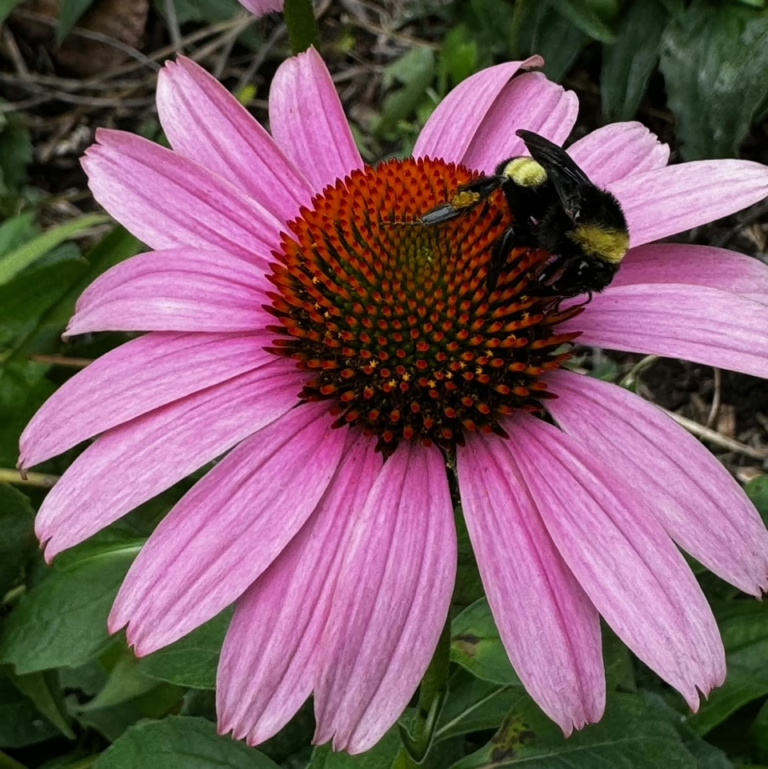
North Texas Giving Day
North Texas Giving Day runs August 28 through September 18, 2025. Every dollar you give helps us plant seeds of change—literally and figuratively. Whether you’re passionate about protecting Texas’s natural heritage, educating the next generation, or transforming your community’s landscapes, your support helps bring our vision to life. Your donation
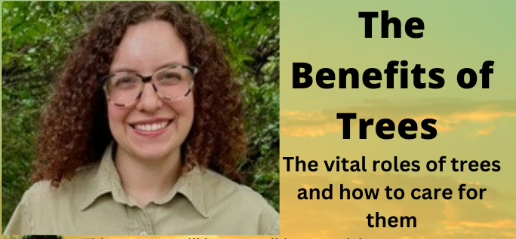
The vital role of Trees
Rachel Sarlls is the regional urban ecologist with the Texas A&M Forest Service for the San Antonio region. She graduated from Sam Houston State University with a bachelor’s degree in plant and soil sciences. She is an ISA Certified arborist with specialized qualifications in tree risk assessment and Oak Wilt management. She has worked as an arborist in the Houston region, managing work from tree removals and pruning to fertilization and planting. Rachel has a passion for empowering communities through education and outreach to help people understand the vital role trees play in urban environment and how to effectively care for them.

NICE Fall 2025 Plant of the Season
American Beautyberry (Callicarpa americana): Shrub for partial shade Description: American Beautyberry is an interesting and beautiful ornamental shrub, suitable for a shade or sun garden. The most striking feature of this shrub is its clusters of berries, which turn purple in the fall. White-berried varieties are also available. American Beautyberry