The Native Plant Society of Texas offers the following research grant to graduate students at Texas universities who are performing academic research related to Texas native plants and/or to the conservation and restoration of native plant habitats of Texas:
Ann Miller Gonzalez Graduate Research Grant – This research grant is named in honor of an early supporter of Texas native plants. The award amount is up to $2500 for the duration of the grantee’s research project.
The Grants & Scholarships Committee is excited to announce the below 2023 AMG Grant Recipients (watch for full bios in future newsletters):
Chali Simpson, Texas A&M University, College Station – Award $2500

Grasslands cover 37% of terrestrial land surface, produce roughly 75% of forage utilized for domesticated livestock grazing, and are a cornerstone of modern agricultural production (O’Mara, 2012, Brown & Thorpe, 2008). Despite their extensive coverage and provision of critical ecosystem services (Jarchow et al. 2020), much about their role in the global carbon cycle remains poorly defined. The purpose of this research is to quantify and compare the provisioning (herbaceous plant biomass production) and regulating services (carbon sequestration through annual carbon budgets) of two climatically and edaphically similar adaptive multipaddock (AMP) and conventional grazing (CG) cow-calf ranch pairs in two distinctive ecoregions of Texas.
Parikama Sapkota, University of Texas, El Paso – Award $2500
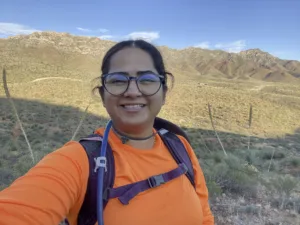
The overarching goal of this study is to shed light on the critical interactions between native grass species found in Texas particularly in the Chihuahuan Desert and their soil microbiome across multiple generations. Specifically, I propose to perform a greenhouse experiment to (1) better understand plant-soil feedback processes of mono-and polyculture grass communities that can support the growth of grasses commonly found in southwestern Texas drylands and (2) test the strength of bioinoculants across different grass species to identify microbial taxa and support plant growth even under climate change drought scenarios. This work aim is to provide valuable insights that can directly benefit conservation efforts, advance scientific understanding, and enhance the practical utilization of native plants and their habitats in Texas.
Catalina Berry, Tarleton State University – Award $2500
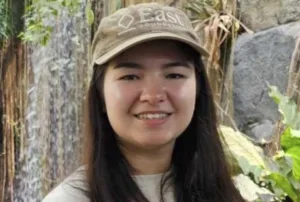
This project will be located at Texas Parks & Wildlife’s newest addition, Palo Pinto Mountains State Park, where we will remove woody and invasive plants within 20 acres of an encroached upland area and reseed with native grasses. This restoration site is located on uplands proximate to an ongoing 8-year riparian restoration project, thus supplementing the improvements to the watershed by focusing on the health of the upland grasslands. We will monitor the native plant and avian communities before and after restoration
Eli Hartung, Texas State University – Award $2500
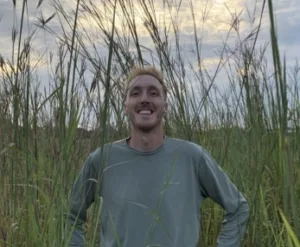
I will investigate the role of rock-stored water on the drought tolerance of four common warm season grasses of the Edwards Plateau. The species will cover a spectrum of drought tolerance and association with rocky outcrops on the Edwards Plateau: Andropogon gerardii (big bluestem) and Schizachyrium scoparium (little bluestem) are warm-season perennial bunch grass with a wide distribution across North America. Muhlenbergia reverchonii (seep muhly), a native warm season grass distributed through Texas and Oklahoma, and Bothriochloa laguroides (silver bluestem), common across North America, are by contrast more often associated with calcareous, often rocky limestone soils. This study will endeavor to answer the overarching questions: 1) Do native herbaceous plants on the Edwards Plateau use water stored in limestone fragments during intermittent drought? and 2) Are some species better than others in accessing rock water reservoirs.
There are 3 additional deserving candidates if there is an individual chapter who would like to directly support a research project. Please reach out to grants@npsot.org if interested