Join Us for the Big Pull

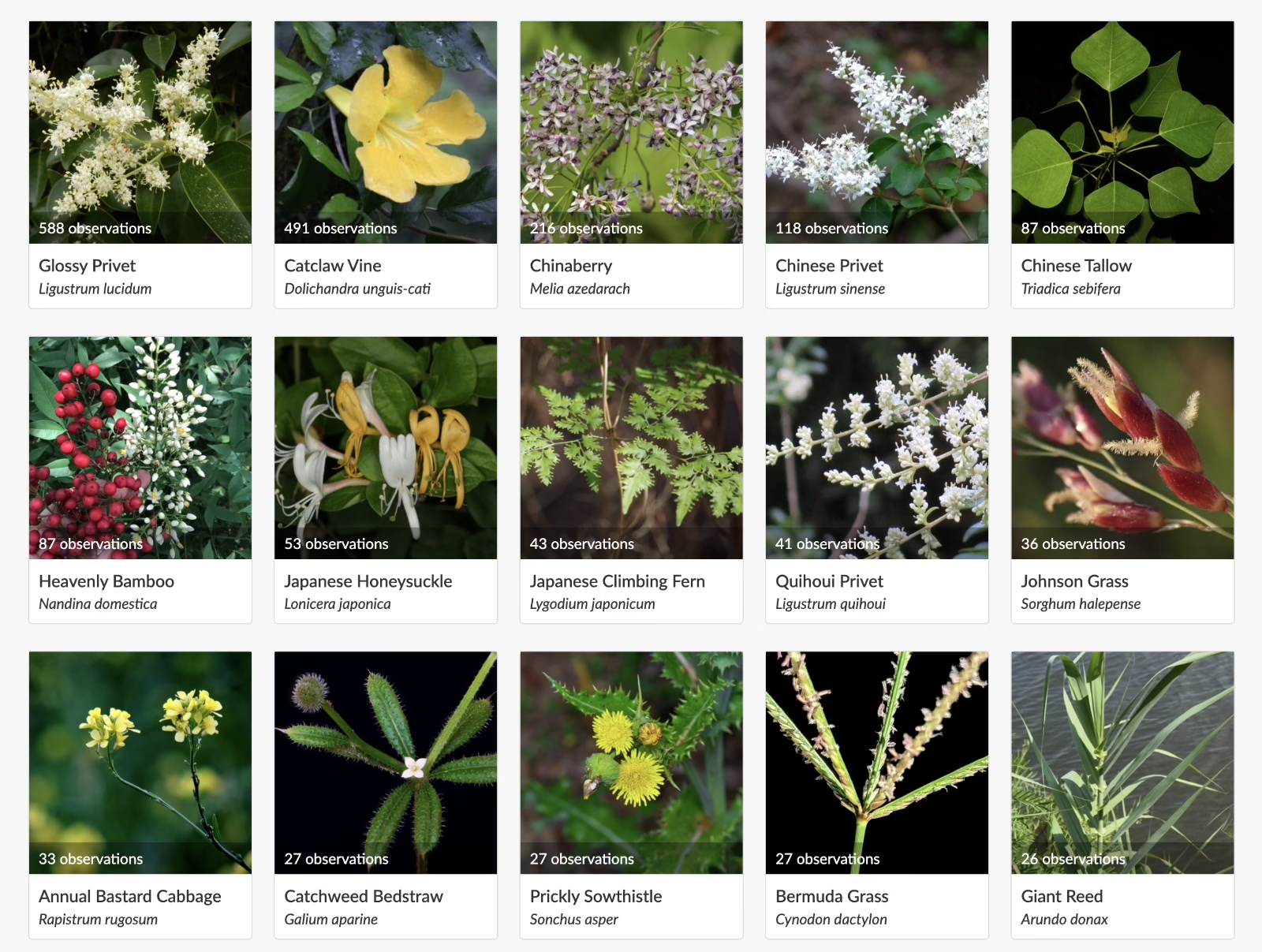
Top Observations from the Invasive Species Bioblitz

Please join us for the invasive species Big Pull! Let’s make an impact during National Invasive Species Week by removing invasive species and supporting healthy native ecosystems across Texas between Feb. 23 – March 8.

Whether you participate as a chapter, or as an individual, here is what you can do:

Choose a Site

  • Select public or private land (ensure permission has been granted by the land manager or landowner)
  • Not sure how to find your spot? Contact your city or county parks or environmental department for hot spot ideas
  • Check in with a Texas Master Naturalist group to see if they have projects
  • Reach out to area natural area managers, like state parks or nature preserves, and county ag extensions

Identify Target Invasive Species

  • Focus on one or more invasive plant species appropriate to your region
  • Confirm species identification before removal. Use this handy list of “Top Offenders” organized by ecoregion

Host or Participate in a Removal Activity

  • Conduct your “Big Pull” any time between Feb. 23 – Mar. 8
  • Chapters may host an organized workday or partner with another group
  • Individual members may work on their own property or other areas (as long as permission is given)

Follow Safety & Disposal Best Practices

  • Use appropriate removal methods for the species
  • Dispose of plant material according to local guidance
  • Do not transport invasive material off-site unless disposal is approved

Document Your Impact

We encourage you to submit a report here about the type and amount of species you removed to help us get a sense for state-wide impact.
Be sure to take some before and after photos of your work!

Questions? Please email leah.fenley@npsot.org.

Leah Fenley
Chair, Invasive Species Committee
About the Region

Fall Symposium 2025 Logo - Teach for the Future

Salado, the location of our Fall 2025 Symposium, lies at the intersection of two ecoregions: the Edwards Plateau (Limestone Cut Plain) and Blackland Prairie (Northern Blackland Prairie).

The Edwards Plateau area is also called the Hill Country; however, this general term covers a much larger area extending farther north. Spring-fed creeks are found throughout the region; deep limestone canyons, rivers, and lakes (reservoirs) are common. Ashe juniper is perhaps the most common woody species found throughout the region. Additional woody species include various species of oak, with live oak (Quercus fusiformis) being the most common. Sycamores (Platanus occidentalis) and bald cypress (Taxodium distichum) border waterways. This area is well known for its spring wildflower displays, though they may be viewed in spring, late summer, and fall, as well. According to Texas Parks and Wildlife, average annual rainfall in the Edwards Plateau ranges from 15 to 34 inches.

The Blackland Prairie extends from the Red River south to San Antonio, bordered on the west by the Edwards Plateau and the Cross Timbers, and on the east by the Post Oak Savannah. Annual rainfall averages 30 to 40 inches, with higher averages to the east. This region is dominated by prairie species. The most common grass species include little bluestem (Schizachyrium scoparium) and Indian grass (Sorghastrum nutans) in the uplands and switchgrass (Panicum virgatum) in the riparian areas and drainages. Common herbaceous flowering plants include salvias, penstemons, and silphiums. This area has suffered greatly from overgrazing and agricultural use. Few intact areas remain, though many of the plants can be found along county roadsides throughout the region.

Our fall Symposium host chapter, the Tonkawa Chapter, includes both of these ecoregions.

Source: Wildflowers of Texas by Michael Eason