NICE! Plant of the Month
(Rivina humilis)
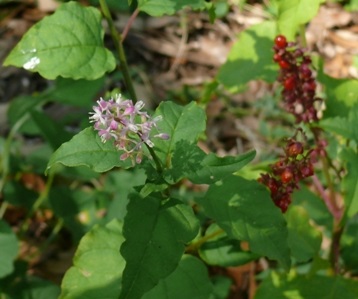
Family: Phytolaccaceae
Other Common Names: Rouge Plant, Rivina, Bloodberry. Baby peppers.
Type: Perennial herb. Leaves and berries are toxic to humans if ingested.
Natural Habitat: Native to the Edwards Plateau; found throughout Texas and most southern and western states in moist woodlands and in hilly chaparral.
Growth: 1-2 feet.
Deer Resistance: Moderately resistant.
Wildlife: Birds and butterflies.
Light Tolerance: Dappled shade, part shade to full shade.
Flowers: 2-inch spikes with delicate white and pink flowers; blooms March to October.
Fruit: Bright red berries from spring to fall.
Leaves: 1-3 inches long; deciduous; ovate to lanceolate, with wavy margins.
Water Requirements: Medium
Soil Requirements: Prefers moist, well-drained sites; sand, loam, clay, caliche.
Planting Instructions: Space plants 1 foot apart. Dig a hole at least two times wider than, but the same depth as the root ball in the nursery container. Sides of the hole should be irregular, not smooth. Remove plant from container, taking care to support the root ball. Loosen exterior roots gently with your fingers. If the plant is root-bound and cannot be loosened by hand, the outer roots may be cut in several places. Lift the plant by the root ball and place into the hole. Backfill hole, using soil that was dug out. Do not add any soil to the top of the root ball. Gently firm the soil with your hands, but do not tamp it down. Place 3-4 inches of mulch over the bare soil around, but not touching the base of the plant.
Watering Instructions after planting: Water deeply after planting to settle soil around roots. Then water every 7-10 days, as needed, during the first growing season. Before watering, check soil moisture at a depth of an inch or two at the edge of the root ball. Skip a watering after a rainfall of ½ to 1 inch. Maintain this watering schedule until the first fall. Reduce watering during the cool and winter months. In a “normal” year, no watering may be necessary during the fall and winter, but during a dry period, monthly watering may be needed. Second Spring and thereafter: Water monthly only during the periods of drought. Once established, native will survive with little supplemental irrigation.
NICE! Tip: Pigeonberry goes semidormant during dry summer months. Leaves return with the fall rains and turn a beautiful purplish-red color in the late fall. This plant thrives as a groundcover in part to full shade. Pigeonberry’s real attraction is that it blooms pink flowers and bears bright red berries simultaneously. The berries produce a red dye.
Look for the NICE! Plant of the Month signs and information sheets on your next visit to a participating Boerne nursery. And thank you for supporting native plants by using them in your landscapes.