NICE! Plant of the Month
(Chasmanthium latifolium)
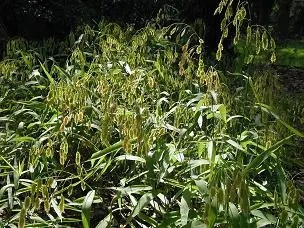
Family: Poaceae
Other Common Names: Broadleaf woodoats, River-oats
Type: Native Ornamental Grass
Natural Habitat: Moist woodland soils, along streams, ditches, and lakes from Arizona to Florida, Michigan to New Jersey.
Growth: 24- to 48-inch perennial that can form thick mats.
Preferred Site and Use: Understory.
Deer Resistance: Deer resistant
Wildlife: Excellent forage and cover for wildlife, especially birds.
Light Tolerance: Must grow in shade or part shade or it burns and bleaches.
Flowers: Green seedheads throughout summer and fall, turning bronze in the fall.
Leaves: Broad, flaccid, bamboo-like foliage.
Water Requirements: Low, once established
Soil Requirements: Grows well in sand, loam, or clay.
Planting Instructions: Space plants 2 feet apart. Dig a hole at least two times wider than, but the same depth as the root ball in the nursery container. Sides of the hole should be irregular, not smooth. Remove plant from container, taking care to support the root ball. Loosen exterior roots gently with your fingers. If the plant is root-bound and cannot be loosened by hand, the outer roots may be cut in several places. Lift the plant by the root ball and place into the hole. Backfill hole, using soil that was dug out.. Do not add any soil to the top of the root ball, but a thin layer of compost may be spread over the soil surface. Gently firm the soil with your hands, but do not tamp it down.
Watering Instructions: Water deeply after planting to settle soil around roots. Then every 7-10 days, as needed, during the first growing season. Before watering, check for soil moisture at a depth of an inch or two at the edge of the root ball. Skip a watering after a rainfall of ½ to 1 inch. Maintain this watering schedule until the first fall. Reduce watering during the cool fall and winter months. In a “normal” year, no watering may be necessary during the fall and winter, but during a dry period, monthly watering may be needed. Second Spring and thereafter: Water monthly only during periods of drought. Once established, natives will survive with little supplemental irrigation.
NICE! Tip: Inland seaoats can be substituted for fern or combined with ferns and turks cap in shady areas. It tolerates poor drainage, prevents erosion and does well in patio pots. In the fall the big drooping seeds and leaves turn a warm bronze and are a very showy mass and often used in flower arrangements. Inland seaoats and other Texas native plants can be seen at the Cibolo Nature Center’s native-plant gardens or along the woodland trails. The Master Naturalist Demonstration Garden at the end of Aubrey St. in San Antonio, along the Riverwalk has this plant and others that are identified and in their glory because of recent rains. Inland seaoats is the larval host plant for several varieties of skipper butterflies. Parts of this plant are used as nesting and denning materials. This is an attractive accent plant and can be used in dried floral arrangements.
Look for the NICE! Plant of the Month signs and information sheets on your next visit to a participating Boerne nursery. And thank you for supporting native plants by using them in your landscapes.