NICE! Plant of the Month
Bauhinia lunarioides (congesta)

Description:
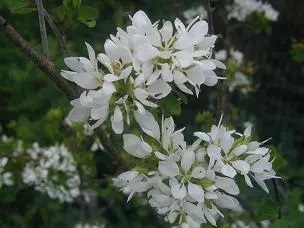
The Anacacho Orchid Tree is a small blooming shrub or tree and is a member of the legume or pea family. In Texas, it is found only in the Anacacho Mountains of Kinney County and in a small area along the Devil’s River. It is also found in the state of Coahuila, Mexico. In its native habitat in Texas, it grows on rocky limestone canyons at an elevation of up to 1,383 feet. It is thought to be a remnant of prehistoric times and has close relatives in Central and South America and Southeast Asia. Its unusual light green leaves are divided into pairs of two oval leaflets which resemble cloven hooves. Its white or light pink flower clusters resemble orchids. Blooming time is from March through May and occasionally again in later summer after a rain. It achieves a height of 8 to 10 feet and may have multiple trunks.
Deer Resistance:
In many environments Anacacho Orchid is considered to be deer resistant, but all small trees should be caged to prevent bark damage from rubbing.
Planting Instructions:
Anacacho Orchid Tree tolerates full sun to part shade. It should be planted in well-drained soil and not in a location with a sprinkler system. Choose a south-facing location to protect it during harsh winters. Dig hole at least 2 times wider than, but the same depth as the root ball in the nursery container. Sides of the hole should be irregular, not smooth. Carefully remove plant from container, taking care not to break the root ball. Loosen exterior roots, if root bound. Plant at the same depth as the soil in the container. Do not add any soil to the top of the root ball. Adding a layer of 3-4 inches of mulch after planting is desirable.
Watering Instructions:
After planting, water the plant well in order to thoroughly soak its roots. Repeat watering a few days after planting. Water deeply every 7-10 days, checking an inch or two into soil at edge of root ball to determine soil moisture.
First Fall/Winter:
Maintain this watering schedule until the first fall after planting. Reduce water during fall and winter. In a “normal” year, no watering may be necessary in fall and winter, but during a dry period, monthly watering may be desirable.
Second Spring and thereafter:
Water monthly only in periods of drought. Once established, Anacacho Orchid Tree will survive with little supplemental irrigation.
NICE! Tip:
It is a relatively fast grower once established and is a beautiful blooming specimen under the right conditions. This is also a good patio tree which attracts butterflies. Save and sow the seeds to produce additional plants for your landscape.
Look for the NICE! Plant of the Month signs and information sheets on your next visit to a participating Boerne nursery. And thank you for supporting native plants by using them in your landscapes.