

Century Plant

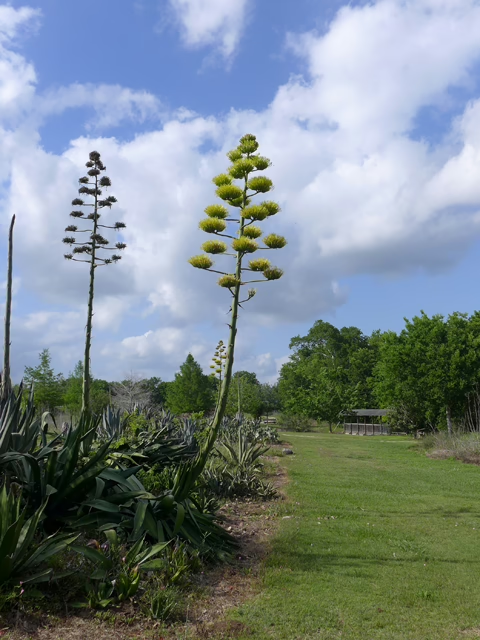
Agave americana

Other common name(s):

American Century Plant, American agave, Maguey americano

Family:

Asparagaceae (Asparagus Family)

Plant Ecoregion Distribution Map

This map uses data from the US EPA. EPA  servers have been offline frequently so maps may not display. We are working on a solution.

Chihuahuan Deserts, Edwards Plateau, Gulf Coast Prairies and Marshes, Southern Texas Plains
Chihuahuan Desert Grasslands
Balcones Canyonlands
Lower Rio Grande Alluvial Floodplain
Texas-Tamaulipan Thornscrub

Plant Characteristics

Growth Form

Cactus & Succulent

Height

4
to
6
ft.

Spread

3
to
5
ft.

Leaf Retention

Evergreen

Lifespan

Perennial

Habitat and Care Requirements

Soil Type(s)

Sand, Loam, Clay, Caliche, Well Drained, Dry

Light Requirement

Sun

Water Requirement

Very Low, Low

Native Habitat

Grassland, Woodland

Bloom and Attraction

Bloom Color

Yellow, Green

Bloom Season

Summer

Seasonal Interest

Seeds, Nectar, Pollen, Larval Host, Flowers

Wildlife Benefit

Birds, Small Mammals, Bees

Maintenance

Low maintenance. Remove old leaves if desired, using gloves to protect from spines. Heat and cold tolerant. Grows in very dry conditions, but benefits from some extra moisture. Best used in mass or as focal point. It also does well in a large container. Can take light shade better than some other agaves. Although cold tolerant, should be protected from teen winter temperatures to avoid damage. Plant away from heavy pedestrian traffic due to sharp-tipped leaves. Propagation: seed, offshoot transplant.

Comments

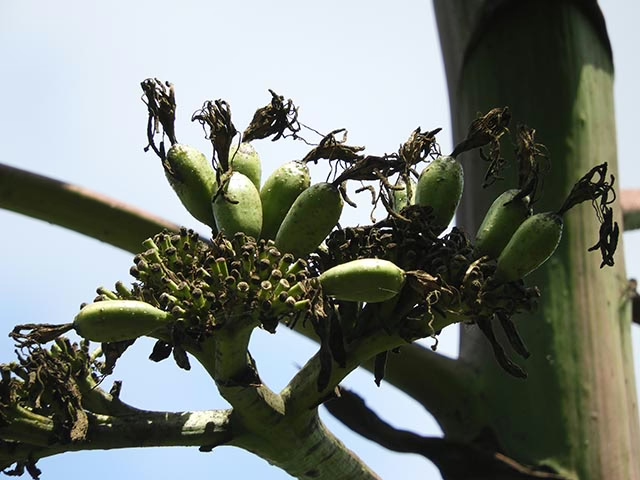
Blooms June-July. Leaves are green to blue-green color with an interesting pattern on the back side, and sharp tips. The inflorescence appears after the plant is 10 yrs old and then it dies. Pups typically appear at base before parent plant blooms and dies. Flowers are funnel-shaped to cylindrical, growing in cluster on the upper half of a long, branched stalk. The fruit is a capsule.

References

1) https://www.itis.gov/servlet/SingleRpt/SingleRpt?search_topic=TSN&search_value=182660&print_version=PRT&source=to_print#null, 2) https://bonap.net/Napa/TaxonMaps/Genus/County/Agave, 3) https://www.wildflower.org/plants/result.php?id_plant=AGAM, 4) https://portal.torcherbaria.org/portal/taxa/index.php?taxon=Agave+americana&formsubmit=Search+Terms, 5) Richardson, Alfred. Plants of Deep South Texas: A Field Guide to the Woody and Flowering Species (Perspectives on South Texas, sponsored by Texas A&M University-Kingsville) (p. 16). Texas A&M University Press.
Material Treatment Method Collection References
Offshoots Division Replant pups in well draining soil. You’ll need a pair of sharp, clean gardening shears or a knife, gloves (those spines are no joke!), and small pots filled with a well-draining potting mix specifically formulated for succulents and cacti. Choose pups that are at least a few inches in diameter. They should have a healthy root system of their own. Carefully separate them from the mother plant by cutting the connecting tissue as close to the pup as possible. Allow the pups to callous over for a day or two in a dry, shaded area. This helps prevent rot once they are potted. Plant the pups in your prepared pots, ensuring the base sits level with the soil surface. Don’t bury them too deep. Water sparingly until you see new growth. Overwatering is the enemy! Place the pots in a bright location, but avoid direct sunlight until they become established. Gently remove small offshoots (pups) in spring or summer. https://www.gardenia.net/plant/agave-americana-century-plant#:~:text=Propagation:%20Agave%20americana%20can%20be,replant%20in%20well%2Ddraining%20soil.
Seed No Treatment Lightly press the seeds onto the surface of a well-draining seed starting mix. Don’t bury them. Mist the soil surface and cover the tray with a plastic dome or cling wrap to retain moisture. Place the tray in a bright location, out of direct sunlight, with temperatures around 70-75°F (21-24°C). Germination can be erratic and take anywhere from a few weeks to several months. https://propagate.one/how-to-propagate-agave-americana/

About the Region

Fall Symposium 2025 Logo - Teach for the Future

Salado, the location of our Fall 2025 Symposium, lies at the intersection of two ecoregions: the Edwards Plateau (Limestone Cut Plain) and Blackland Prairie (Northern Blackland Prairie).

The Edwards Plateau area is also called the Hill Country; however, this general term covers a much larger area extending farther north. Spring-fed creeks are found throughout the region; deep limestone canyons, rivers, and lakes (reservoirs) are common. Ashe juniper is perhaps the most common woody species found throughout the region. Additional woody species include various species of oak, with live oak (Quercus fusiformis) being the most common. Sycamores (Platanus occidentalis) and bald cypress (Taxodium distichum) border waterways. This area is well known for its spring wildflower displays, though they may be viewed in spring, late summer, and fall, as well. According to Texas Parks and Wildlife, average annual rainfall in the Edwards Plateau ranges from 15 to 34 inches.

The Blackland Prairie extends from the Red River south to San Antonio, bordered on the west by the Edwards Plateau and the Cross Timbers, and on the east by the Post Oak Savannah. Annual rainfall averages 30 to 40 inches, with higher averages to the east. This region is dominated by prairie species. The most common grass species include little bluestem (Schizachyrium scoparium) and Indian grass (Sorghastrum nutans) in the uplands and switchgrass (Panicum virgatum) in the riparian areas and drainages. Common herbaceous flowering plants include salvias, penstemons, and silphiums. This area has suffered greatly from overgrazing and agricultural use. Few intact areas remain, though many of the plants can be found along county roadsides throughout the region.

Our fall Symposium host chapter, the Tonkawa Chapter, includes both of these ecoregions.

Source: Wildflowers of Texas by Michael Eason